Vessev VS–9 enters America and faces the industrial test
A $19 million funding round and a first US customer move the Vessev VS–9 beyond the technology showcase. The real test is turning efficiency and low wake into a repeatable transport service.
Article outline
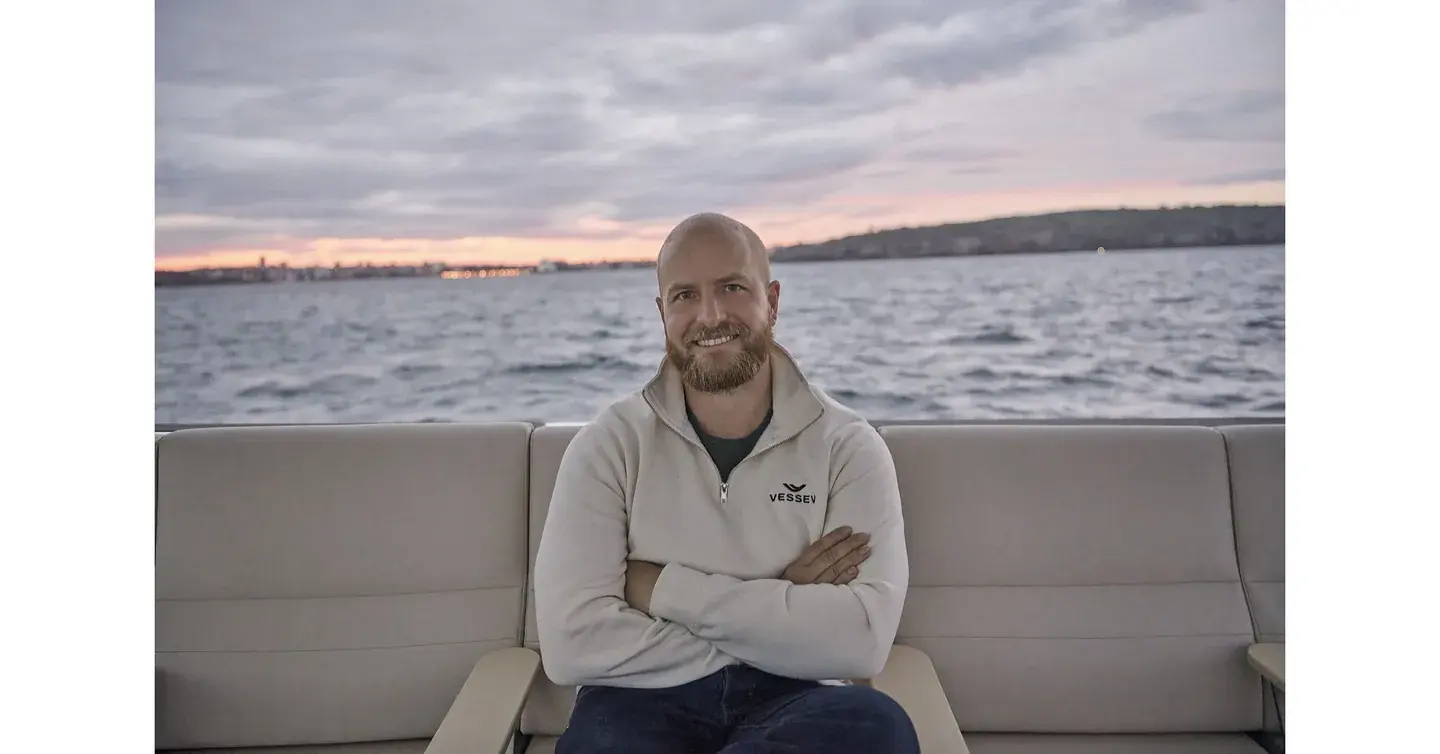
The Vessev VS–9 electric hydrofoil is entering the United States with more than a polished prototype: the company has announced $19 million in financing, its first American commercial customer and more than 11,000 nautical miles logged. That changes the question. The technology no longer needs only to prove that it can fly efficiently; it must show that it can become a dependable, permitted and serviceable fleet.
An American order moves the argument beyond demonstrations
On 20 August, Vessev announced a $19 million Series A and follow-on financing package led by Blackbird Ventures. The company says the money will expand in-house VS–9 production, advance its software and telemetry, support larger vessels and prepare for manufacturing in the United States. FlyTahoe is the first US commercial customer and plans to use the craft in a passenger network across Lake Tahoe.
“Plans” matters. Vessev’s own release says the proposed operation remains subject to Tahoe Regional Planning Agency permits and approvals. The agency’s Connections 2050 plan includes sustainable waterborne transport and names FlyTahoe as an example, but a place in a regional plan is not an operating permit. That distinction keeps an encouraging order from being mistaken for an established service.
The VS–9 is also due to make demonstration stops in New York, Washington, DC, and Lake Tahoe. Those events put the vessel in front of operators and policymakers, but they do not replicate a timetable through a full season. The meaningful transition is from an engineered craft to a system in which boat, charging, landing access, maintenance and regulation must work together.
Strong specifications open the business case
Vessev lists the carbon-composite catamaran at 8.95 metres long and 3.1 metres wide, with a 105 kWh battery. Claimed cruise speed is 25 knots and top speed 30 knots. The published range is 40 nautical miles at full load or 50 at light load, while payload is up to 1,000 kilograms. The builder cautions that range and performance vary with configuration, load, sea state, wind and onboard energy use.
Retractable foils and an active control system lift the hull clear of much of the water resistance. Vessev says the system responds to changing conditions up to 100 times a second and produces virtually no wake. Its specification page lists AC charging up to 22 kW and DC charging up to 110 kW. Together, those figures make a persuasive case for short, repeated routes. They are not yet a public profit-and-loss statement.
An operator still needs seasonal energy consumption, technical availability, battery-cycle data, foil maintenance hours, crew cost, fares and load factor. That is the same discipline applied when comparing established leisure products fromAzimutor multihulls fromFountaine Pajot: headline performance starts due diligence; it never replaces it.
Lake Tahoe will test more than the boat
Tahoe is a demanding laboratory because the claimed benefit relies on an entire transport chain. FlyTahoe wants to shift journeys from the road to the lake; Vessev cites as many as 20,000 daily car trips between the North and South shores. The TRPA plan independently confirms regional interest in sustainable water transport and a cross-lake connection, while leaving permitting and delivery work to follow.
A ten-passenger vessel offers frequency and route flexibility, but it also requires more departures to move meaningful numbers. Low wake is relevant on an environmentally sensitive shoreline. The total footprint, however, will also depend on the electricity supply, battery life and how passengers reach the landing. Those are reasonable implications, not environmental results already measured in Tahoe service.
For marinas, the practical lesson extends beyond installing a socket. Available grid capacity, charging peaks, fire procedures, manoeuvring space, shore access and spare parts become part of the transport product. Buyers following production builders such asBeneteaushould watch this infrastructure layer too. Marine adoption often rewards the package that integrates cleanly, rather than the machine with the most dramatic single metric.
Series production is the harder foiling manoeuvre
The new capital moves risk from research toward manufacturing. Vessev intends to keep its foils, hardware, flight controls and core engineering in-house while working with US shipbuilders. That vertical integration can protect know-how and speed software-hardware improvements. It can also create a bottleneck if specialist parts, trained technicians and field support fail to grow with the order book.
More than 11,000 nautical miles and commercial service in New Zealand are stronger evidence than a concept image. They are not a published reliability dataset. A professional buyer should ask for operational availability, scheduled and unscheduled maintenance, warranty terms, parts lead times, battery health reporting and performance when sea conditions prevent foiling.
The resale question comes later, but it cannot be ignored. Brokers such asMarina Yacht SalesandValbrokerillustrate the mature market in which support history and future liquidity sit beside technical merit; neither company is connected with the reported project. A specialised commercial hydrofoil will need its own credible route to inspection, finance and second ownership.
The VS–9 does not make displacement hulls obsolete, nor does it make every boat easy to electrify. It demonstrates a narrower and more valuable proposition: for a fast, short and repeatable mission, hydrodynamic efficiency can make battery propulsion commercially plausible. If Tahoe secures approval and later releases convincing operating data, the industry will have a model that others can evaluate and copy. Until then, the real significance of this US entry is that electric foiling is approaching its toughest judge—the daily timetable.
Sources and references
Sources consulted and references retained to verify data and context.
- Vessev Enters U.S. Market With $19 Million Series AVessev / PR Newswire · 2026-08-20
- VS–9 Electric Hydrofoil — Technical SpecificationsVessev
- Connections 2050 Regional Transportation Plan — Appendix BTahoe Regional Planning Agency · 2025-10-01
Continue reading
Hamilton Island’s 194-boat fleet reveals a resilient sailing market
August 20, 2026 · 5 min read
Seafinn 80 Anya at auction, beyond the €200,000 opening bid
August 18, 2026 · 5 min read
Lake Tahoe crowns Riva as provenance takes centre stage
August 9, 2026 · 5 min read