Princess V 48: versions, used checks and prices
A source-grounded guide to the first-generation Princess V48, covering official specifications, version traps, used-boat checks and observed Batoo prices.
In brief
The first-generation Princess V 48 is an approximately 15-metre sports cruiser for buyers wanting two cabins, a large cockpit and shaft-drive diesels. It suits fast multi-day cruising for a family or two couples. Its main caveat is generation confusion: the 2013 IPS V48 is different, and each older boat’s dimensions, systems and maintenance history need individual verification.
Article outline
Model factsheet
Editorial data from official sources and observed listings. Open only the level of detail you need.
Key facts
- Observed years
- 2006–2009
- Length
- 14.6–15.49 m
- Beam
- 3.95–4.2 m
- Draft
- 1.2–1.23 m
Specifications and engines
2× Volvo Penta D9 575 hp
Observed prices
Observed asking prices from eligible active Batoo listings in this dossier, grouped by currency. This is not a valuation: taxes, equipment, condition, year and negotiation can change the final price.
Observed listings (2)
Listings form the dossier dataset and may change or become unavailable.
Images come from active Batoo listings and may show different individual boats, years and configurations. Brokers and sellers have not reviewed or approved this dossier. Broker Pro indicates an active subscription, not identity verification, and never guarantees editorial coverage, placement or assessment.
See V 48 listings on BatooListing photographsReal photographs from listings included in the dossier, with a link to each source.
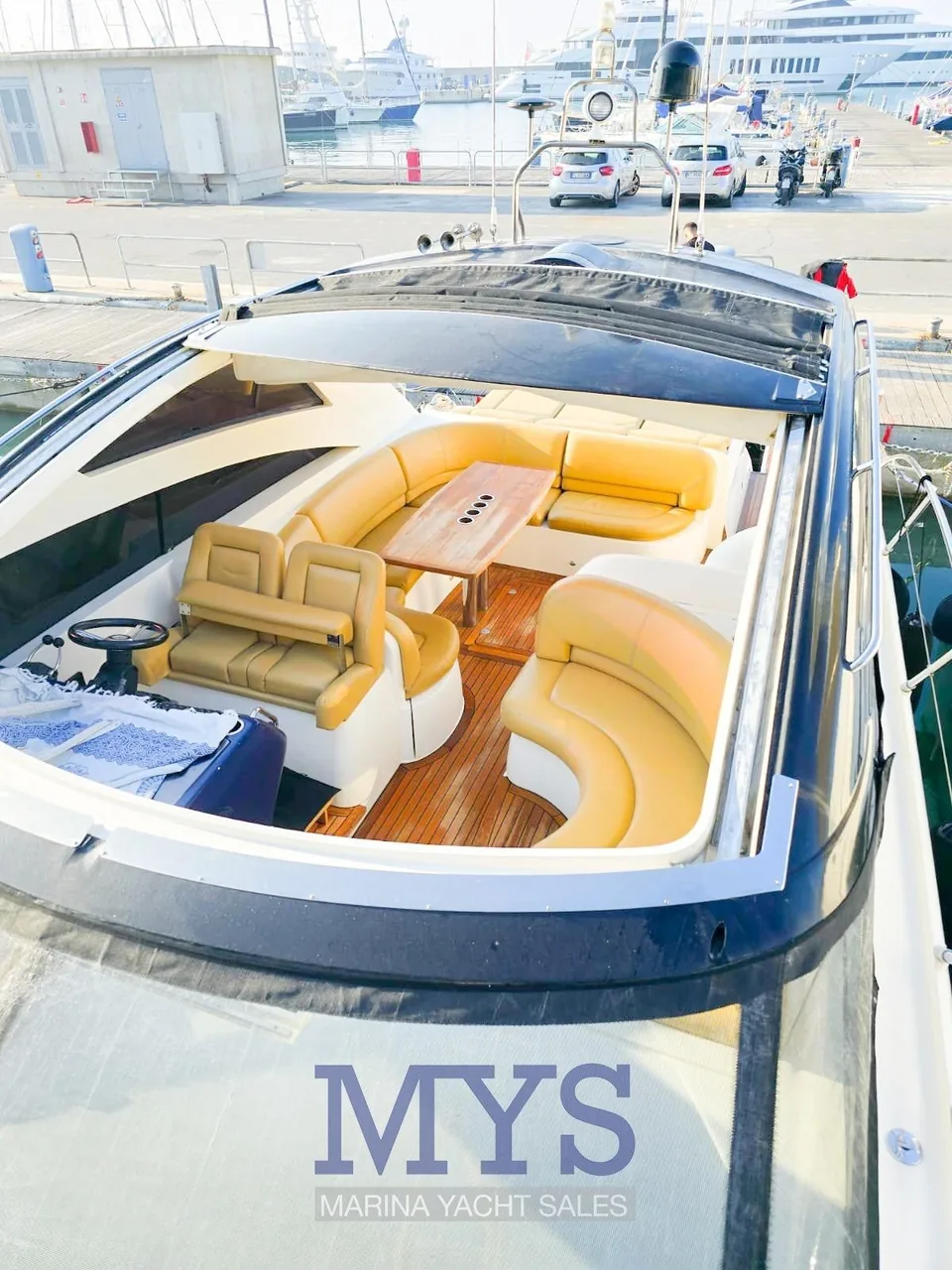
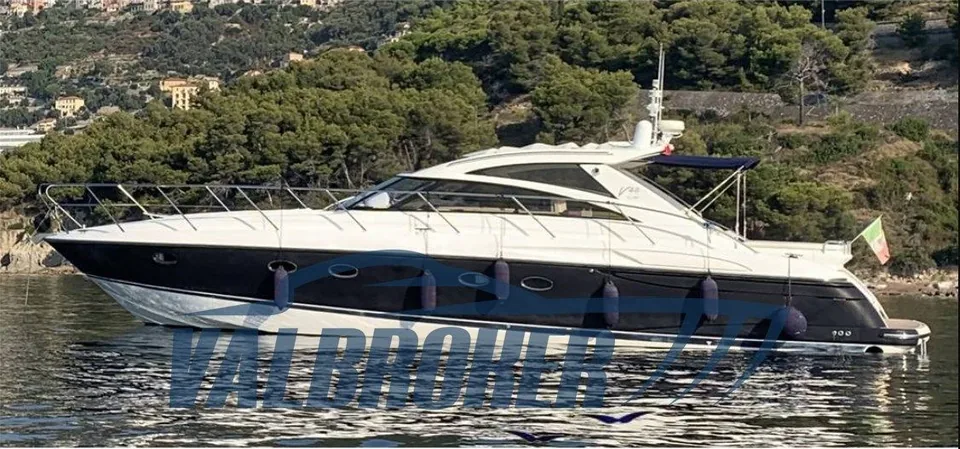
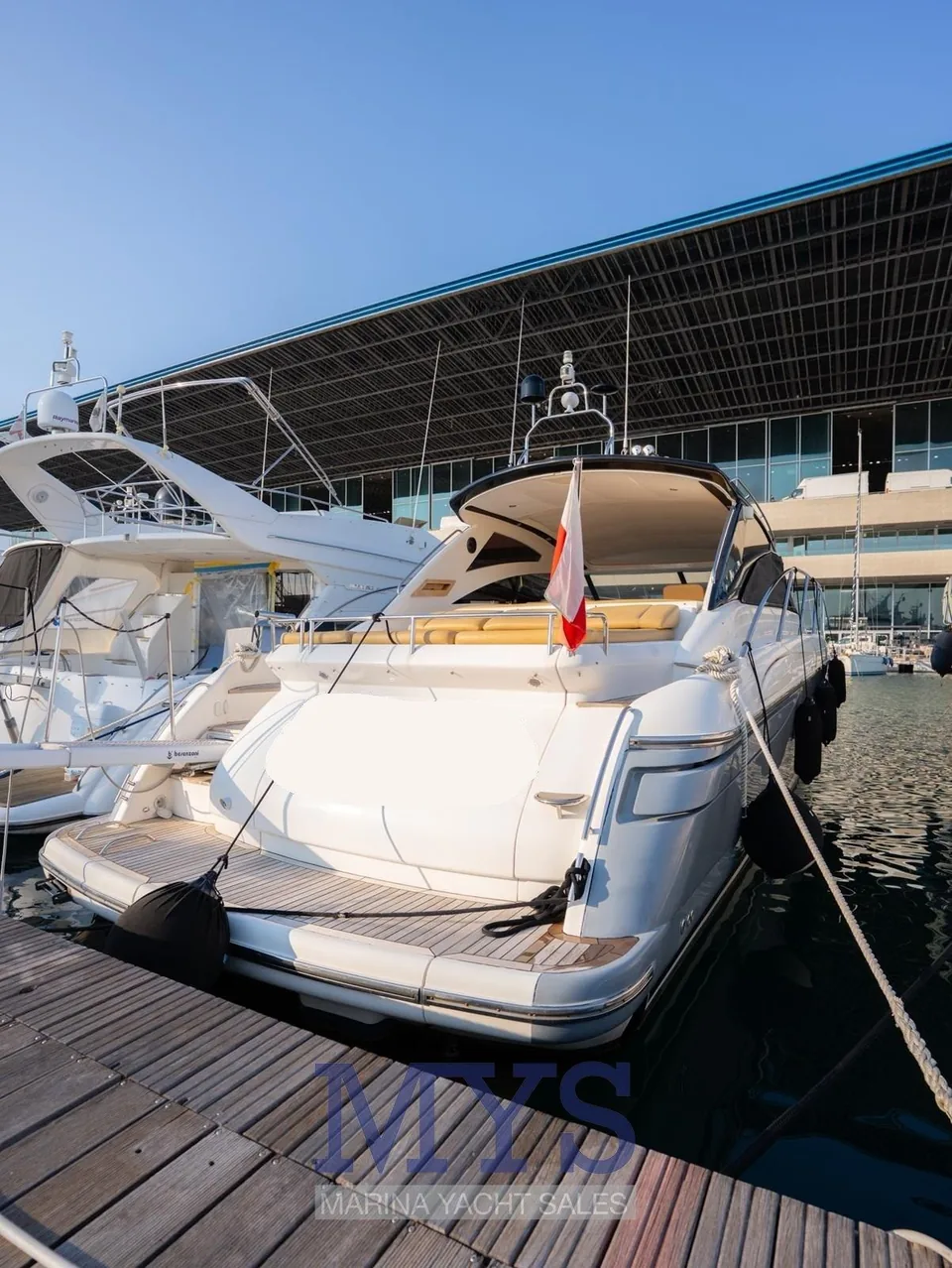
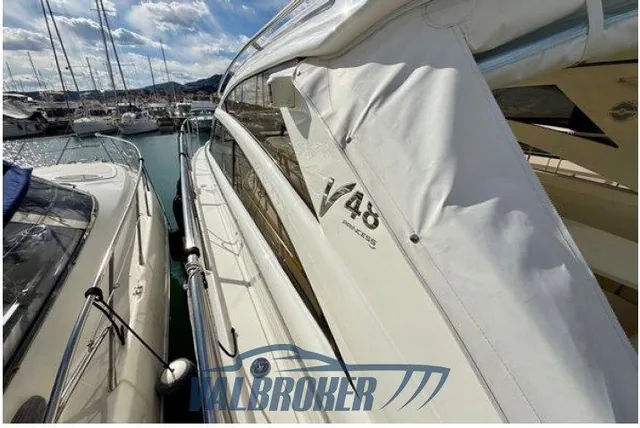
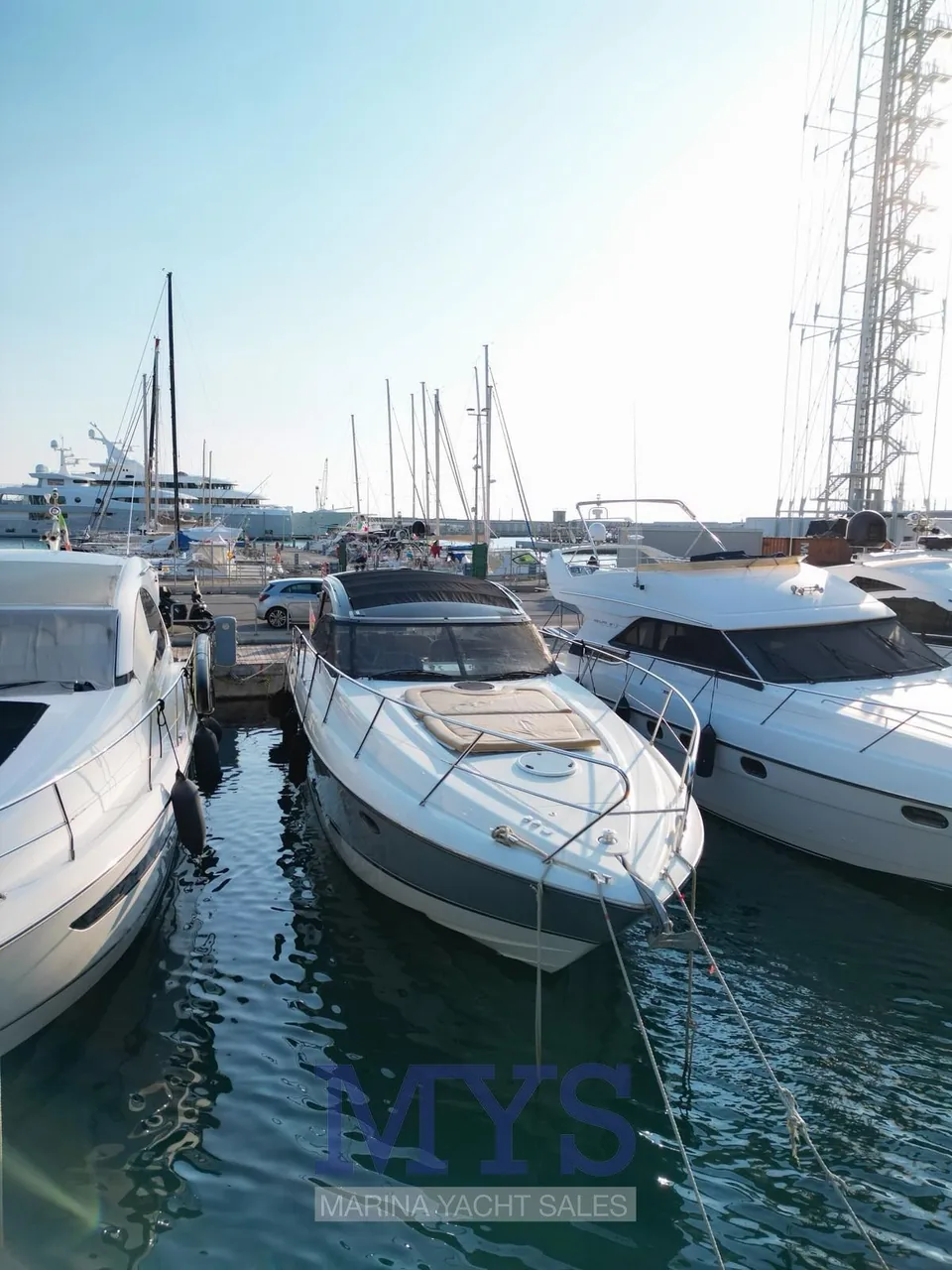
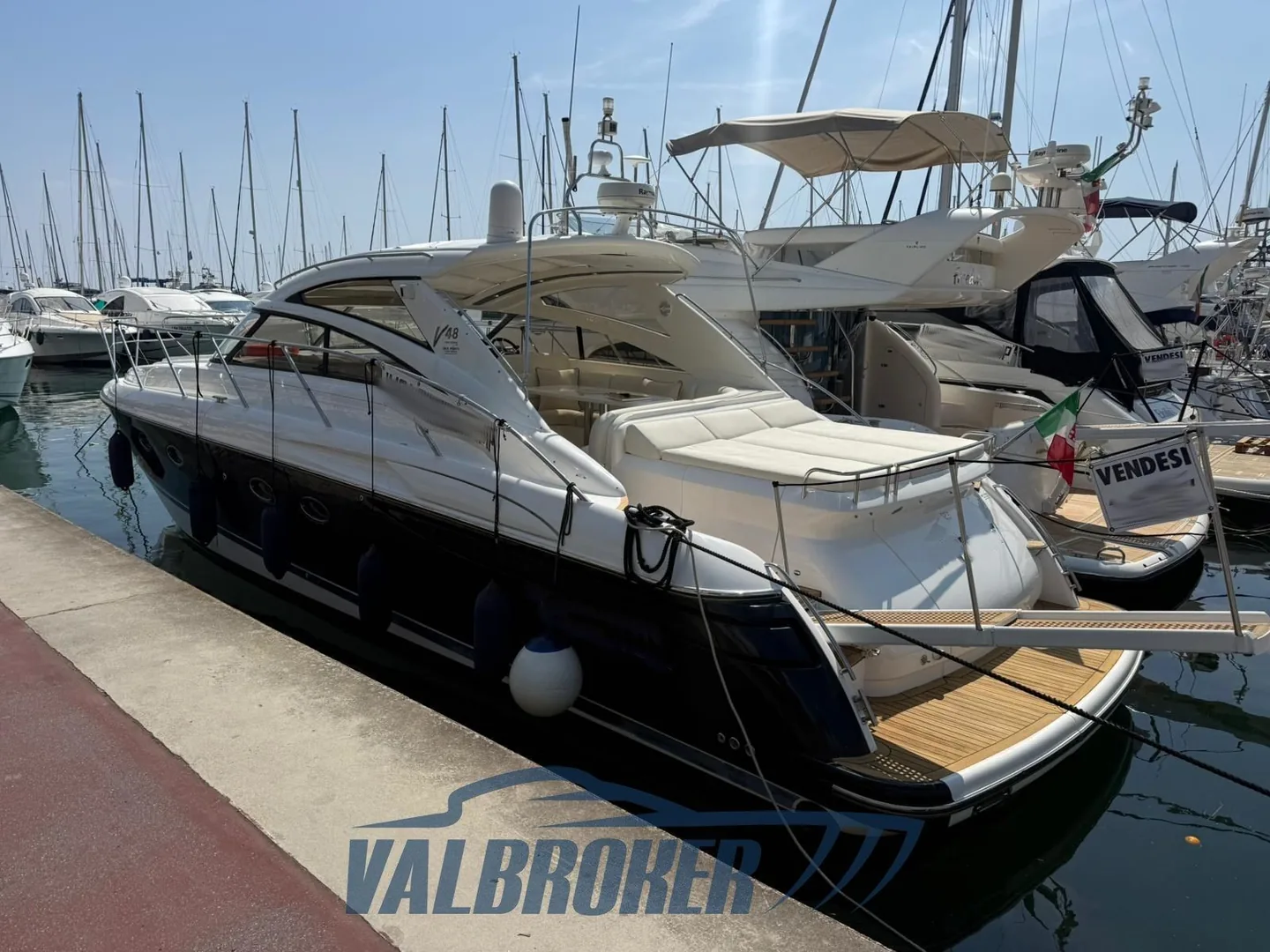
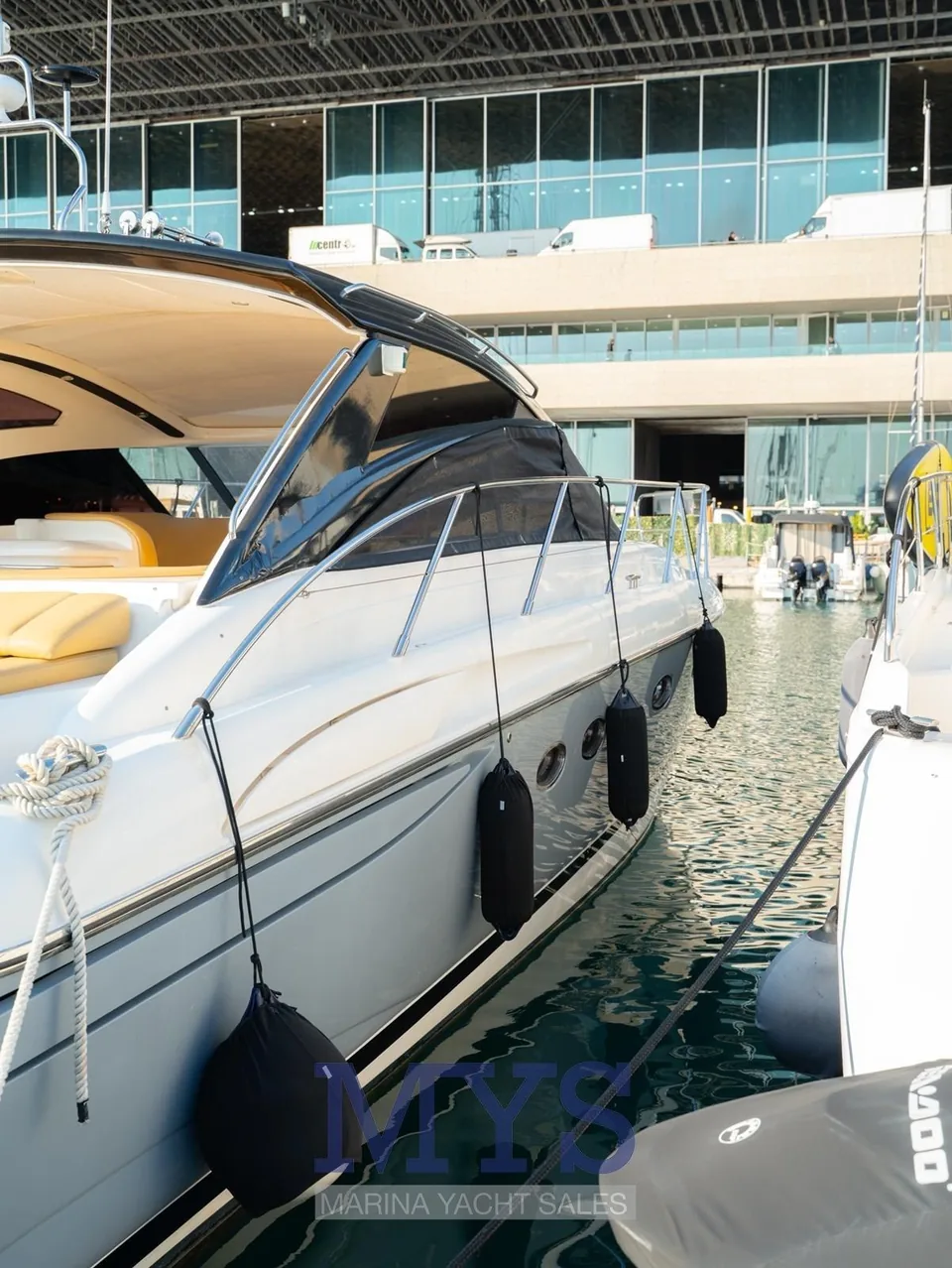
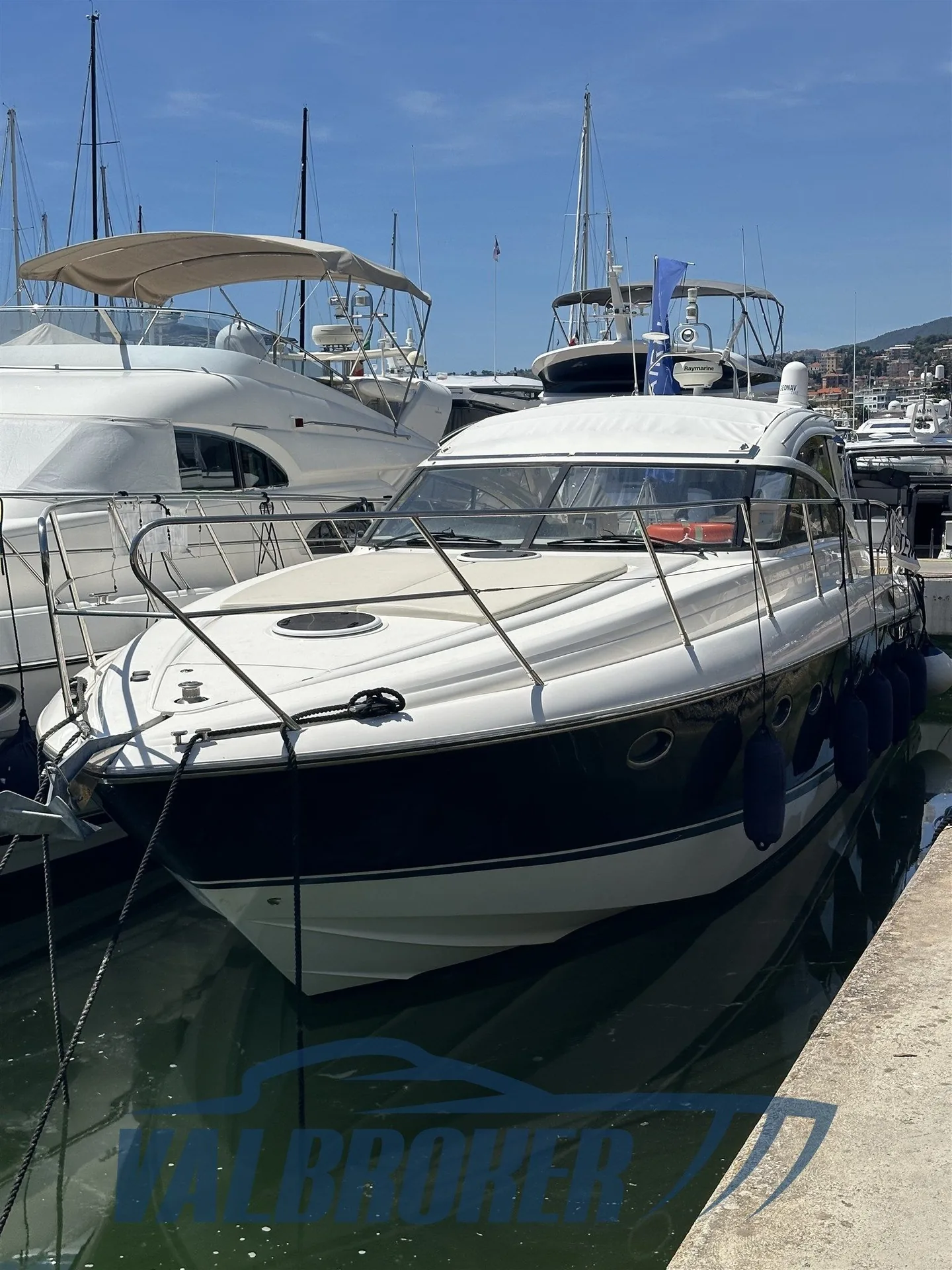
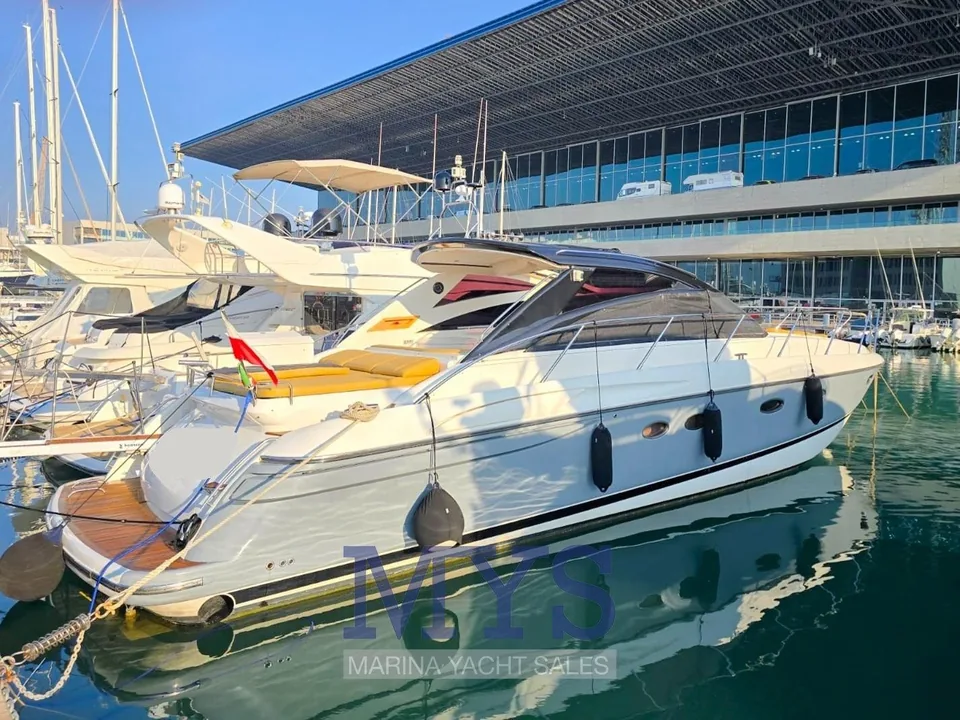
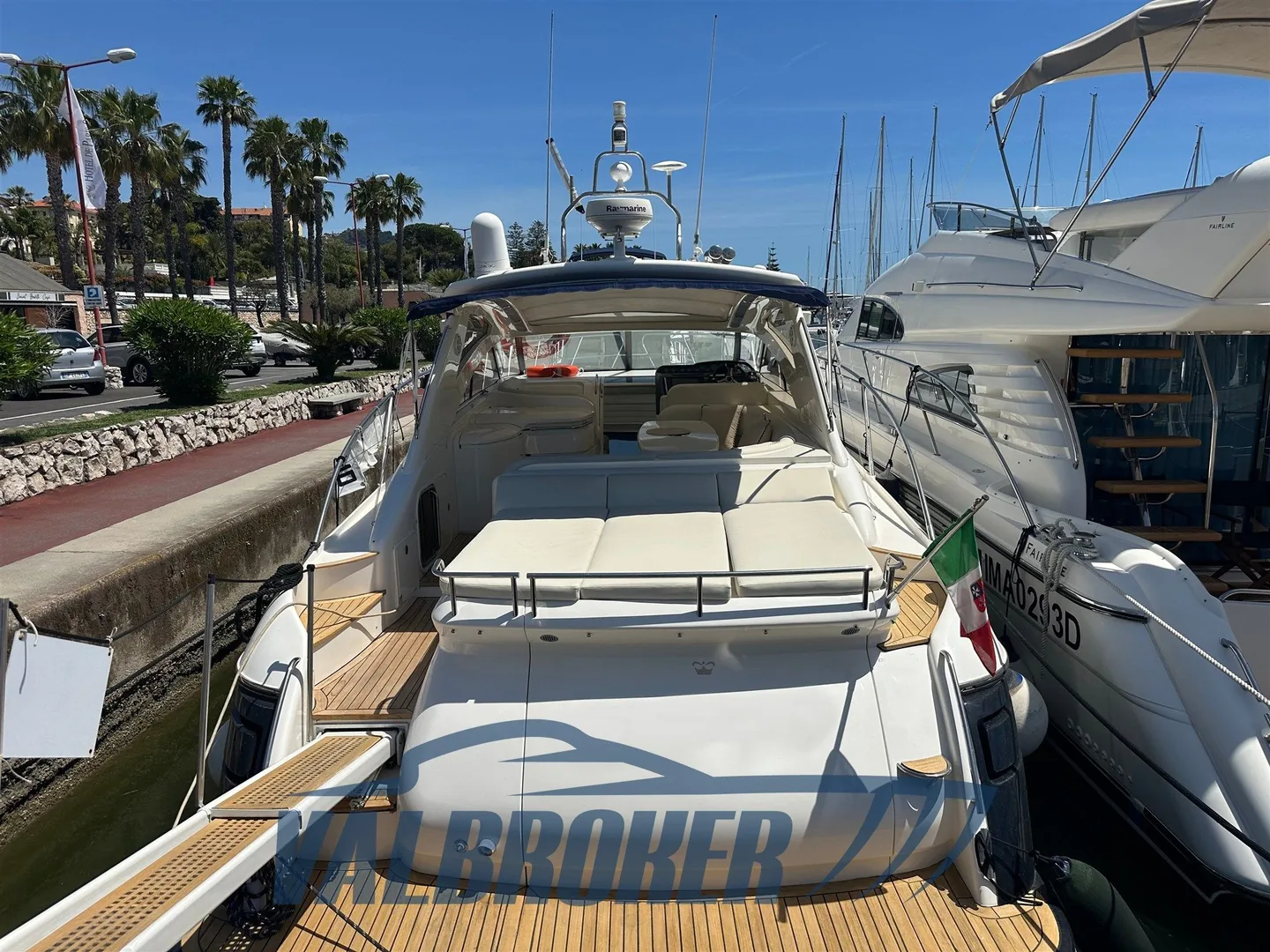
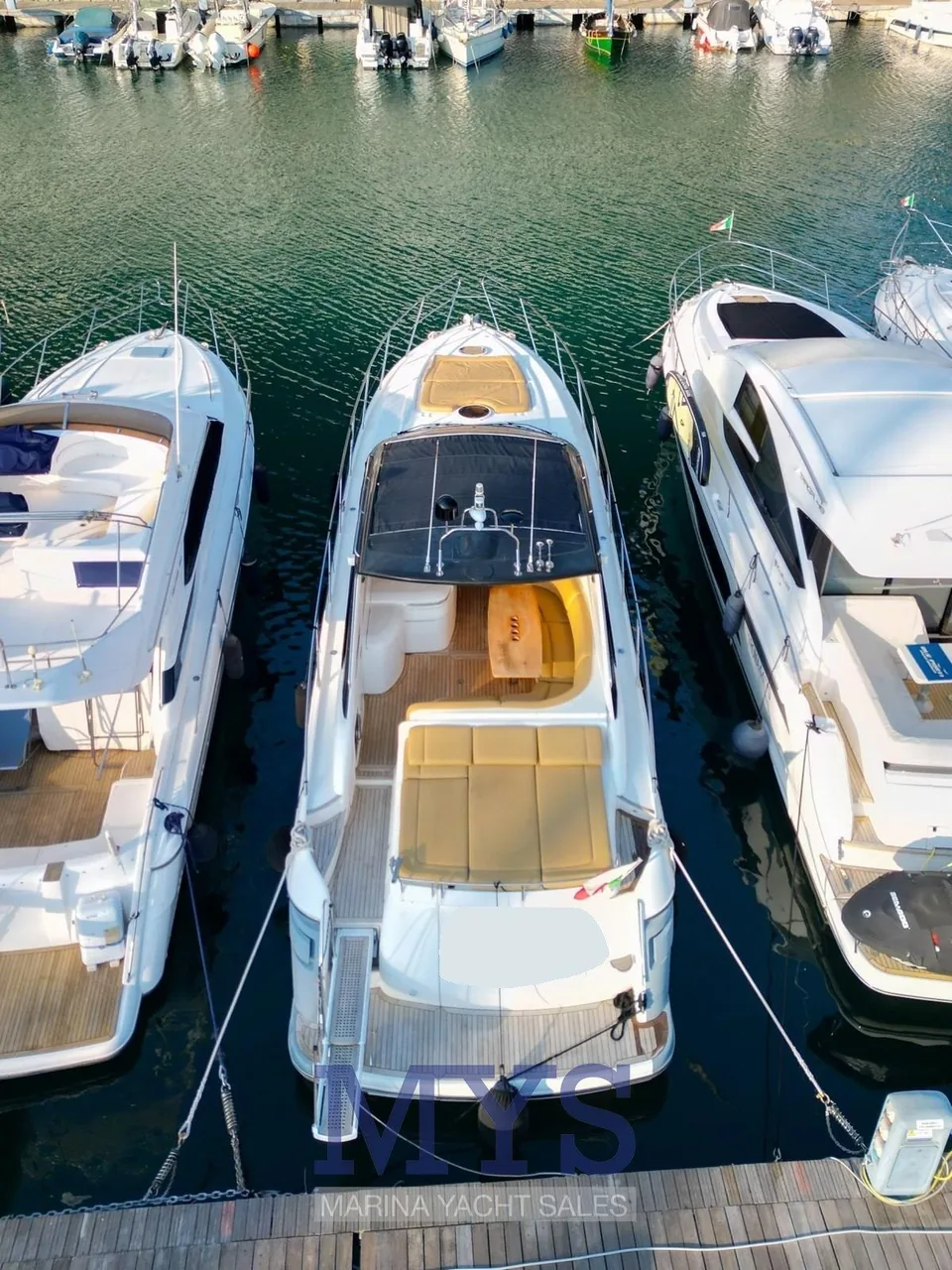
The first-generation Princess V48 is a British open sports cruiser with a hardtop, two-cabin accommodation and conventional shaft drives. This guide covers the 2004-era design represented by the 2006 and 2009 boats in the Batoo dossier. It does not describe the IPS-powered V48 announced in 2013, despite the shared model name.
Establish the generation before comparing numbers
Princess heritage data is the clearest primary baseline for the early boat. It records the V48 introduced in 2004 at 14.96 m overall including the pulpit, 14.48 m excluding it, 4.01 m beam, 1.04 m draft and approximately 12.3 tonnes displacement. The usual engines listed are twin Volvo D9-575 diesels or twin 480 hp TAMD75P units. An official Princess sales listing for a 2006 example independently gives 14.96 m by 4.01 m, fibreglass construction, twin D9-575 shaft drives and 1,150 hp in total.
| Item | Princess record, 2004 generation | Two Batoo listings | Editorial interpretation |
|---|---|---|---|
| Overall length | 14.96 m including pulpit; 14.48 m excluding | 14.60–15.49 m | measurement or registration basis differs |
| Beam | 4.01 m | 3.95–4.20 m | resolve against each boat’s documents |
| Draft | 1.04 m | 1.20–1.23 m | unresolved conflict; do not average |
| Observed engines | twin D9-575 listed as an option | twin D9-575 on both | consistent for these two boats |
| Observed layout | — | two cabins, two heads | listing-level evidence, not universal |
These figures should not be blended into a convenient midpoint. Length can include or exclude a pulpit, platform or other appendage, while registration papers may apply another convention. Berth planning, lifting and road transport should therefore use the individual craft’s registration, hull identification, manual and a measurement accepted by the relevant marina or contractor.
The 2013 V48 is a separate design. Princess announced that boat with a 15.49 m length, 4.11 m beam, twin 435 mhp Volvo IPS 600 packages and two deck arrangements. Specifications, handling assumptions and parts information from that IPS model must not be transferred to the 2006 and 2009 shaft-drive boats in this dossier.
Design and accommodation in practical terms
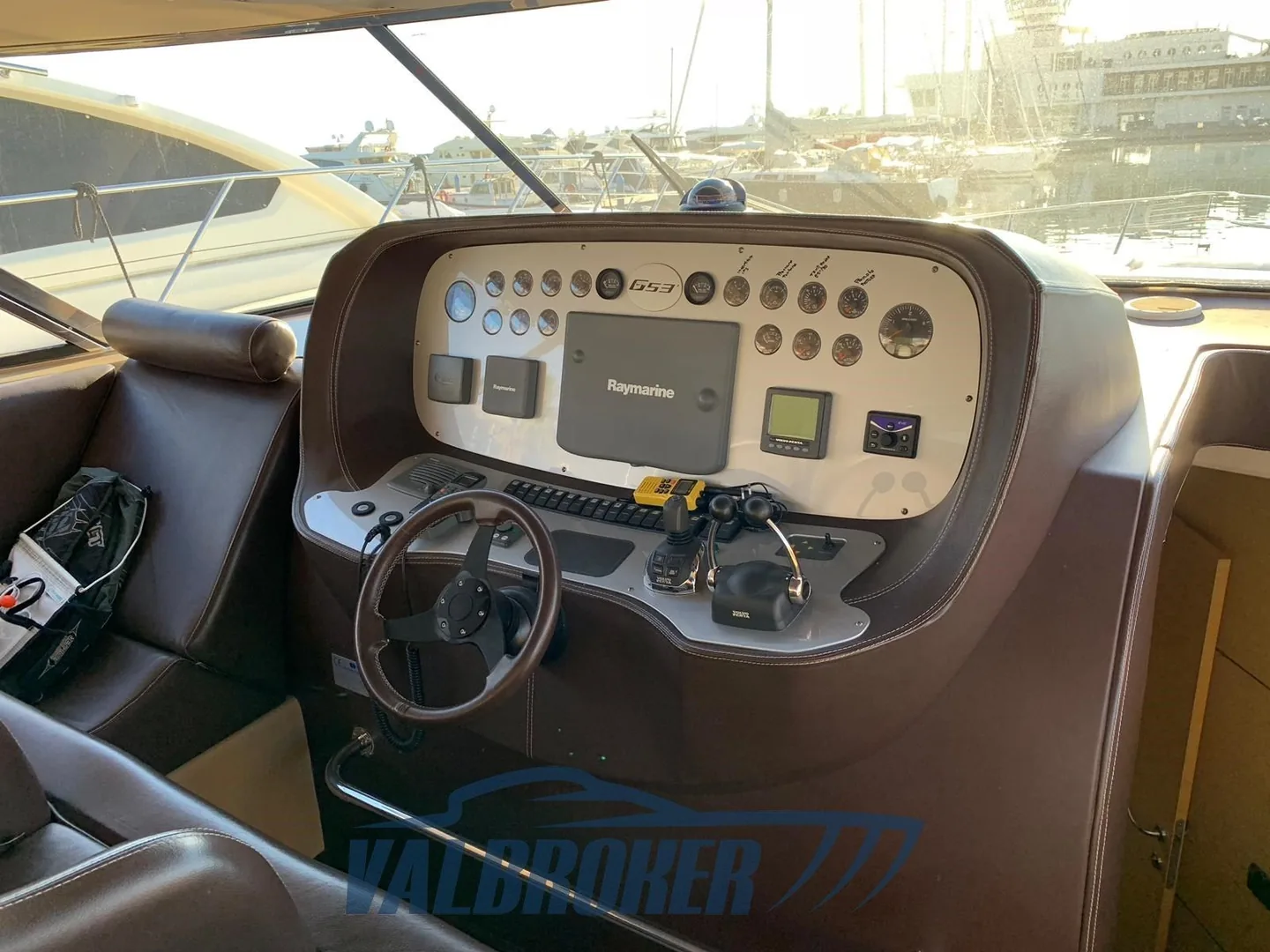
The early V48 gives priority to outdoor living while retaining credible accommodation for a family or two couples. The official Princess listing documents an electrically sliding hardtop, an electro-hydraulic tender garage, U-shaped cockpit seating, a forward chaise opposite the helm and a cockpit wet bar. Below, it records a forward owner’s cabin, a twin guest cabin, two heads with showers and a saloon that can convert into another berth.
The design’s strength is the clear division between a sociable cockpit and private sleeping spaces. Its corresponding weakness is systems exposure. Roof mechanisms, garage hydraulics, a generator, climate equipment, pumps and any fitted passerelle are valuable when they work, but an ageing set of auxiliaries can turn an apparently affordable purchase into a large refit.
Both Batoo offers record fibreglass hulls, two cabins and two heads. Those are observations from the current offer data, not a promise that every V48 left the yard or survives today in identical form. Electronics, joinery, galley equipment, generators and tender arrangements may be original, replaced or removed; the signed inventory matters more than a model-level assumption.
Propulsion, pros and cons in real use
Each Batoo listing reports two Volvo Penta D9 engines rated at 575 hp apiece, or 1,150 hp combined. The displayed engine hours are 1,050 for the 2006 boat and 1,420 for the 2009 boat. A Princess listing for another 2006 V48 also pairs D9-575 engines with shaft drives, supporting the configuration without proving the condition of either Batoo boat.
Hours alone are not a health report. Service invoices, cold-start behaviour, electronic diagnostics, oil and coolant evidence, and comparison between port and starboard engines are all more informative than a low counter without provenance. Any sea trial should log achieved rpm, temperature, pressure, smoke, vibration and whether both engines load evenly, then compare the findings with engine-maker limits for that exact installation.
Reasoned advantages include familiar shaft-drive engineering, a large open cockpit, two genuinely separated sleeping cabins and two heads. The drawbacks are equally material: running costs appropriate to almost fifteen metres and 1,150 hp, a long list of auxiliary systems, weather protection that depends on covers and roof condition, and inconsistent published dimensions that must be resolved boat by boat.
No universal top or cruising speed is stated here. Speed depends on hull cleanliness, propellers, loading, fuel, sea state and engine condition; a seller’s number cannot replace a controlled trial. Buyers should agree the test profile in advance and include manoeuvring astern, slow-speed control, acceleration and a sustained loaded run that remains safe for the machinery and conditions.
Who it is for, and useful alternatives
The early V48 suits an owner who wants fast multi-day cruising, a Mediterranean-style open cockpit, privacy for two couples and the direct mechanical character of shaft drives. It is less suitable for someone seeking minimal maintenance, low annual fixed costs or a boat that can be assessed mainly from cosmetic presentation.
| Search alternative | Why put it on the list | Main comparison to make |
|---|---|---|
| Contemporary Princess V42 | a smaller route into the same brand family | reduced volume and payload expectations |
| Contemporary Fairline Targa 47 | another British open-cruiser interpretation | layout, machinery and support differ |
| Contemporary Sunseeker Portofino 47 | a useful peer for cockpit and accommodation priorities | compare actual condition and refit scope |
| 2013-generation Princess V48 | newer IPS-based design and different layout choices | it is not a direct variant of the 2004 boat |
This is a shortlist, not a ranking. Start with actual crew size, intended range, home berth, service access and refit tolerance. Comparing three well-documented individual boats is more valuable than comparing three attractive model summaries.
Used-boat inspection priorities
Technical identity comes first: HIN/CIN, build year versus registration year, compliance documents, manuals, ownership trail and the dimensional convention used on the papers. A haul-out survey should inspect hull, moisture patterns in context, structure, underwater fittings, shafts, bearings, propellers, rudders, seacocks and sealing. A single moisture reading should never be treated as a diagnosis on its own.
For the D9 installation, request chronological service evidence and specific records for cooling circuits, exhaust components, gearboxes, mounts and shaft seals. Start from cold where possible, sample fluids when the surveyor considers it useful, and inspect again after the sea trial for leakage or abnormal heat. Generator hours and history deserve the same evidential standard as the main engines.
Cycle the sliding roof and tender garage repeatedly and under realistic load. Inspect rams, hinges, limit switches, drains, seals and signs of water migration. Test the 24/230 V systems, shore-power protection, charger, batteries, generator, air conditioning, water heater, pressure pump, toilets, bilge pumps, windlass and navigation equipment as systems, rather than confirming that their displays merely light up.
Teak, upholstery and glossy joinery are expensive, but they should not outrank structure and machinery. Look for staining around windows and deck hardware, lifting deck material, movement at rails and fittings, and previous repairs that lack invoices or photographs. Record every included item and every declared upgrade in the contract, because removable electronics and tender equipment can otherwise create avoidable disputes.
Finally, divide survey findings into safety-critical work, deferred maintenance and optional improvement. Written quotations turn that list into a credible ownership budget. A percentage discount without a scoped repair plan is rarely a sound substitute.
Observed asking prices and what they mean
On 21 September 2026, the dossier contained two active Batoo asking prices in euros: €275,000 for a 2006 boat and €249,000 for a 2009 boat. The observed range is therefore €249,000–€275,000, with a sample size of two. It is a marketplace snapshot, not a valuation, transaction record or forecast.
The younger boat asking less is a useful warning against age-only comparisons. Tax status, location, maintenance evidence, machinery hours, equipment, cosmetic state and imminent work can outweigh model year. The defensible method is to preserve the observation date and currency, inspect each boat, cost its backlog separately and avoid averaging incompatible versions. The negotiated price remains unknown unless a completed sale is documented.
Images come from current Batoo listings and may depict different individual boats, years and configurations. Brokers and sellers have not reviewed, validated or approved this dossier. In the dossier, Broker Pro means only that a Batoo subscription is active; it is not identity or KYB verification and never guarantees editorial coverage, ranking or a positive assessment.
Sources and references
Sources consulted and references retained to verify data and context.
- Princess Yachts V 48 — Batoo offer 2006Batoo
- Princess Yachts V 48 — Batoo offer 2009Batoo
- Princess Heritage — Princess V48Princess Motor Yacht Sales
- Used Princess V48 2006 — official Princess brokeragePrincess Motor Yacht Sales
- Coming soon: the new Princess V48 (2013)Princess Motor Yacht Sales · 2013-03-10T00:00:00.000Z