Sea Ray 310 Sundancer: used-boat guide
A source-grounded guide to the 1998–2000 Sea Ray 310 Sundancer, covering factory dimensions, propulsion variants, used-boat checks and observed Batoo asking prices.
In brief
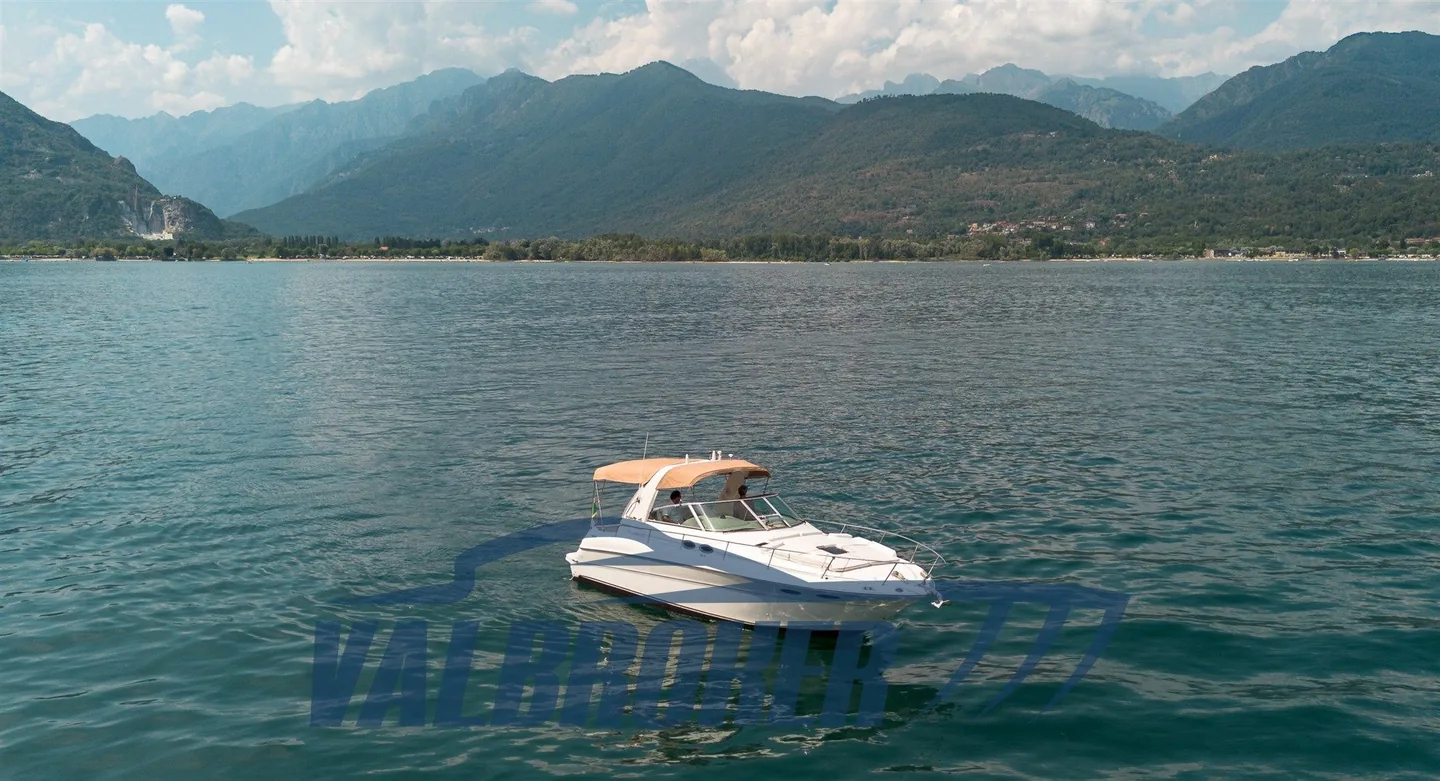
The 1998–2000 Sea Ray 310 Sundancer is a 9.60 m-hull express cruiser suited to couples wanting a social cockpit and short cruises. Petrol sterndrive and V-drive configurations were offered. Its main caveat is the maintenance exposure of twin engines and ageing systems: exact variant, history and condition must be established for the individual boat.
Article outline
Model factsheet
Editorial data from official sources and observed listings. Open only the level of detail you need.
Key facts
- Observed years
- 1998–2000
- Length
- 9.6 m
- Beam
- 3.4 m
- Draft
- 0.8–1 m
Specifications and engines
2× Mercury MIE 350 MAG MPI 300 hp · 2× Mercruiser 5.0 225 hp
Observed prices
Observed asking prices from eligible active Batoo listings in this dossier, grouped by currency. This is not a valuation: taxes, equipment, condition, year and negotiation can change the final price.
Observed listings (2)
Listings form the dossier dataset and may change or become unavailable.
Images come from active Batoo listings and may show different individual boats, years and configurations. Brokers and sellers have not reviewed or approved this dossier. Broker Pro indicates an active subscription, not identity verification, and never guarantees editorial coverage, placement or assessment.
See 310 SUNDANCER listings on BatooListing photographsReal photographs from listings included in the dossier, with a link to each source.
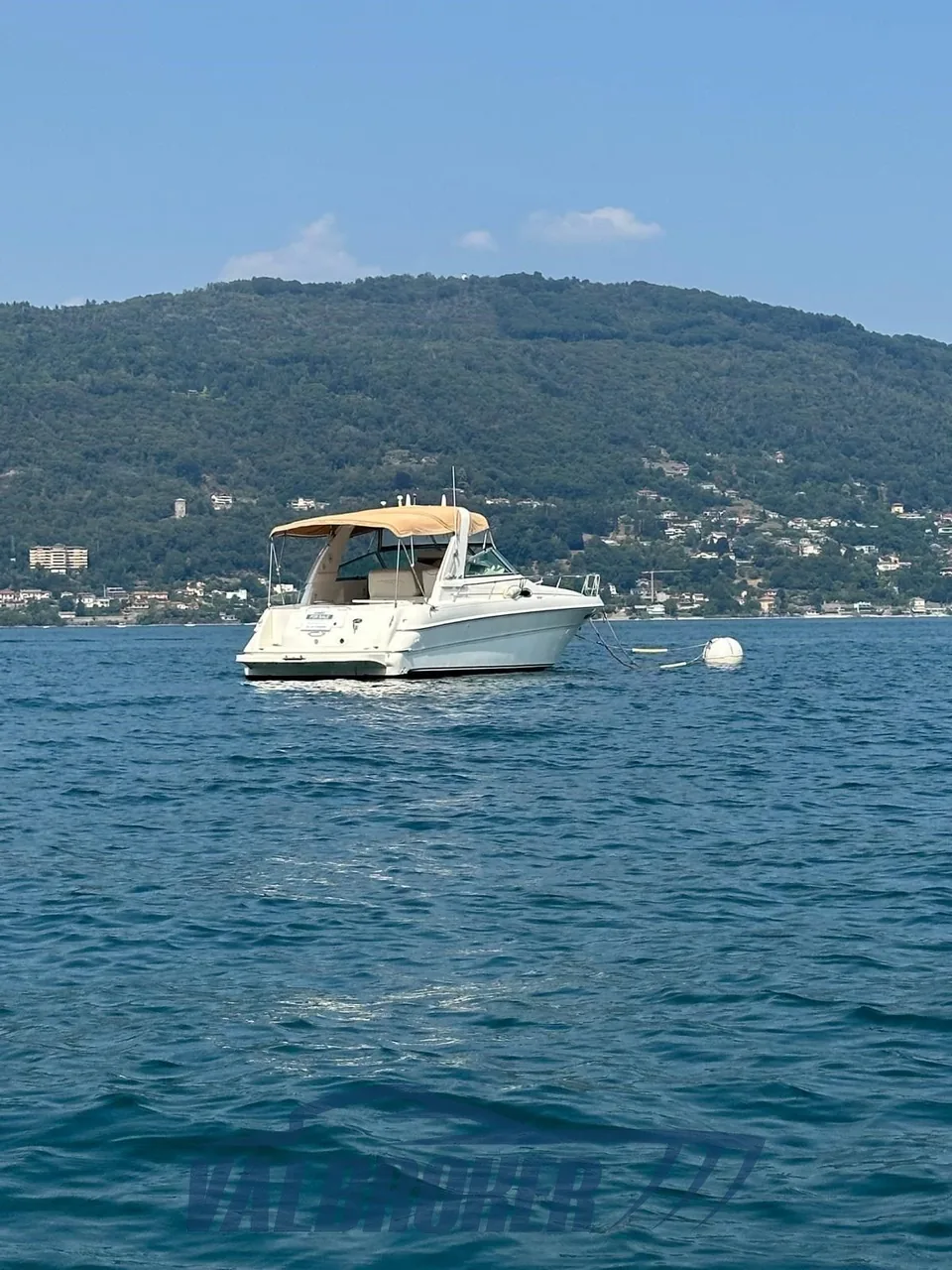
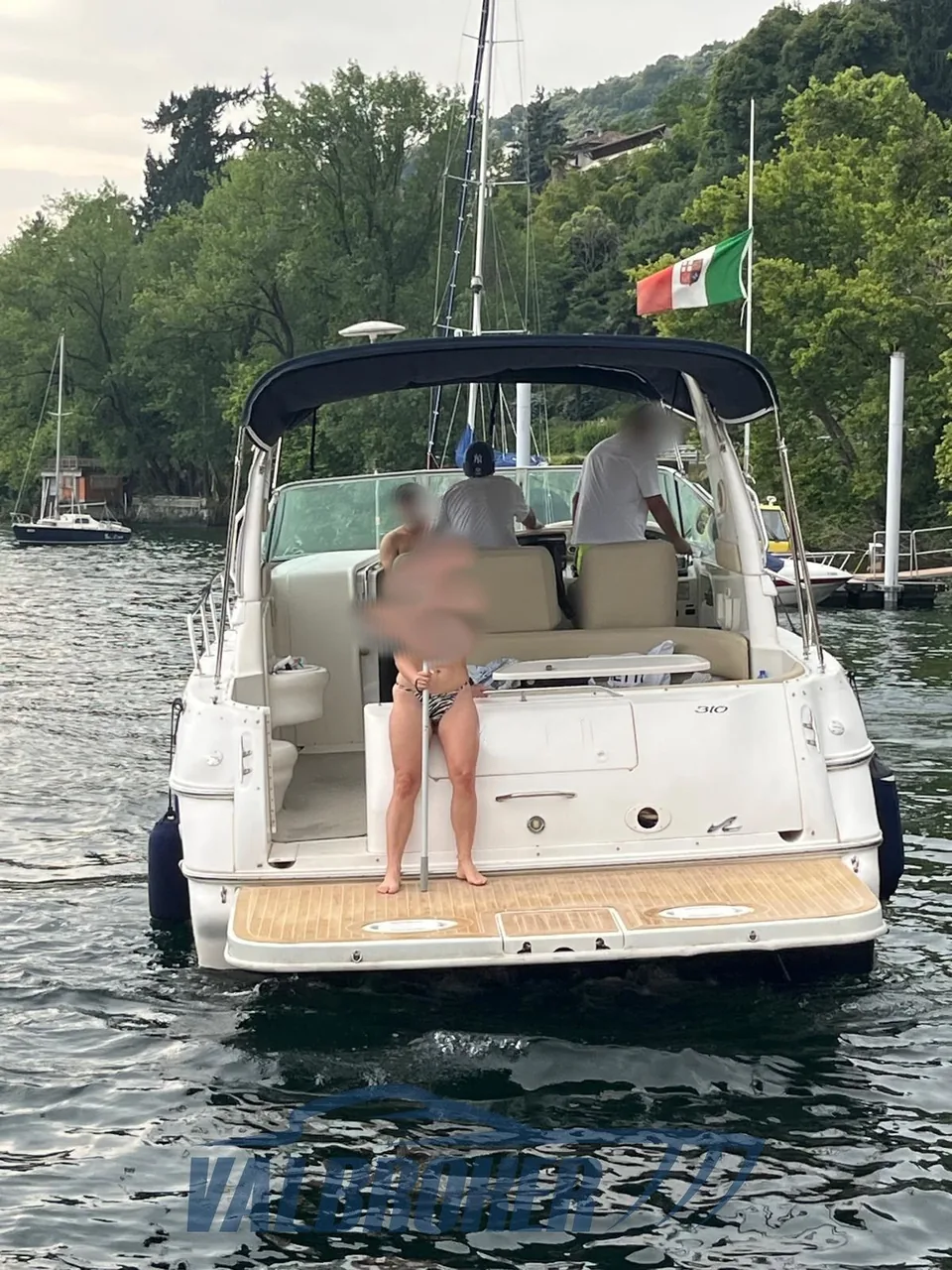
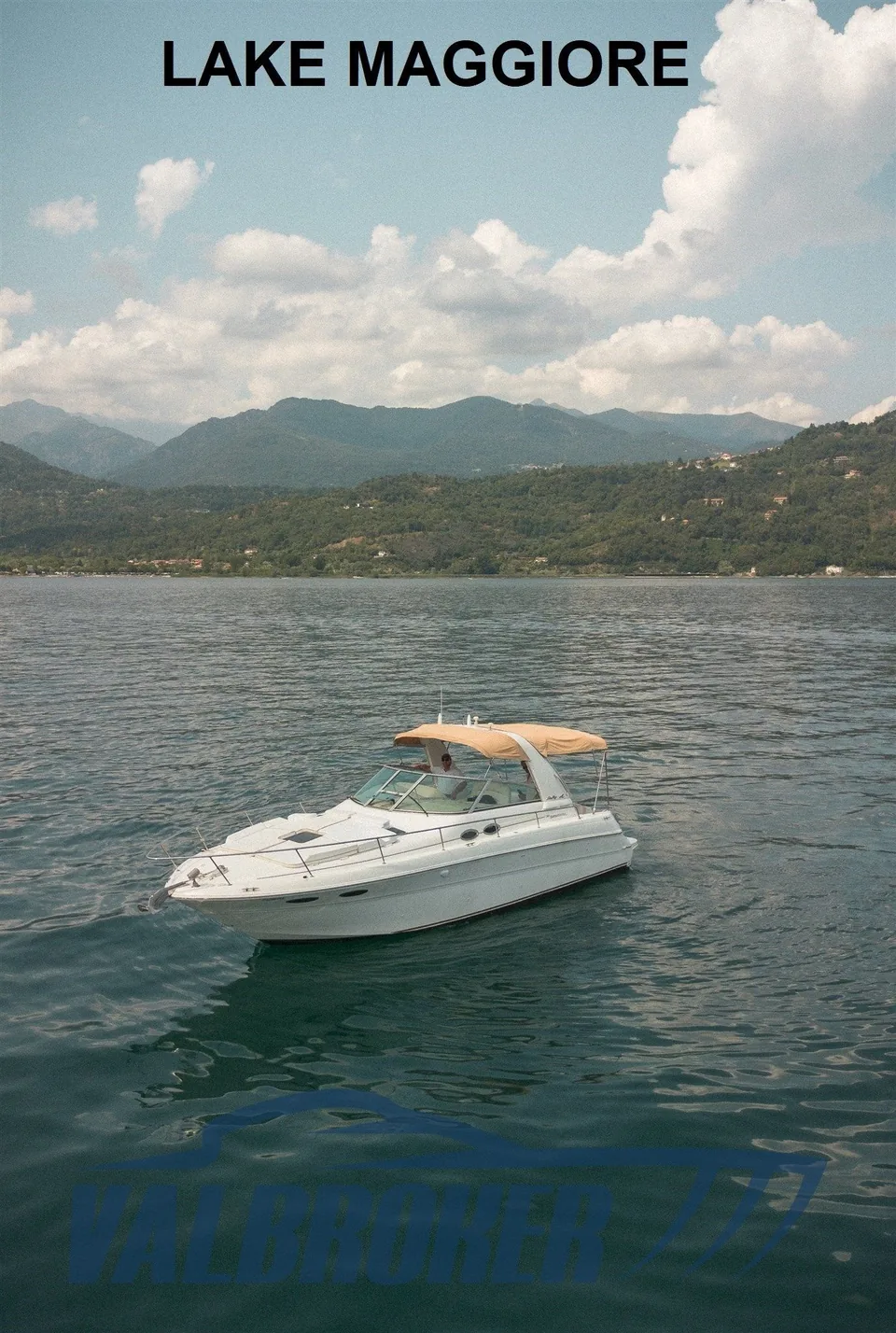
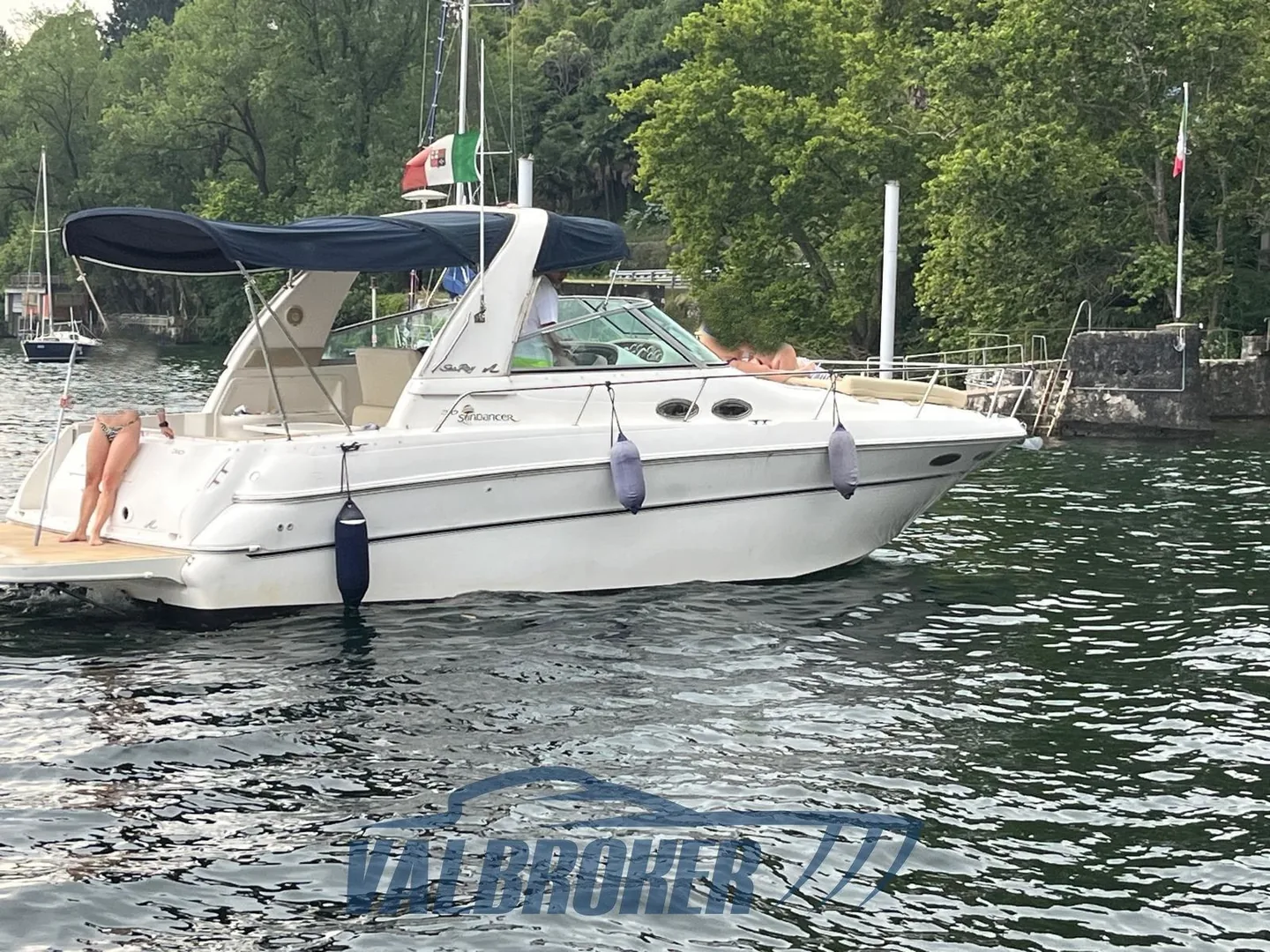
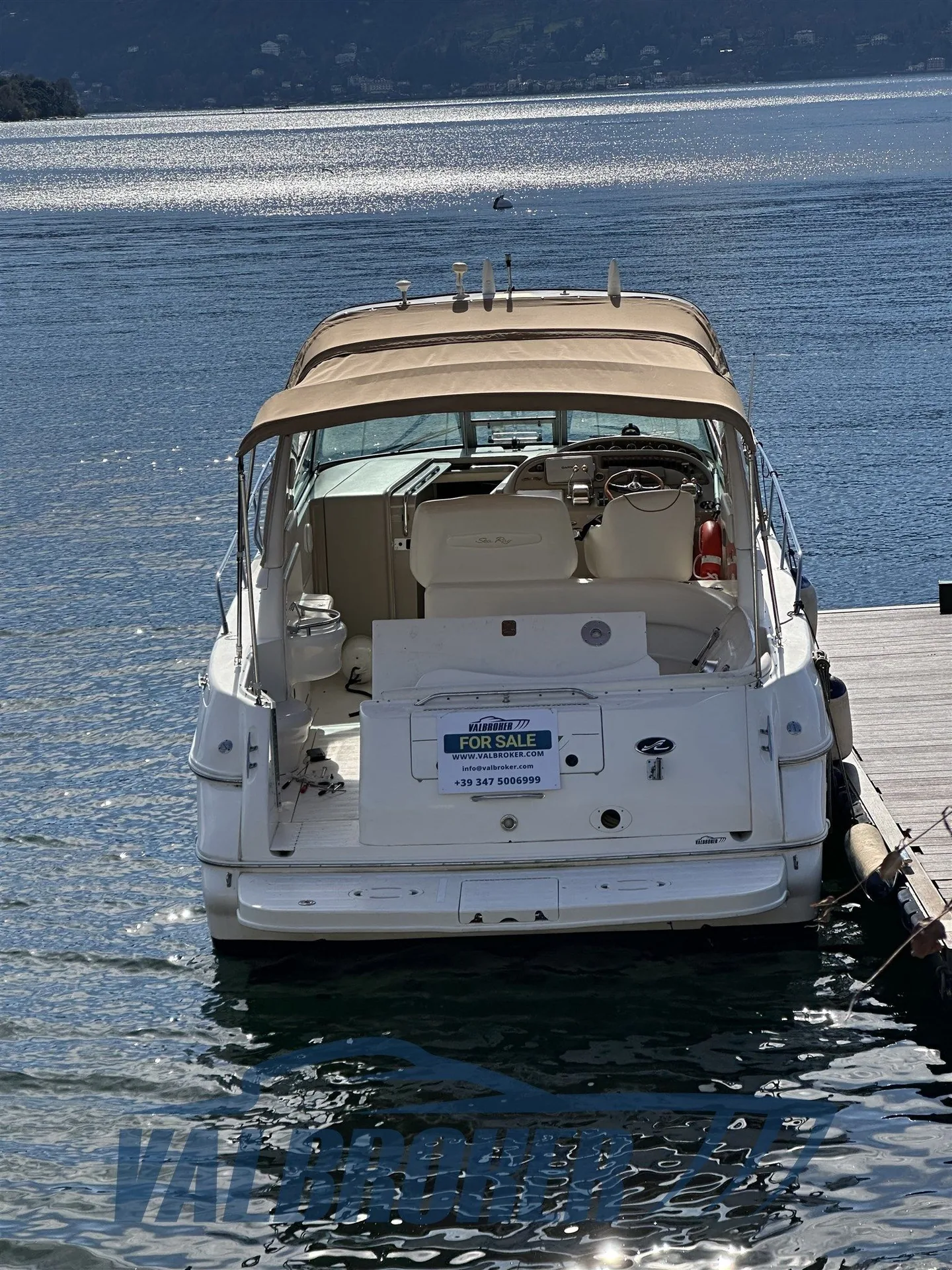
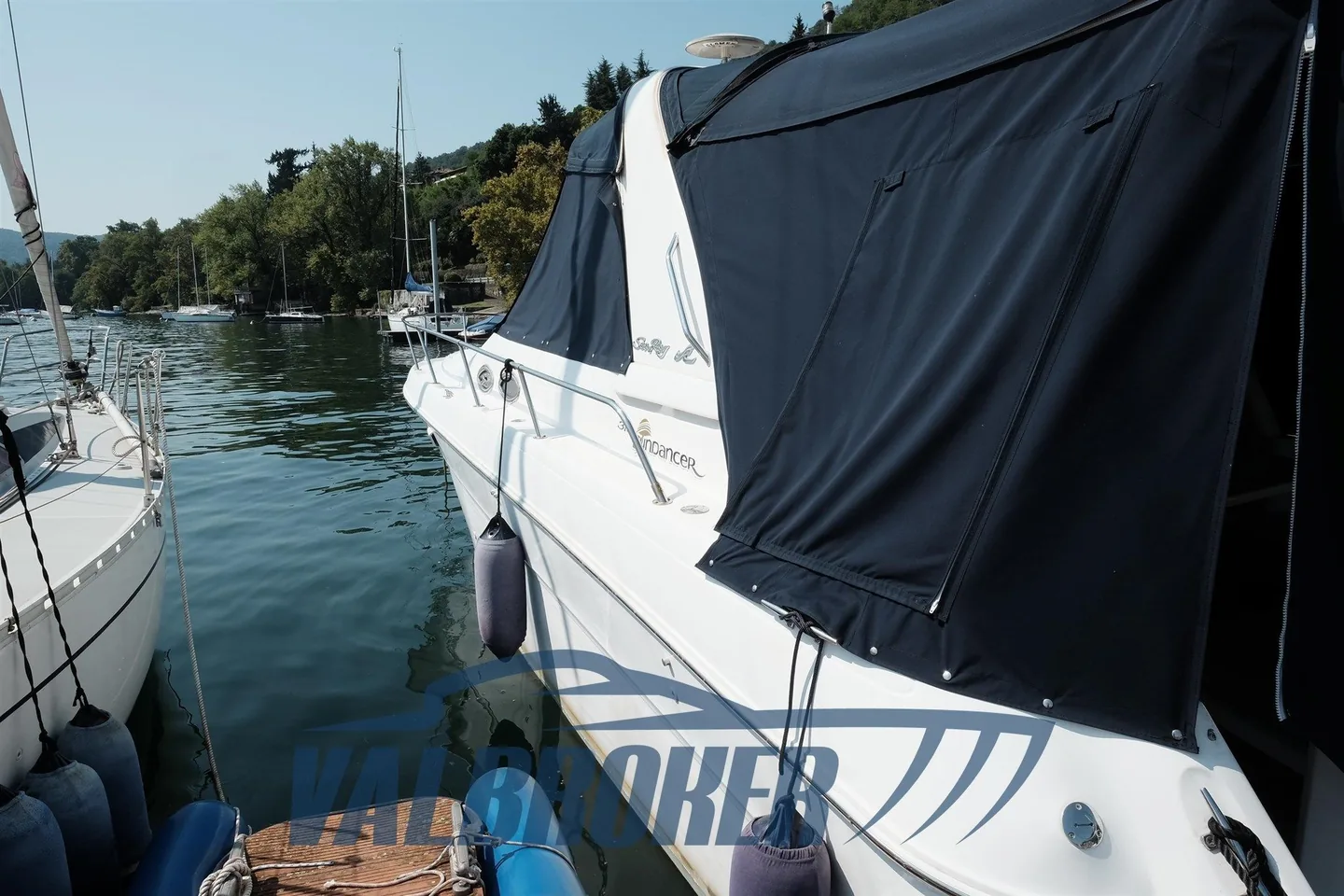
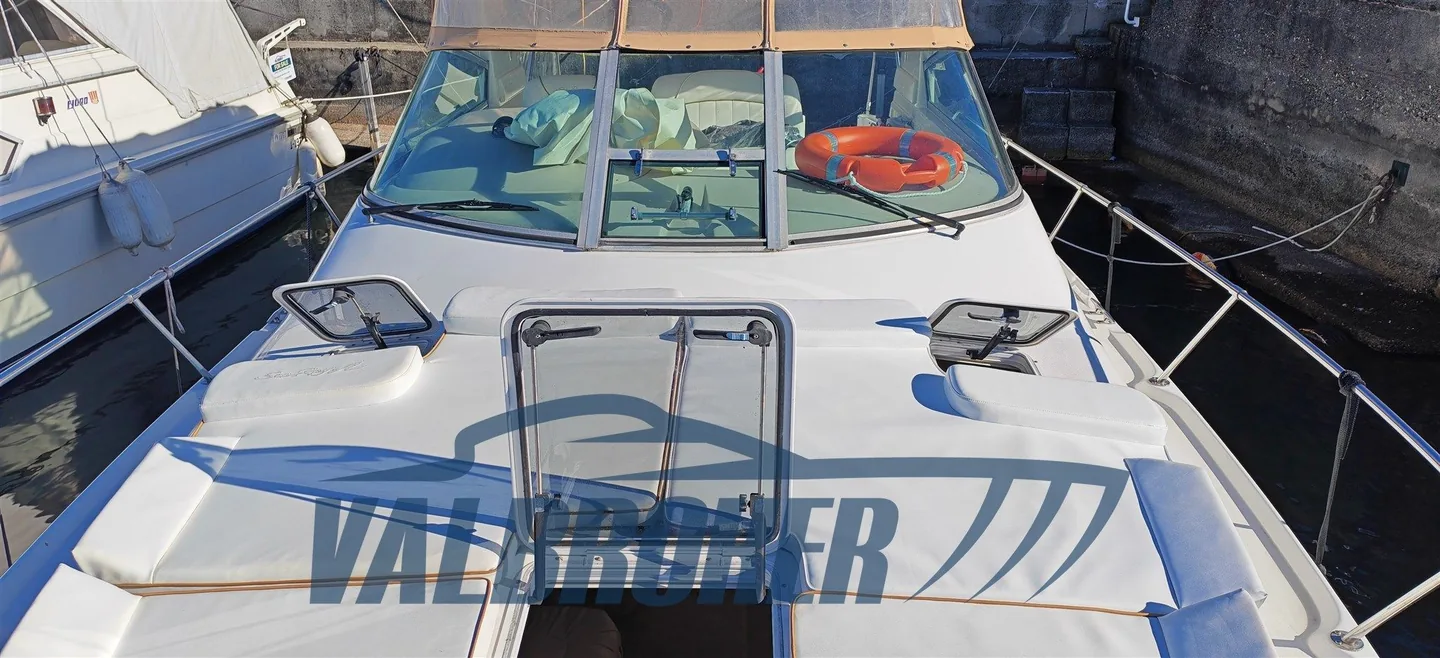
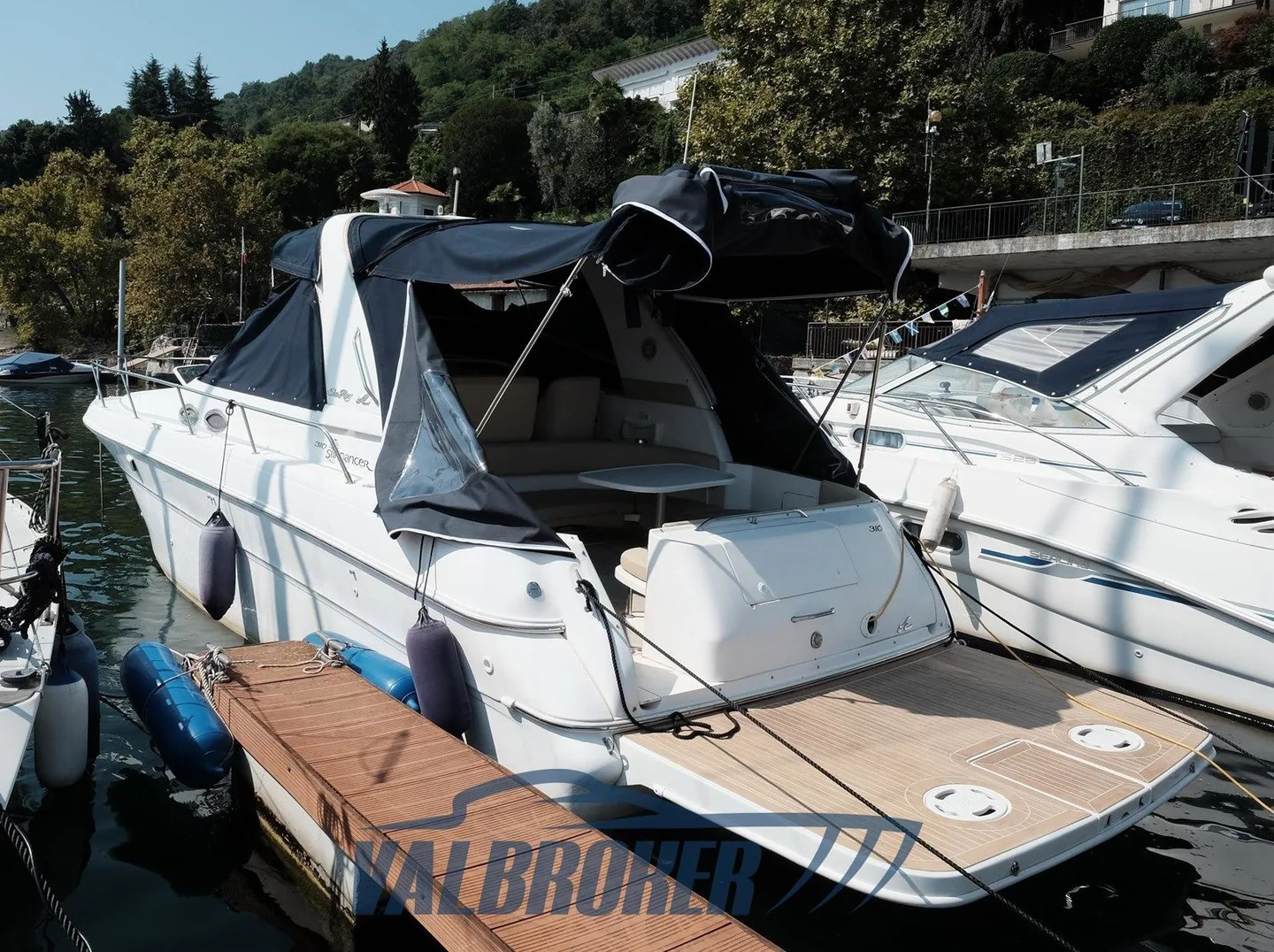
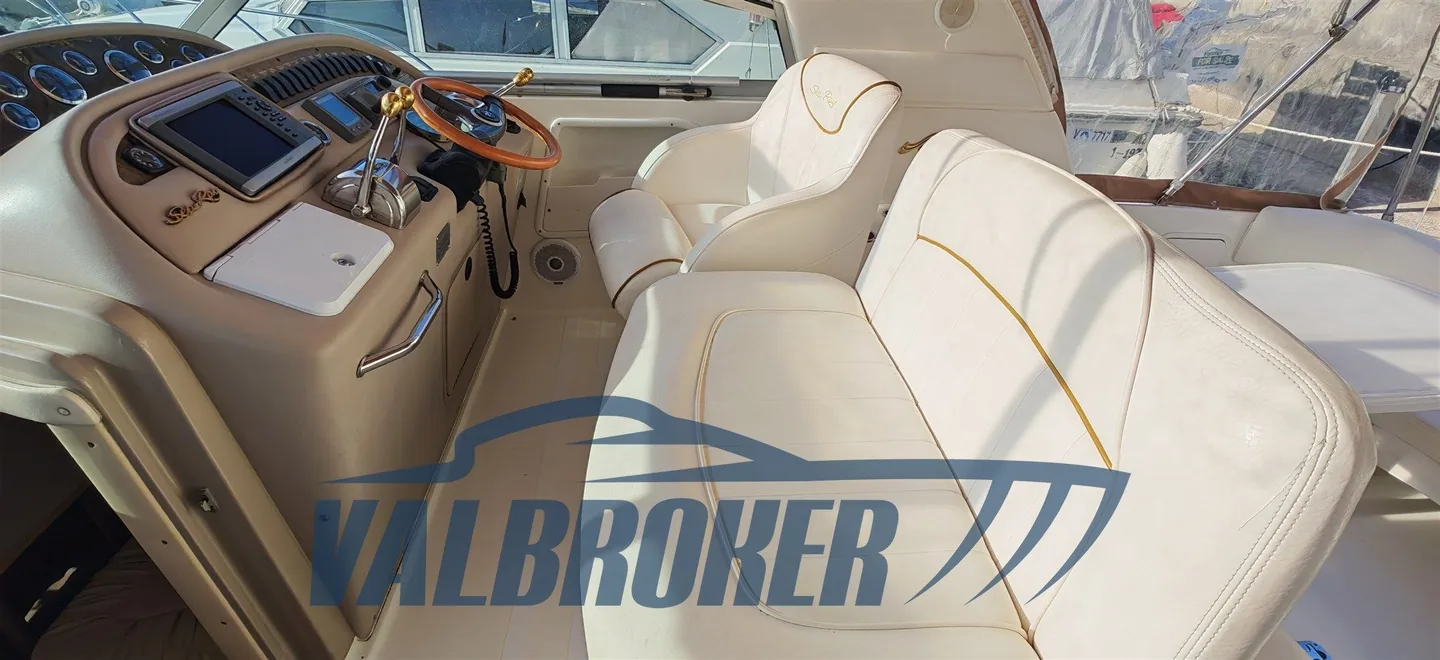
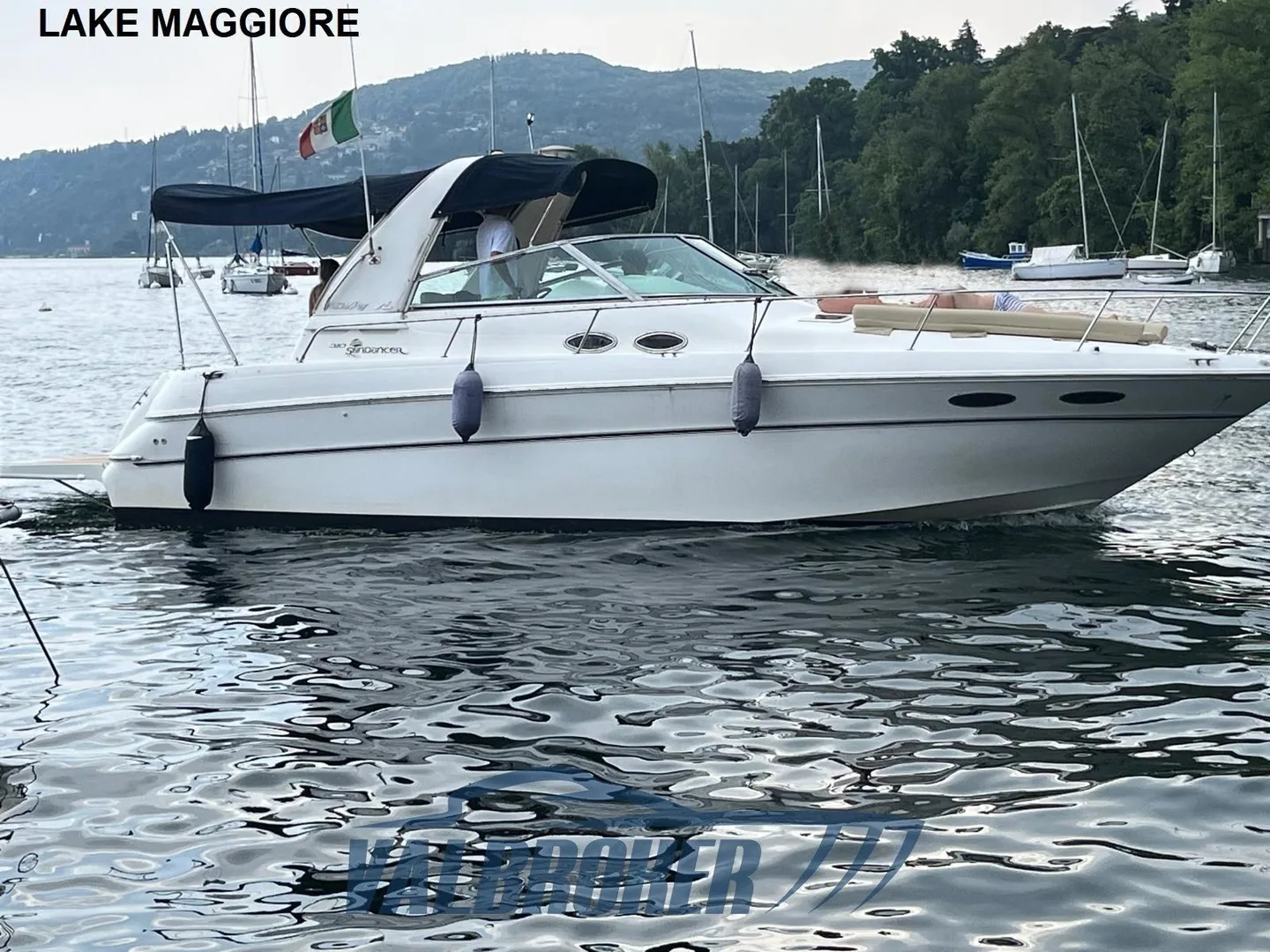
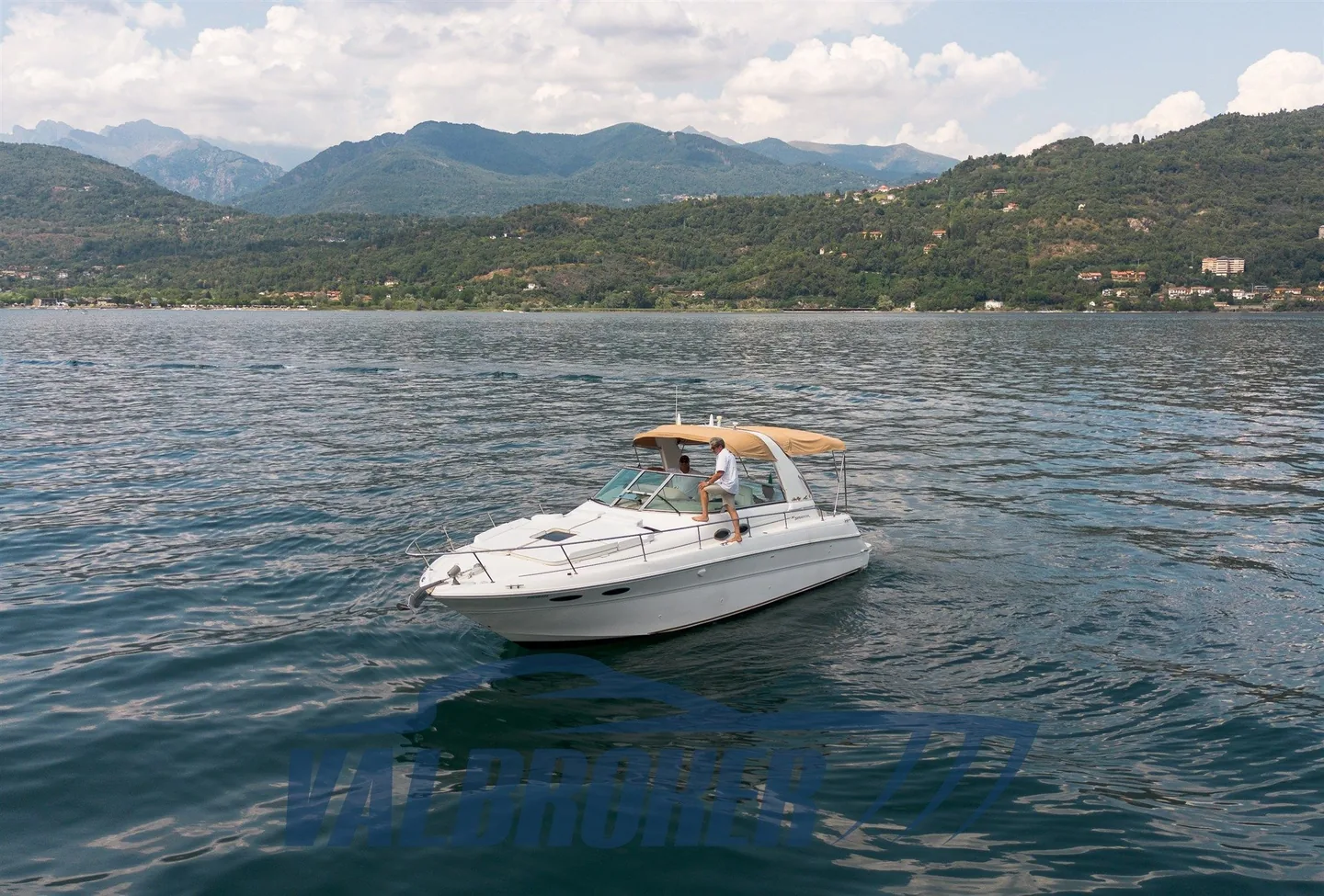
The late-1990s Sea Ray 310 Sundancer is a petrol-powered express cruiser built around a social cockpit, genuine overnight capability and dimensions that remain manageable in many marinas. This guide is specifically about the generation covered by Sea Ray’s 1998 and 2000 literature, not later boats that reused the Sundancer 310 name.
Design and model identity
The firmest baseline is the hull geometry. Sea Ray’s original 1998 and 2000 sheets give a hull length of 9.60 m, a length of 10.31 m with the standard swim platform and a beam of 3.40 m. They also quote a 5,443 kg dry weight and 23-degree transom deadrise; these are catalogue figures, not the loaded displacement of a particular used boat.
The layout follows the American express-cruiser formula: an open entertaining cockpit, a walk-through transom, wraparound windscreen and accommodation below. The 2000 sheet lists a convertible dinette, raised forward berth, convertible mid-cabin and a moulded enclosed head with shower. Those describe the catalogue configuration; refits and the equipment actually aboard require individual verification.
| Catalogue item | Sea Ray 1998/2000 | Used-boat meaning |
|---|---|---|
| Hull length | 9.60 m | Separate from 10.31 m with standard platform |
| Beam | 3.40 m | Relevant to berth and transport planning |
| Dry weight | 5,443 kg | Excludes operating loads and is not a weighbridge result |
| Fuel | 757 L | Nominal published capacity |
| Fresh water | 132.5 L | Nominal published capacity |
| Holding tank | 106 L | Plumbing and discharge arrangements still need checking |
| Deadrise | 23° | Published transom geometry |
Engines, sterndrives and V-drives
Propulsion changes the ownership proposition. For model year 2000, Sea Ray specified twin 5.7L Bravo III units at 250 hp each as standard. Factory options included petrol sterndrives up to 310 hp per engine, 350 Magnum MPI V-drives at 300 hp each, and D4.2L D-Tronic diesel sterndrives at 225 hp each. This establishes what the factory offered; it does not authenticate the machinery in any boat today.
The two Batoo observations should not be treated as equivalent. The 2000 listing reports twin Mercury MIE 350 MAG MPI engines, 300 hp each and 790 hours; the 1998 listing reports twin 5.0 MerCruisers, 225 hp each, sterndrives and 790 hours. These are listing-level observations. Serial numbers, manufacture dates, repower history, hour-meter continuity and drive type all require documentary and physical confirmation.
Draft is another reason not to merge specifications. The 2000 factory sheet states 1.092 m with sterndrives down, 0.584 m with them raised and 0.914 m for inboards. The dossier instead contains rounded values of 0.8 and 1.0 m without tying each number to a propulsion layout. That remains an unresolved conflict; berth, haul-out and shallow-water decisions need the documented measurement of the actual boat.
Strengths, compromises and ideal use
In Batoo’s analysis, the main advantage is the ratio of usable accommodation to footprint. A 3.40 m beam supports distinct sleeping and sitting areas below while allowing a cockpit suitable for a group. The swim platform improves water access and dockside circulation. For a couple mixing day trips with weekends aboard, the forward berth, dinette and mid-cabin are more adaptable than a basic cuddy layout.
Complexity is the corresponding drawback. Two petrol engines, two drives, a large fuel system, domestic services and components approaching three decades old create maintenance exposure. Dry weight already exceeds 5.4 tonnes before fuel, water, people and gear. Lifting and road transport must therefore be planned from an actual loaded condition, not from the brochure number alone.
The 310 Sundancer best suits buyers who value cockpit sociability and short-stay accommodation, accept twin-engine running costs and have a berth compatible with roughly 10.31 by 3.40 m. It is less compelling for economical long passages, extended liveaboard use or mechanical simplicity. No verified sea trial exists for the dossier boats, so this guide assigns no speed, fuel-burn or seakeeping claims to them.
Used-boat checks that matter
Begin with identity. Match the HIN, build year, model year and title or registration documents, because later Sea Ray models used similar naming. The purchase agreement should identify hull, engines, transmissions, generator and major equipment separately, using serial numbers where available. A claimed year for the boat does not automatically date its engines.
On a fibreglass cruiser of this age, an independent surveyor should inspect and, with a stated method, moisture-test the laminate, transom, stringers, bulkheads, rail bases, hatches and penetrations. Isolated meter readings are not a diagnosis: temperature, antifouling and previous repairs influence them. The useful output is a reasoned assessment with repair priorities.
For sterndrives, examine bellows, gimbal components, trim system, corrosion, play, lubricant and replacement records. For V-drives, focus on alignment, shafts, mounts, seals and steering gear. Either system needs a cold start, temperature and pressure checks, exhaust observation, fluid sampling when justified and a loaded run. The 790 hours shown in each listing neither proves good condition nor condemns an engine.
Test the support systems as a connected whole. Fuel tanks and lines, engine-room ventilation, bilge pumps, high-water alarm, shore power, charger, batteries, water heater, refrigerator, galley, toilet and holding system should operate without leaks or unexplained odours. Sea Ray listed a carbon-monoxide monitor for 2000; on a used boat, confirm its presence, date and function rather than trusting an original unit.
Canvas, glazing, deck hardware and cockpit upholstery can absorb a large refit budget even when the machinery passes. Operate every hatch, wiper, windlass, light and seacock, then price defects before agreeing terms. Service invoices are stronger evidence than a neat engine bay, while a survey remains distinct from a mechanical inspection.
Alternatives worth viewing
Contemporary alternatives sharpen the brief, provided each is compared by exact year and engine installation.
| Model to cross-shop | Question to ask | Why it might win |
|---|---|---|
| Sea Ray 290 Sundancer | Is less volume sufficient? | Potentially easier berthing and ownership |
| Regal Commodore 322 | Is a different interior arrangement preferable? | Direct comparison of ergonomics and service access |
| Chaparral Signature 300 | Does cockpit or cabin matter more? | Similar-period express-cruiser proposition |
| Maxum 3000 SCR | Is entry price the priority? | Condition and parts support may outweigh badge |
This is not a ranking. Local supply, refit quality, drive type, records and survey findings can dominate the decision. A less fashionable but well-documented alternative may be safer value than a 310 Sundancer with an opaque history.
Observed asking prices and method
On 4 September 2026, the dossier contained two active, editorially eligible Batoo offers denominated in euros: €52,000 for a boat listed as 1998 and €69,000 for one listed as 2000. The observed span is therefore €52,000–€69,000 from only two advertisements. It is neither a valuation nor an average, and it does not reveal achieved sale prices.
The €17,000 difference cannot be assigned to one variable. Year, engines, drive layout, refit work, equipment, tax status, commissions, location, survey findings and negotiation may all affect the outcome. Batoo’s method groups eligible active asking prices by currency without adjustment; with two observations, the endpoints describe only the dossier snapshot.
Images come from current Batoo listings and may show different individual boats, years and configurations. Brokers and sellers have not reviewed, validated or approved this dossier. Broker Pro means only an active Batoo subscription, not identity verification; it guarantees neither editorial coverage nor ranking, a positive assessment or inclusion in the stable article body.
Sources and references
Sources consulted and references retained to verify data and context.
- Sea Ray 310 Sundancer — 1998 Sport Cruisers specificationsSea Ray Boats, Inc.
- Sea Ray 310 Sundancer — 2000 Sport Cruiser specificationsSea Ray Boats, Inc. · 1999-06-01
- Batoo offer observation — Sea Ray 310 Sundancer, 2000Batoo
- Batoo offer observation — Sea Ray 310 Sundancer, 1998Batoo