Marine distress flares: choosing, storing and disposal
A practical guide to parachute rockets, hand flares and smoke signals, covering onboard checks, expiry management and responsible disposal.
In brief
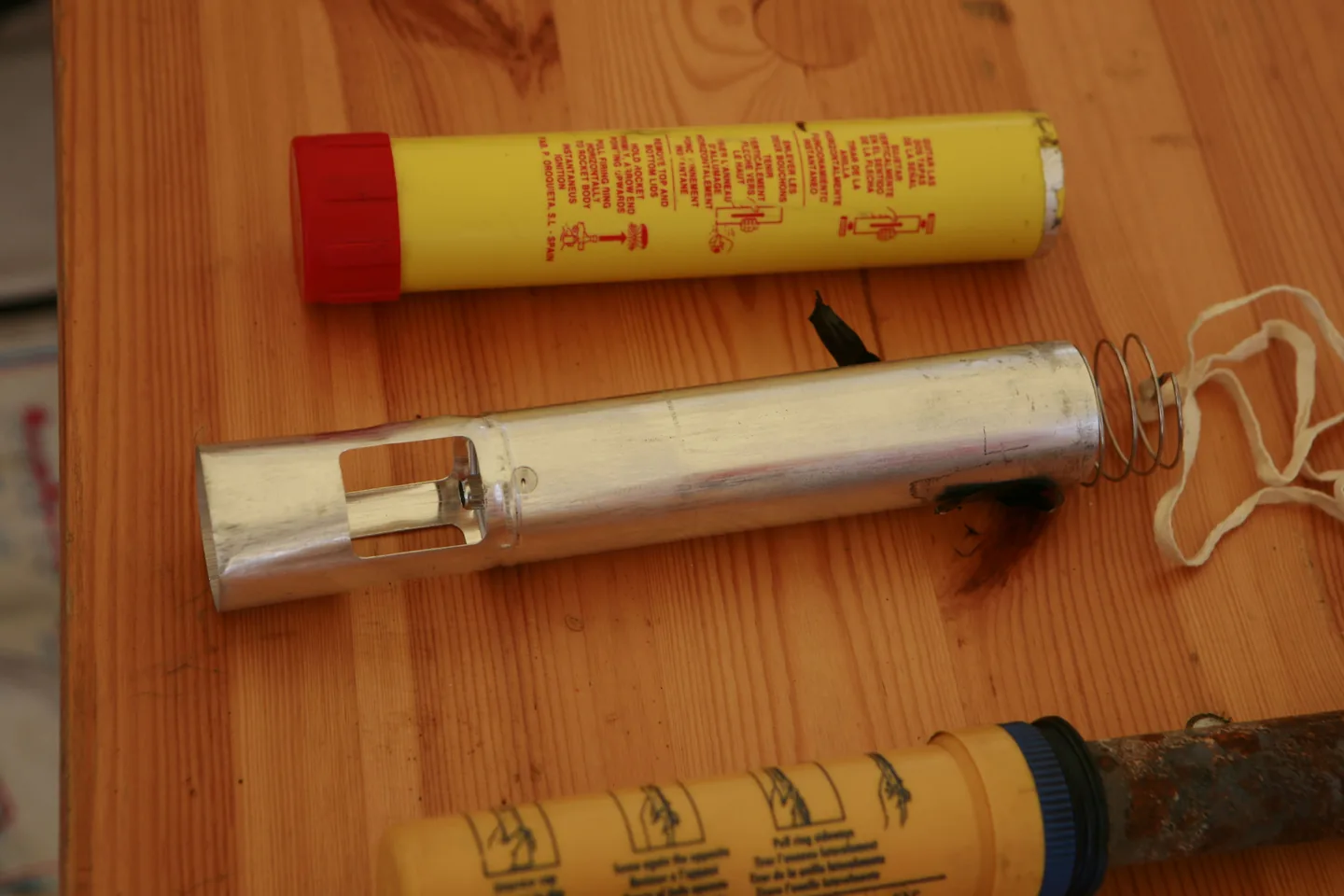
Marine flares perform different jobs: a parachute rocket attracts attention at range, a red hand flare helps close-range location, and orange smoke marks a position by day. Keep them dry, accessible and separate from expired stock. Use them only in distress and follow the label; arrange replacement, transport and disposal with an authorised local provider.
Article outline
Electronic alerting has transformed rescue, yet visual distress signals still solve a very physical problem: making a small craft conspicuous at the right moment. A marine flare is most useful when its job is understood in advance, its instructions remain readable and the crew can deploy it without turning one emergency into a fire.
This guide treats carriage rules as a separate question from seamanship. Flag state, vessel length, operating area and commercial status can all change what must be carried, so the competent authority and the product label must be checked for each voyage rather than replaced by a generic shopping list.
Match the signal to the rescue phase
COLREG Annex IV identifies a red rocket parachute flare, a red hand flare and orange smoke among internationally recognised indications of distress and need of assistance. Recognition gives these signals a shared meaning, not a shared range or purpose. Their practical value appears at different points between first alert and final recovery.
A parachute rocket is primarily a discovery signal. Its elevation can put a bright red light above the nearby horizon, making it relevant when a potential observer may be within sight but is not yet looking directly at the casualty. Exact height, duration and firing sequence depend on the device, so crew should learn the printed instructions for the model aboard rather than memorise unsupported universal figures.
A red hand flare is better understood as a close-range locating aid. Once a lifeboat, ship or aircraft is approaching, the flare can separate a low boat from shore lights, spray and surrounding traffic. It also creates intense heat and burning residue; the user must follow the maker's grip and posture directions and keep the burning end downwind of people, sails, fuel, tenders and survival craft.
Orange smoke gives a daylight reference. Wind both reveals and displaces its plume, allowing a nearby or airborne observer to see position and drift, but it is not automatically a night signal. The US Coast Guard guide makes the functional distinction explicit: approved orange smoke is for daytime use, while approved red pyrotechnic flares may serve by day and night.
Alert first, then help rescuers acquire the target
A flare cannot report coordinates, people aboard, injuries or the nature of the casualty. Where circumstances allow, a robust sequence begins with an appropriate DSC, voice MAYDAY or satellite alert, continues with listening for rescue instructions, and preserves visual signals for acquisition. That sequence is Batoo editorial analysis, not a promise of coverage or a substitute for the judgement required in an immediate threat.
Before activating any projectile, the operator should check overhead and downwind space, rigging, sails and people. This should not be the crew's first encounter with the equipment. A departure briefing can identify the container, allocate communication and signalling roles, and have the responsible adults read the actual wrappers without removing safety features.
There is no universal formula for firing the stock. One signal may attract attention, while another held until a rescuer is watching can confirm the position. Using every device without a plausible observer sacrifices later options; delaying despite a fleeting opportunity can be equally poor. Visibility, range, drift, nearby assets and rescue-centre instructions should drive the decision.
Recognised distress signals are not demonstration fireworks. COLREG Annex IV prohibits their use or display except to indicate distress and need for assistance, and a false signal can divert real rescue capacity. Hands-on practice belongs in an authorised training event using the devices and controls selected by its organiser.
Build a dry, reachable and legible kit
Serviceability begins with storage. The US Coast Guard recommends keeping pyrotechnic devices cool and dry where possible and suggests a watertight red or orange container prominently marked “DISTRESS SIGNALS” or “FLARES.” A waterproof box still fails operationally if it sits beneath luggage or behind a berth that cannot be reached from the working deck.
A pre-departure inspection should read the expiry and approval marks on every item. It should also look for moisture, corrosion, swelling, cracks, loose closures or illegible directions, then compare the usable stock with the route and applicable rules. A suspect device should not be dismantled or test-fired.
Batoo recommends a small inventory recording type, count, expiry date, location and intended disposal route. Label photographs can support planning ashore, although they do not replace touching and viewing each device. A calendar reminder several months before the earliest expiry creates time to find a disposal provider and replacement stock without a last-minute gap.
Reachable does not mean unprotected. Secure the container against impact and vessel motion, keep it away from heat and ignition, and place it where an informed adult can retrieve it quickly. Manufacturer directions take priority over generic layout advice because packaging, permitted orientation and precautions can vary.
Treat expiry and physical damage differently
An expiry date closes the declared service life; it does not create an invitation to conduct a trial. The UK Maritime and Coastguard Agency says expired flares do not necessarily become immediately more dangerous or unstable, but the light- and smoke-producing components start to degrade and may become less effective. For emergency equipment, uncertain performance is sufficient reason to replace it.
Physical damage deserves more caution than an elapsed date on an otherwise intact unit. MCA guidance says not to use a damaged flare, to seek professional advice and to arrange disposal promptly; it also gives packaging steps for its British legal context. Boaters elsewhere should not transplant that method automatically. They should ask their authorised local receiver exactly how the item may be packaged and transported.
Mixing retired units with the live kit creates an avoidable selection error. If local rules allow temporary retention while disposal is arranged, keep the old material unmistakably separated and marked, and never count it as serviceable equipment. The aim is to prevent an unserviceable object from presenting itself as ready during a stressful search in poor light.
Plan disposal as part of purchasing
Pyrotechnic flares are not ordinary household waste. In the United Kingdom, the person holding them remains responsible until proper disposal; firing outside an emergency, abandonment and disposal with household or recycling waste are prohibited, while third-party services and certain retailers, marinas or specialist businesses may provide routes. That is a useful lifecycle model, not a statement of the law in every country.
For a cruising boat, the appropriate contact is the maritime authority or an authorised seller or disposal operator where the material is physically located. Give the provider the type, quantity, age and condition before travel, and obtain instructions on appointments, packaging and carriage. Do not hand devices to a club, neighbour or crew member merely because they volunteer to take them.
Replacement works best as one coordinated operation. Identify a lawful recipient for the old stock first, then obtain the signal mix required for the intended operating area so the boat is not left without usable equipment. Prices and live availability are deliberately outside this stable guide: neither proves compliance, condition or suitability.
Let electronics complement, not blur, the plan
An electronic visual signal can be testable, reusable and free of pyrotechnic disposal, but regulatory acceptance is jurisdiction-specific. The current MCA notice, which expires on 1 March 2027, says the EVDS products it considers are not accepted as substitutes under the relevant international and UK carriage framework. It allows them as additional aids on pleasure craft for locating or transmitting SOS, provided their signal quality and recognition limits are understood.
The useful conclusion is not that one technology wins. Radio carries information, a beacon can supply position, a rocket seeks distant eyes, and hand flare or smoke helps with final acquisition. A sound plan therefore asks three separate questions: how will the crew raise the alert, how will rescuers obtain a position, and what independent option remains if one link fails?
Sources and references
Sources consulted and references retained to verify data and context.
- COLREG — Preventing collisions at sea, Annex IV distress signalsInternational Maritime Organization
- MIN 542 Amendment 3: recognised distress signals and advertised alternativesUK Maritime and Coastguard Agency
- MIN 687: changes to how individuals can dispose of redundant flaresUK Maritime and Coastguard Agency
- A Boater's Guide to the Federal Requirements for Recreational BoatsUnited States Coast Guard
Continue reading
406 MHz EPIRB and PLB: choosing, registering and testing
September 27, 2026 · 7 min read
Navigation lights: inspect and test them aboard
September 26, 2026 · 7 min read
Boat reboarding ladders: test them from the water
September 25, 2026 · 7 min read