Capo Ferro shows why a contained fire is only half the emergency
After 14 people were rescued and a roughly 30-metre yacht sank, the Capo Ferro casualty separates two emergencies often confused: suppression and buoyancy.
Article outline
The sinking of a roughly 30-metre yacht off Capo Ferro on the evening of 11 August leaves one reassuring fact and one uncomfortable question. All 14 people reported aboard were rescued, yet a fire described in early accounts as contained was followed by the loss of the vessel. Until investigators establish the sequence, assigning a cause would be reckless. The operational lesson is already clear: extinguishing flames and keeping a yacht afloat are connected tasks, not the same task.
That distinction sits at the heart of yacht engine-room fire safety. On a complex motor yacht, ventilation, fuel shut-offs, sea inlets, exhausts, seals, alarms and bilge pumps form one system. Capo Ferro should not become an invitation to diagnose machinery from shore. It should prompt owners and crews to consider how fire, smoke, flooding and evacuation must be managed at the same time.
What is confirmed — and where the record stops
Initial reports place the sinking between Poltu Quatu and Porto Cervo. They say guests and crew were recovered without reported injuries, and describe a small fire in the machinery-space area followed by water ingress. No public technical finding has yet identified the ignition source, the equipment damaged or the route by which water entered.
That boundary matters. Heat can damage hoses, wiring, seals and controls; fire suppression can require ventilation shutdown; flooding can exceed pumping capacity. All are credible emergency-planning scenarios. None can responsibly be presented as the cause of this casualty without evidence.
Italy’s interim investigation into the 2024 fire aboard the motor yacht Atina, in the same broad Sardinian area, illustrates why casualty analysis is painstaking. The report reconstructs alarms, firefighting actions, closures, abandonment and rescue response as a timed sequence. That is the appropriate standard here too: evidence first, conclusions later.
Starve the compartment before attacking the fire
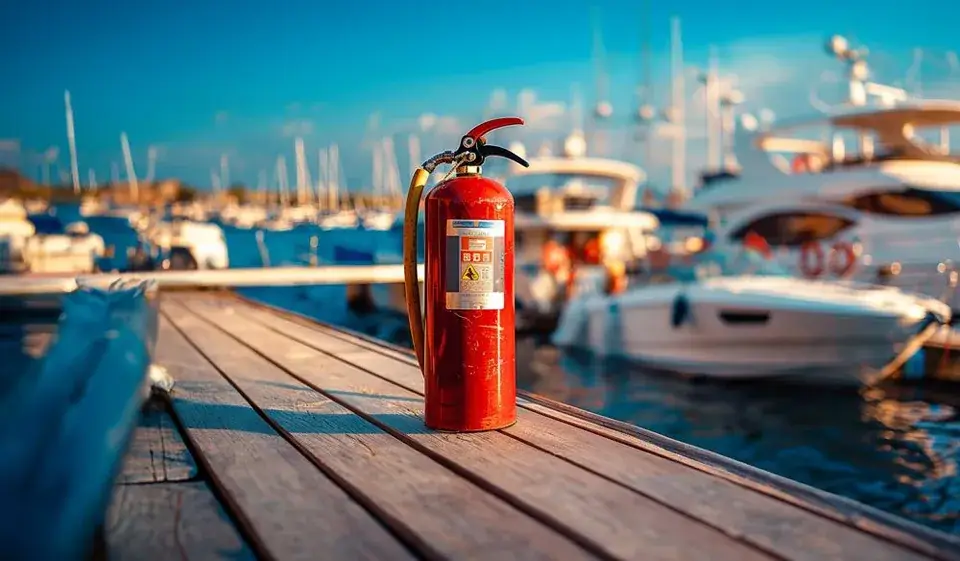
Royal Yachting Association guidance says an engine-space fire should be tackled without admitting more air, because opening the compartment can intensify combustion. A small craft may have a dedicated extinguisher port; a larger yacht will commonly rely on a fixed system, often using a gaseous agent. The hardware works only as part of a sequence: detection, appropriate machinery shutdown, fuel and ventilation isolation, enclosure closure, agent release and the specified hold time.
Opening a hatch early to “take a look” can defeat the suppression effort and expose the person opening it to heat and smoke. A crew therefore needs more than the location of a release button. It needs to know which dampers close, which machinery stops automatically, what must be stopped manually and which essential services remain available afterwards.
For buyers comparing contemporary motor yachts, Batoo’s profiles ofAbsoluteandPrincess Yachtsprovide useful range context, without suggesting either builder has any connection to this event. During a survey or handover, the sharper question is not merely whether a fixed system exists. It is how the space is sealed and how successful isolation is confirmed at the helm.
Fire out does not mean flooding stopped
Fire naturally commands attention. Meanwhile, somebody must continue to read the boat’s water balance. Separate high-bilge alarms, tank and bilge levels, pump current, trim and changing draught are meaningful indicators. The decisive question is not whether a pump can be heard running, but whether the level is falling, stable or rising.
Redundancy has to survive the same failure. Two pumps fed from one switchboard, two sensors installed at the same height, or shut-off valves accessible only through the affected space can share a single vulnerability. Following refit work in or near a machinery space, a dockside test should cover high-level alarms, manual control, alternative power and access to seacocks. The RYA also advises owners preparing for the season to work seacocks and confirm hoses and bilge pumps are serviceable.
Complexity rises with size. Batoo’s pages forFerretti YachtsandBenettihelp illustrate the breadth of modern motor-yacht programmes; they do not imply involvement in the casualty. More equipment brings capability, but also more interfaces the crew must understand under pressure.
A useful drill forces competing decisions
A credible drill is not a walk-through with a laminated card. It should introduce incomplete information and conflicting demands: smoke detected, camera obscured, a high-bilge alarm several minutes later, then loss of one electrical source. The crew must allocate roles and decide when the mission changes from firefighting to abandonment.
A robust exercise checks at least five functions:
- who raises the general alarm and transmits position, persons aboard and the nature of distress;
- who stops ventilation and fuel remotely without entering the space;
- who monitors bilge levels, pumps and trim from a protected location;
- who prepares lifejackets, rafts, grab bags and tender without obstructing escape routes;
- which pre-agreed threshold makes abandonment non-negotiable.
Success is not measured by heroics. It is measured by how quickly everyone is accounted for, an accurate position is transmitted and usable lifesaving equipment is prepared. At Capo Ferro, the most important human outcome is that everyone reported aboard survived.
Handover after refit must demonstrate the system
Significant work can alter cable runs, insulation, valves, penetrations or alarm logic. That does not make a refit inherently hazardous; it makes commissioning and crew familiarisation essential. Updated drawings and certificates are necessary, but they do not prove that a skipper can identify an alarm, isolate a line or find a remote control in smoke and darkness.
Before departure, an owner should request a documented demonstration of firefighting and bilge systems attended by the captain and responsible technician. Results, defects and corrective actions should be recorded. Where simulation replaces a live discharge, it should still confirm sensors, interlocks, dampers, remote stops and indications.
The Capo Ferro casualty supports no verdict about the lost yacht’s design or maintenance. It does support a restrained editorial conclusion: the moment a fire appears contained may be the moment the yacht enters its most critical phase. Good preparation treats compartment integrity, buoyancy and evacuation as one continuous problem, because the sea does not wait for one emergency to finish before starting another.
Sources and references
Sources consulted and references retained to verify data and context.
- Initial report: 30m yacht sinks off Capo FerroSeaEmploy · 2026-08-13T00:00:00Z
- ATINA interim reportDirezione Generale per le Investigazioni Ferroviarie e Marittime
- Fire Safety On BoatsRoyal Yachting Association
Continue reading
406 MHz EPIRB and PLB: choosing, registering and testing
September 27, 2026 · 7 min read
Navigation lights: inspect and test them aboard
September 26, 2026 · 7 min read
Boat reboarding ladders: test them from the water
September 25, 2026 · 7 min read