Lightning aboard: avoidance, response and checks
An operational guide to avoiding thunderstorms, protecting the crew when reaching shelter is no longer possible, and checking a boat after a suspected strike.
In brief
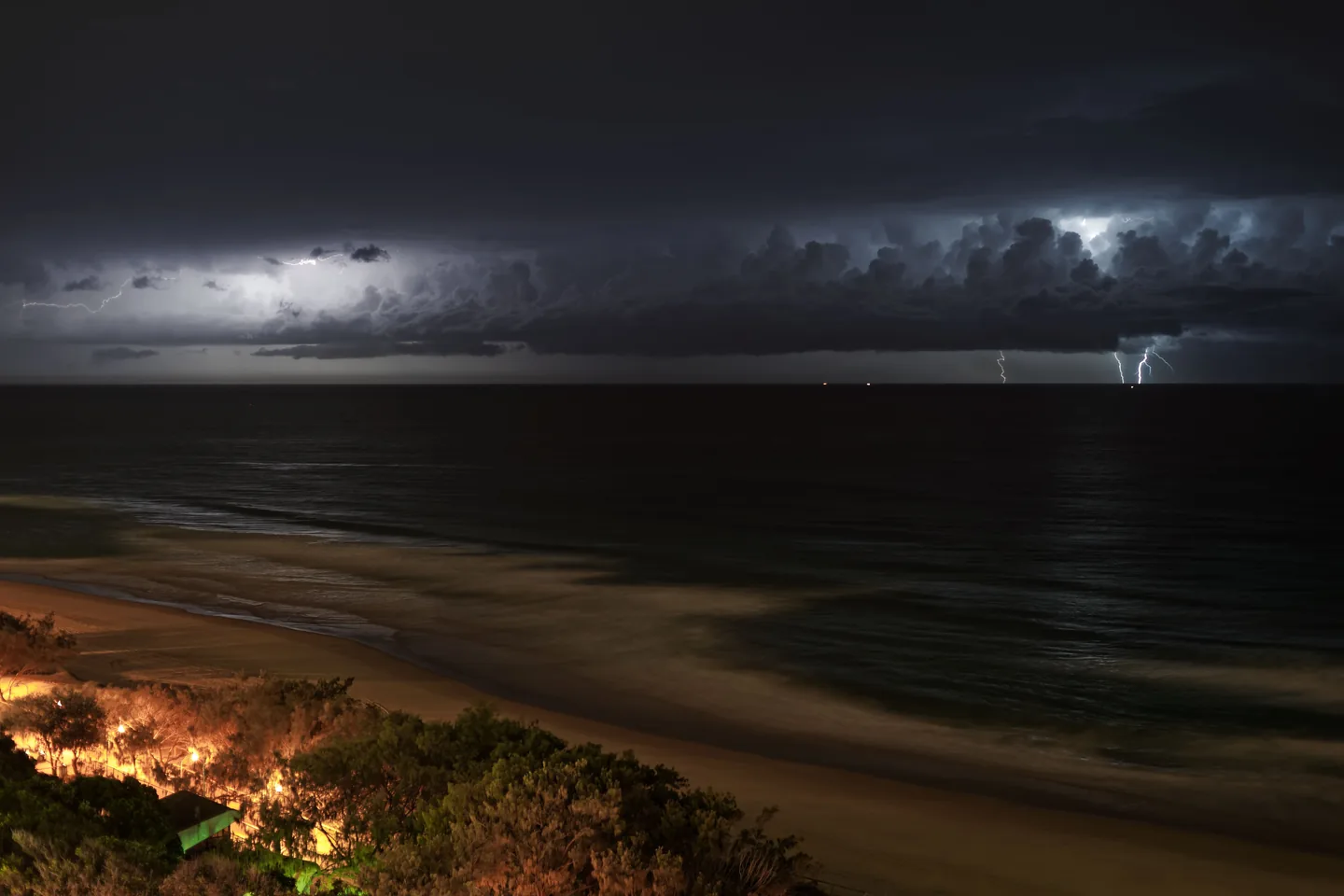
The most effective lightning defence afloat is avoiding exposure: check the forecast, decide an escape route before departure, and seek safe shelter as soon as the sky threatens or thunder is heard. If escape is impossible, wear lifejackets, stay low or in the cabin’s centre, and avoid water, metal and electronics. After a possible strike, treat electrical systems and the compass as unreliable until checked.
Article outline
A thunderstorm at sea is a compound hazard, not merely an electrical event. Lightning may arrive with abrupt wind shifts, steep waves, heavy rain and poor visibility, so the safest decision is often the one made alongside the dock, while changing or cancelling the plan is still easy.
Build the escape route before departure
Start with a current forecast and convert it into a time question: how long would the boat need to reach genuinely safe shelter from the route’s most exposed point? The National Weather Service advises boaters not to venture out when thunderstorms are possible and to maintain an escape plan because a mariner may be unable to make port quickly. Distance alone is insufficient; harbour access, shoals, traffic, boat speed and the likelihood of the storm cutting off the return all affect the margin.
Do not make one phone application or the blue sky above the marina your entire warning system. Marine forecasts, weather radar and lightning information can show a changing picture, and assigning one crewmember to monitor it prevents the task disappearing during normal boat work. Batoo analysis: a pre-agreed turn-back point based on the actual time to shelter is more defensible than a universal range, because boats, coastlines and harbour approaches differ.
Hearing thunder is already an action trigger. NOAA says lightning can strike more than 10 miles from rainfall and directs people toward a substantial building or a fully enclosed metal vehicle. A boat cabin can reduce exposure compared with an open deck, but it should not be described as the same shelter; the operational aim is to be ashore before the storm removes that option.
Give every crewmember a limited job
A short briefing should identify who watches the weather, who gets lifejackets on people and who retains control of the vessel. Everyone needs to know the least-exposed location aboard before the first close flash, rather than searching lockers or handling an antenna while the storm is overhead. This preparation matters most on an open boat with no completely enclosed cabin.
Lifejackets belong on bodies before gusts and motion make movement difficult. NWS thunderstorm guidance identifies shifting and gusty winds, dangerous sea conditions, waterspouts and torrential rain alongside lightning, so a lightning plan must also secure loose gear, reduce deck work and preserve steerage. There is no responsible single speed or heading for every hull; the skipper must account for sea room, visibility, traffic and the boat’s handling.
Treat antennas and projections according to their designed function. NWS guidance says an antenna may be lowered, removed or secured when it is not part of a lightning-protection system; that qualification matters. Permanent changes to air terminals, conductors, bonding or underwater dissipation arrangements require a competent marine technician familiar with the particular installation, and no such system should be sold to the crew as a guarantee against injury or damage.
Reduce exposure when escape is no longer possible
If the storm overtakes the boat, protect people without causing a collision, grounding or capsize. On a cabin boat, the NWS recommends staying inside and near the centre, away from metal and electrical devices. With no fully enclosed cabin, occupants should remain as low and central as possible, keeping arms and legs inside and out of the water.
Avoid bridging separate metal objects with the body and avoid wiring, radios, switch panels and conductive plumbing. Electronics should be disconnected only when the arrangement was prepared in advance, the action can be completed without exposure, and nobody must handle bare conductors or go onto the deck during the dangerous period. Otherwise, step away: saving a chartplotter is not worth moving a person into a more exposed position.
The vessel still needs a lookout and control. Rain or an electrical failure can remove instruments while rocks, shallow water and other traffic remain, so the operator must reconcile the advice to avoid conductive paths with the immediate duty to navigate. No crouching position makes an open deck safe, and rubber footwear is not a dependable lightning shield.
First aid starts without fear of residual charge
A lightning casualty does not retain an electrical charge that can injure a rescuer. NWS boating guidance calls for CPR immediately when required, so the crew should alert rescue services using whatever communication remains, follow professional instructions and provide aid within its training. Continuing lightning is a real environmental risk, but it is not a reason to treat the casualty as electrically untouchable.
Visible burns are not the only concern. Loss of consciousness, breathing difficulty, a fall or injury caused by the boat’s motion warrants professional medical assessment, and a responsive person should not be declared unharmed by an unqualified crew. This guide does not replace first-aid training; competence in CPR and a backup way to call for help are preparations made before casting off.
Normal activity should not resume at the instant rain eases. NOAA recommends remaining in safe shelter for at least 30 minutes after the last thunder because strikes may occur outside the most obvious phase of the storm. Afloat, that is a minimum margin for keeping the protected arrangement; fire, flooding, traffic or loss of control may force action, but the end of rainfall alone does not end the lightning threat.
Treat a suspected strike as a systems event
A nearby flash, sharp report, burning smell or sudden electronics failure cannot reveal the current’s complete path. After a certain or suspected strike, first check for injured people, smoke, fire, flooding and loss of steering; then communicate the situation and decide whether the boat can proceed to harbour or needs assistance. Do not repeatedly reset a tripping circuit, and do not infer that a clean-looking deck means the boat is undamaged.
NWS guidance specifically calls for checks of the electrical system and compasses after a suspected lightning strike. A careful assessment can include DC and AC supplies, protective devices, chargers, antennas, radios, navigation equipment, sensors and compass behaviour against independent references. This is a diagnostic scope, not a prediction that all those items have failed; safety-critical equipment should nevertheless be considered unverified until competent testing confirms it.
The hull, appendages, mast, rigging, through-hulls and areas beside substantial metal fittings also deserve examination because the current path cannot be reconstructed from one visible mark. This is a conservative Batoo recommendation rather than proof of a particular defect. Heat, odour, holes, delamination, leaks or abnormal steering justify treating the vessel as potentially compromised and arranging professional inspection.
Record the time, position, observed effects and equipment that stopped working, taking photographs only when conditions are safe. That evidence gives a technician a useful starting point without encouraging the crew to act as surveyors. The durable method is layered: avoid the storm early, monitor it continuously, assign simple roles, minimise human exposure, then inspect methodically rather than assuming a successful return proves the boat is sound.
Sources and references
Sources consulted and references retained to verify data and context.
- Safe Boating and ThunderstormsNational Weather Service
- Inland Boating TipsNational Weather Service
- Lightning SafetyNational Oceanic and Atmospheric Administration
- Lightning storm over ocean.jpgWikimedia Commons
Continue reading
Boating in fog: sound signals, radar and Rule 19
October 20, 2026 · 7 min read
Radar reflectors for small craft: choice, mounting and limits
October 18, 2026 · 7 min read
Compass deviation: checking and correction cards
October 15, 2026 · 6 min read