Anchor rode inspection: chain, rope and connections
A systematic way to lay out an anchor rode, identify wear and corrosion, check every connection and the windlass, and decide when the equipment needs expert assessment rather than another season.
In brief
Inspect the entire anchor rode clean and laid out: chain, rope, splice, shackles or swivel, anchor attachment, strong point and windlass. Look for distortion, corrosion, sharp contact points, cut or glazed fibres and inconsistent diameter. There is no universal replacement date; extensive damage, deformed hardware or uncertain remaining strength calls for withdrawal and competent assessment.
Article outline
An anchor rode is best understood as a load path, not as a length of chain with an anchor at one end. The anchor attachment, connectors, chain, rope splice, strong point and deck structure all participate, while the windlass handles deployment and recovery. Inspection should therefore follow the force from seabed to boat and should never assume that one shiny component proves the system is sound.
The useful outcome is not a guessed percentage of remaining strength. It is a defensible choice to keep the rode in service, arrange an approved repair, or withdraw a component until its maker or a competent marine professional has assessed it.
Lay out the complete rode before judging it
Empty the locker in a clean, well-lit area and extend the rode so that no section is hidden beneath a coil. Remove mud and salt with the cleaning method specified for the installed materials, then isolate the windlass circuit before placing hands near its moving parts. A series of dated photographs gives the next inspection a reliable comparison.
Work from the anchor towards the boat: anchor eye, shackle or swivel, every chain link, chain-to-rope splice, rope, bitter-end termination and the structural point that carries the load. Look and feel slowly, recording the distance of each concern from the anchor. The UK Maritime and Coastguard Agency’s MGN 592 treats anchoring equipment as a system because anchoring operations impose substantial loads on ropes, gear, windlasses, fairleads and their foundations.
Add the service story where it is known. Groundings, fouled recoveries, shock events, repeated work at one scope, chemical exposure and previous repairs matter more than a simple birthday for the rode. There is no credible universal calendar life in the selected guidance, so age alone neither condemns nor clears an assembly.
Read chain and connectors as loaded shapes
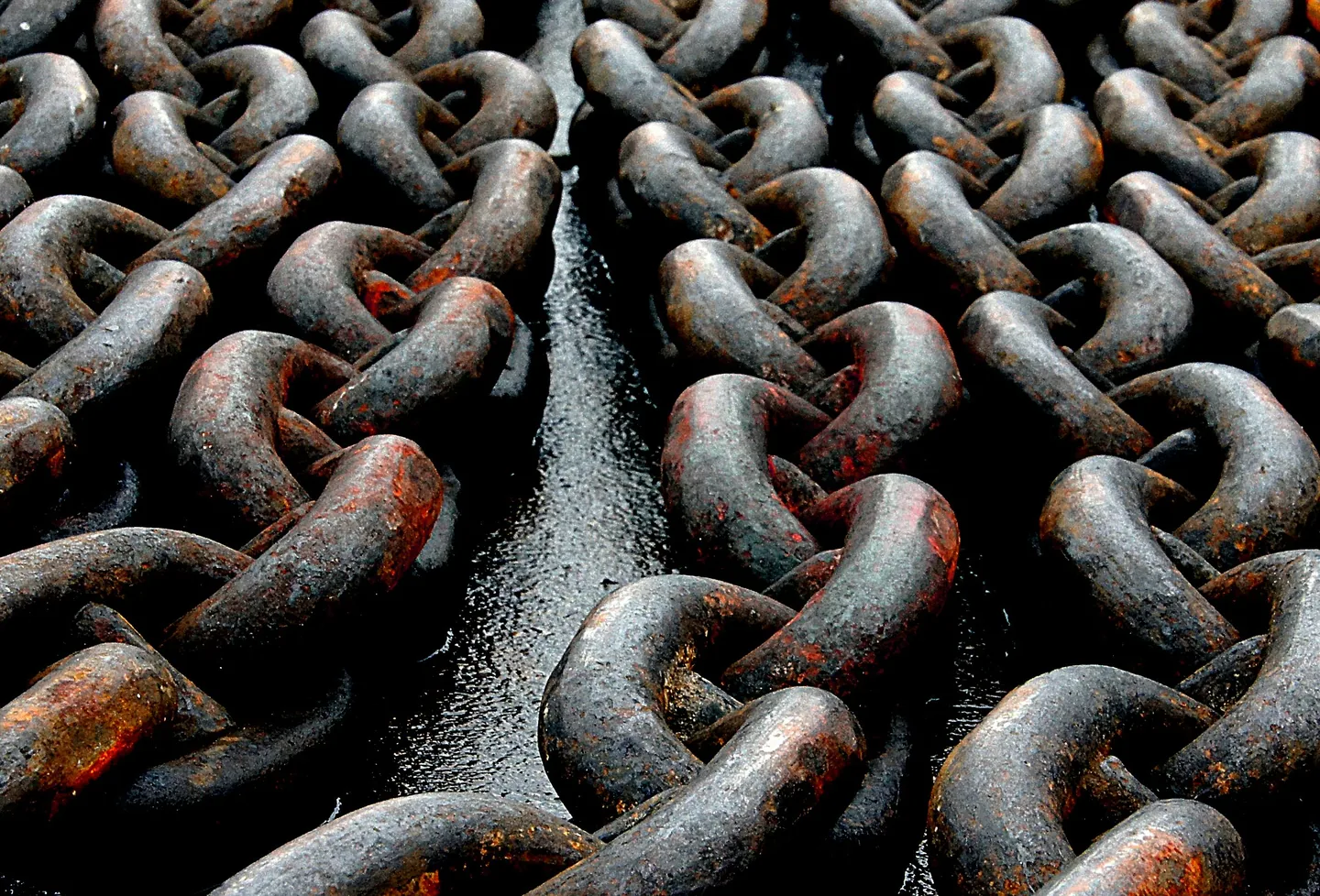
Clean chain reveals changes that dried mud can conceal. Examine the crown and sides of each link, paying special attention to the lengths that repeatedly cross the bow roller and gypsy, then inspect the seldom-used end in the locker. Seek bent, stretched or twisted geometry, unusual weld areas, concentrated corrosion, local material loss and edges that could injure a rope or adjacent link.
MGN 592 calls for a regular maintenance programme covering wear, damage, deflection and corrosion, with defects recorded. That supports measurement and trend tracking, but it does not supply one discard percentage for every recreational chain. Chain grade, link geometry and equipment specification vary; if section loss or distortion is suspected, compare with the chain maker’s limits and obtain a competent measurement rather than adopting an internet rule of thumb.
Treat shackles, pins and swivels as structural links. Check for permanent opening, bent pins, damaged threads, unexpected play and contact marks that show side loading or poor articulation. Confirm that the exact connector, orientation and securing method are permitted by its manufacturer; an unmarked item of unknown history cannot be assigned a safe capacity by appearance.
The anchor end deserves particular attention because incompatible shapes may bear on a small area instead of aligning with the pull. Move an unloaded joint through its intended range and look for binding, but do not modify metal, enlarge holes or improvise stacks of connectors to create clearance. Such changes alter the load path and call for design advice.
Inspect rope by touch as well as sight
Run the entire clean rope through gloved hands in good light. Samson’s rope guidance identifies cut fibres, abrasion, fused or glazed areas, discoloration, flat spots, lumps and inconsistent diameter or texture as relevant signs; some can point to internal damage, excessive heat, contamination or overload. Where the construction permits, separate strands gently to compare internal and external fibres and look for powdered fibre, without dismantling a splice.
Surface fuzz is not automatically a retirement verdict for every construction. Samson explains that initial fuzzing can stabilise, whereas increasing roughness means abrasion is progressing and strength is being lost. The opposite shortcut is equally unsafe: a tidy cover does not rule out a hard, flattened or irregular core. Apply the criteria for the rope’s material and construction, and ask its manufacturer when the evidence does not fit the published examples.
The rope-to-chain splice lives in an especially demanding zone. It flexes, meets metal and must travel through a compatible gypsy; Lewmar’s V1–V6 manual includes regular splice-wear checks in its servicing schedule. Inspect the entry into the last link, the strand pattern, taper or stitching, and any portion that has become thinner, hard or asymmetric. A distorted or damaged splice should be unloaded and remade by an appropriate method, not hidden beneath tape.
Include the windlass and every contact surface
A good rode can be damaged by a poor route. Examine the bow roller, chain pipe, locker rim, gypsy and any fairlead for burrs, sharp metallic areas, seizure and abnormal wear marks. MGN 592 warns against severe lead angles and advises checking metal surfaces previously used by wire before fibre rope is led across them. Correct the cause as well as replacing a damaged line.
The locker needs effective drainage and enough clear fall for the installation. Lewmar’s schedule includes checking the locker drain, electrical connections for corrosion, mounting studs, the splice and the gypsy; it also calls for fresh-water washing. Use the manual for the exact windlass, since service intervals, disassembly and compatible chain or rope are model-specific.
Do not make the windlass the mooring point. Lewmar instructs operators to transfer the anchored load to a chain stopper or an independent strong point, and to motor the vessel towards the anchor during recovery rather than pull the boat with the windlass or use it to break out a fouled anchor. This makes the stopper, cleat, bollard, backing structure and their fasteners part of the same inspection.
Keep people outside the line of tension during functional checks. Controls should be tested from a position that avoids the chain, rope bights and the likely travel of a failed component. If the rode jumps, slips or feeds unevenly, stop and isolate power before investigating compatibility, wear or obstruction.
Make a conservative retirement decision
Use three recorded outcomes. Continue in service only when the inspection finds no significant defect and the maker’s maintenance is complete; repair only where the relevant manufacturer recognises a qualified repair; withdraw and assess whenever damage is extensive, hardware is deformed, material appears lost, fibres are fused, diameter is inconsistent or remaining strength is uncertain. Uncertainty is not proof of fitness.
Samson advises considering how much rope is affected, its service time and work, the location of damage and its extent. Local repair may be possible for some constructions, while extended or significant non-repairable damage calls for retirement. Because those decisions depend on product design, the most conservative applicable manufacturer criterion should govern.
Finish by restoring operational readiness. A 2020 MAIB casualty lesson described an anchor stored disconnected from its chain and rope when a fishing vessel lost propulsion near danger; the agency stressed that an anchor may need to be deployed promptly in an emergency. Before sailing, confirm that the rode is connected, clear to run under control, secured for passage and understood by the crew—without leaving the bitter end or people exposed to an uncontrolled release.
Sources and references
Sources consulted and references retained to verify data and context.
- MGN 592 (M+F) Amendment 2: anchoring, mooring, towing or hauling equipment on all vesselsUK Maritime and Coastguard Agency · 2024-10-14
- Lewmar V1–V6 Windlass Product Manual, issue 11Lewmar
- Lewmar anchoring proceduresLewmar
- Rope warning statement and inspection guidanceSamson Rope Technologies
- MAIB Safety Digest 2/2020, case 21UK Marine Accident Investigation Branch · 2020-10-01
Continue reading

Lightning aboard: avoidance, response and checks
October 22, 2026 · 7 min read

Boating in fog: sound signals, radar and Rule 19
October 20, 2026 · 7 min read
Radar reflectors for small craft: choice, mounting and limits
October 18, 2026 · 7 min read