Carbon monoxide on boats: prevention and alarms
Engines, generators and heaters can bring CO into cabins and cockpits. Learn how to assess exhaust paths, marine alarms, symptoms and emergency action.
In brief
Reduce carbon-monoxide risk by maintaining engines and fuel-burning appliances, keeping exhaust outlets and ventilation clear, fitting marine-suitable detectors exactly as instructed, and testing them routinely. If an alarm sounds or anyone develops headache, dizziness, nausea or confusion, move everyone into fresh air immediately and contact the nearest emergency services. Do not re-enter a suspect compartment to investigate.
Article outline
Carbon monoxide aboard a boat gives no useful warning through smell or colour. Exhaust from a propulsion engine, generator or fuel-burning appliance may be redirected by wind, a canopy or equipment at the transom, so an apparently open cockpit can become a collection space. Sound prevention combines maintained machinery, unobstructed exhausts, deliberate ventilation, marine-suitable alarms and an immediate response to symptoms.
Map every source before considering the alarm
CO is produced when fossil fuel burns, and gasoline engines and onboard generators are established sources on recreational boats. Cabin heaters and other combustion appliances also belong on the inventory. A useful survey therefore begins with the actual boat: identify each appliance, its air supply, its exhaust route and every occupied area the discharge could reach.
An alarm does not make a defective installation acceptable. The United Kingdom's fire-safety guidance tells owners to maintain fuel-burning equipment, keep cabin ventilation clear and use marine-grade heater components intended for the particular appliance. Any questionable installation, damaged flue or recurring exhaust smell calls for a competent technician rather than an attempt to compensate with another detector.
Portable combustion equipment deserves a firm boundary. The same official guidance says barbecues should not be used on boats because charcoal releases dangerous CO as well as embers, and it advises using portable appliances ashore. Those recommendations remove the source instead of asking ventilation or electronics to manage an avoidable hazard.
How exhaust returns to occupied spaces
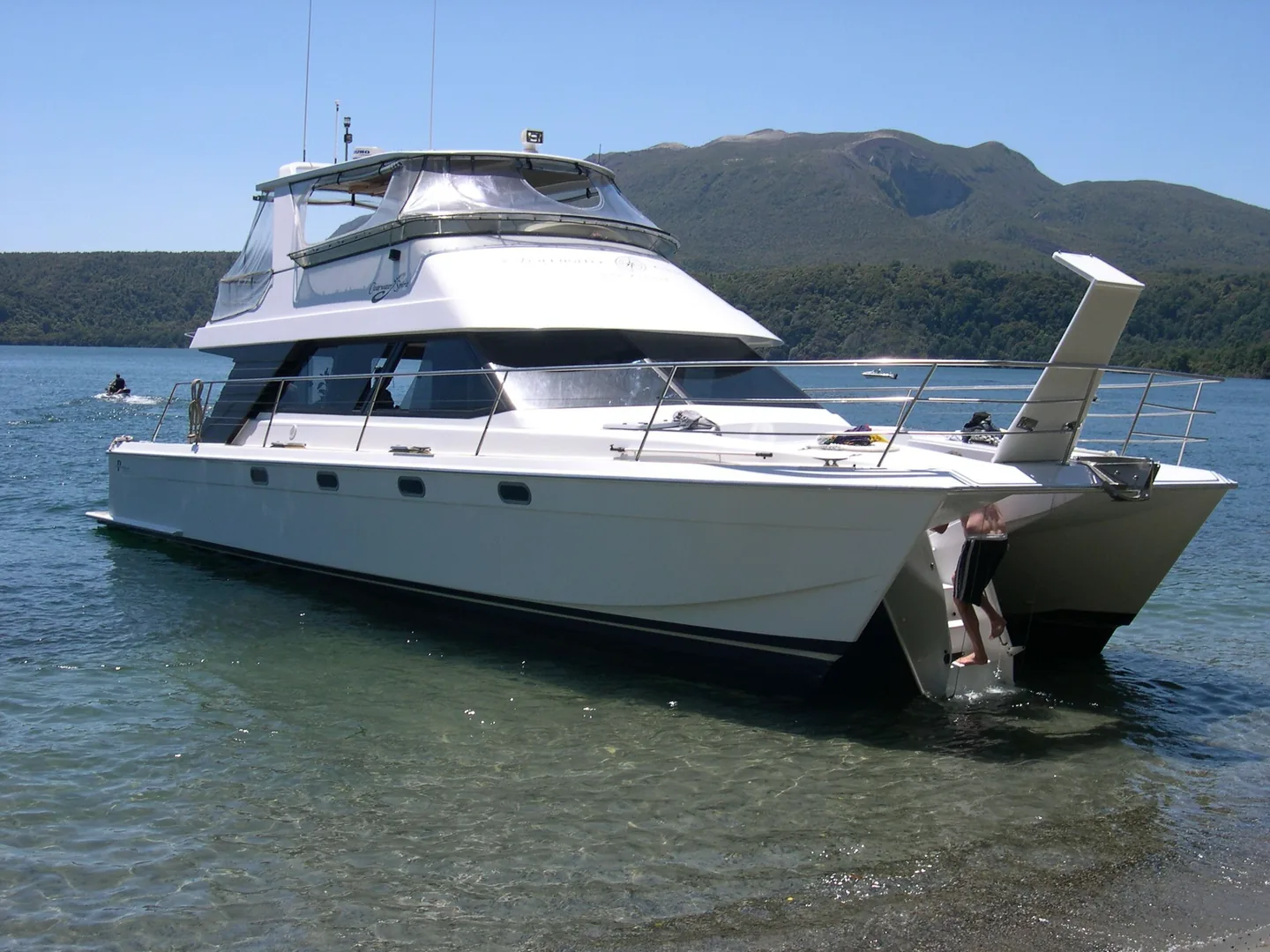
The stern is not protected merely by being outdoors. CDC guidance explains that CO can collect near a rear swim deck or water platform, including above the water, when exhaust discharges nearby. People should swim and play away from outlets, and children on aft platforms need close supervision while machinery is operating.
Slow running and idling can also move exhaust into the cabin, cockpit, bridge or aft deck. A wind from astern may intensify the problem, while covers and side curtains reduce the volume's exchange with fresh air. The correct operating question is therefore not simply whether the engine is outside; it is where the exhaust goes under today's speed, wind and enclosure configuration.
Neighbouring boats can be sources too. The CDC advises leaving at least 20 feet between a boat that is docked, beached or anchored and the nearest vessel with an engine or generator running. That is specific US preventive guidance rather than a universal legal limit, but it usefully shows why tying up close to another transom requires active assessment.
What the Emma Louise investigation demonstrates
The MAIB's investigation summary describes a fatal event aboard the 5.5-metre sports cruiser Emma Louise on 11 January 2022. Its 3-litre petrol engine was left idling at a marina, probably to charge batteries. Investigators concluded that a towable inflatable at the transom likely helped channel waterline exhaust through small gaps into the covered cockpit.
Tests in the as-found configuration produced accumulated CO levels capable of harming health and causing collapse within 35 minutes. No CO detector was fitted, and two occupants died. The value of the case lies in the chain of conditions: a running engine, redirected discharge and a covered living area together defeated the assumption that exhaust would disperse.
The report also warns that lethal exhaust can enter while a boat is under way. An external outlet may be clear yet nearby structures, aerodynamic effects or wind can return gases aboard. A dinghy, inflatable, fender, canvas panel or quay can alter the route, so the transom and enclosure should be reassessed whenever the boat's setup changes.
Specify, position and test marine alarms
Detector labels matter. UK guidance identifies EN 50291-2 as the standard for alarms suitable for marine use, while the CDC recommends a UL-listed detector identified for marine use inside the boat. These are jurisdiction-specific references, not interchangeable claims of worldwide compliance; buyers should check the rules of the operating area and the product manufacturer's declaration.
Placement must follow the instructions supplied with the chosen unit. Cabins, covered cockpits and other spaces where CO could collect need consideration, but the correct height and separation from berths, openings or appliances depend on the detector design. A convenient mounting point hidden by joinery or washed by a vent may not represent the air occupants breathe.
Routine testing is essential, but the test button should be understood as the manufacturer defines it. MAIB guidance says alarms should be installed to instructions, tested routinely and never ignored. The UK fire guide recommends testing alarms on boarding and at least monthly while aboard; replacement dates, batteries and any end-of-life indication remain product-specific.
Use a repeatable departure and overnight check
Before starting machinery, inspect each exhaust outlet and remove anything that could obstruct or redirect it. Confirm that permanent vents are open, review how canvas changes the cockpit, and operate each alarm through its stated test procedure. Brief the crew on the sound and the route to fresh air before anyone sleeps aboard.
While an engine, generator or heater runs, watch the configuration rather than assuming the morning check still applies. A shifted wind, newly closed panel or neighbouring generator can change exposure. Nobody should remain or swim close to an active exhaust, and an alarm or exhaust odour should trigger shutdown when safe, ventilation and investigation—not a reset followed by continued use.
A short log makes deterioration visible. Record each detector's model, location, installation date, stated expiry and latest test, plus maintenance for each combustion source and any unusual fumes. This is Batoo's organisational suggestion, not a regulatory interval; the appliance and detector manuals, competent technician and local requirements remain authoritative.
Recognise symptoms and get people outside
The CDC lists headache, dizziness, weakness, nausea, vomiting, chest pain and confusion among common CO-poisoning symptoms. MAIB also notes tiredness, stomach pain and shortness of breath, and cautions that the presentation can resemble a cold, influenza or a hangover. Similar complaints among several people in one occupied space should raise suspicion immediately.
Suspected exposure requires fresh air and contact with the nearest emergency services. MAIB also advises stopping the source, but that step must not delay escape or require an unprotected return into a contaminated compartment. An unconscious casualty needs professional emergency assistance; a would-be rescuer who enters unsafe air can become another casualty.
High exposure can cause loss of consciousness, and on a boat that can lead to a fall overboard and drowning. Someone asleep or intoxicated may die before recognising symptoms. Following any alarm or suspected poisoning, keeping the vessel out of normal use until the source, exhaust path, ventilation and alarms have been professionally checked is a prudent application of the official prevention advice.
The final safeguard is shared understanding. Every person aboard should know that CO itself cannot be smelled, an alarm is not to be silenced for convenience, and open air plus emergency contact take precedence over finding the fault. Hardware works best when the crew has already agreed what it will do.
Sources and references
Sources consulted and references retained to verify data and context.
- About CO Poisoning on Your BoatUS Centers for Disease Control and Prevention · 2024-05-15
- Safety flyer to the recreational craft industry and pleasure craft usersUK Marine Accident Investigation Branch · 2023-04-27
- Fire safety on boats (accessible version)UK Home Office · 2022-05-25