Boating in fog: COLREG, radar and sound signals
A practical Rule 19 guide to safe speed, fog signals, radar tracking and AIS limits, built to preserve decision time when visual references disappear.
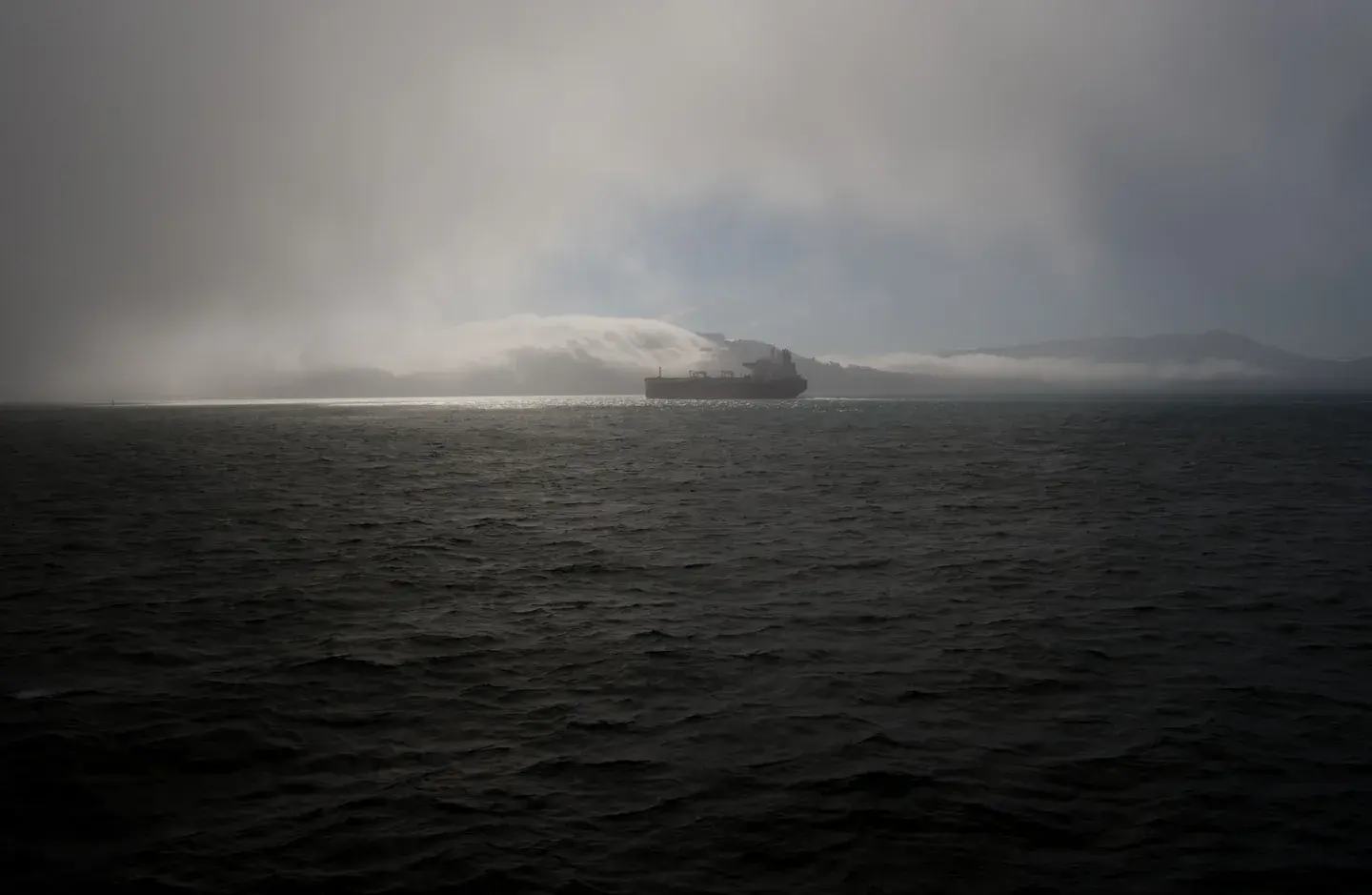
In brief
In fog, Rule 19 applies when vessels are not in sight: proceed at a safe speed, keep engines ready, maintain a lookout, show navigation lights and make the prescribed sound signals. Cross-check radar, AIS and VHF, but never treat any one of them as a substitute for systematic observation or COLREG.
Article outline
Restricted visibility begins before the view turns white. The operational break occurs when another vessel’s course, distance and intentions can no longer be judged reliably, whether the cause is fog, heavy rain, mist or snow.
Rule 19 changes the encounter
COLREG Rule 19 governs vessels that are not in sight of one another while navigating in or near restricted visibility. It is not simply a cautious version of the visual crossing rules. Once the other vessel cannot be seen, a skipper should not automatically assign “stand-on” and “give-way” roles from an AIS or radar geometry.
The first control is a safe speed adapted to the actual conditions. COLREG gives no universal number, and the UK Maritime and Coastguard Agency says safe speed must remain under continuous review. In Batoo’s analysis, a defensible speed leaves enough time to detect, interpret, decide and then verify an action after allowing for stopping distance, traffic, sea room, weather, sensor performance and the crew’s workload.
A power-driven vessel must keep her engines ready for immediate manoeuvre. That has practical consequences: the propulsion arrangement and bridge routine must permit a prompt reduction, stop or reversal if the picture deteriorates. Every vessel still needs a proper lookout by sight, hearing and all appropriate available means; an occupied display is not, by itself, an effective watch.
Prepare while references still exist
Preparation is cheapest while shoreline, marks and traffic remain visible. Confirm the position by more than one useful cue, compare charted depth with the sounder, switch on the prescribed navigation lights, test the sound-signalling method and allocate jobs. Rule 20 requires prescribed lights, when carried, to be shown during daylight as well as darkness in restricted visibility.
For a crew of two, Batoo’s suggested brief is deliberately plain: one person conns and looks out while the other works radar, chart and depth, if competence and circumstances allow. Agree course limits, safe-water boundaries, wheel-over points and the conditions that will end the attempt. Reduce music and close-door isolation because sound matters, yet remember the MCA warning that the apparent direction of a fog signal may be hard to judge.
A waypoint sequence is not permission to continue. Entering a busy channel, a shoal-sided route or a sector without a credible escape plan may be avoidable if the decision is made before landmarks disappear. That is Batoo operational analysis rather than a statutory threshold: the skipper remains responsible for matching the choice to the vessel, crew and local rules.
Decode the sound pattern, not just the noise
A short blast lasts about one second and a prolonged blast lasts four to six seconds. Rule 35 signals apply in or near restricted visibility by day or night. The stated interval is the longest permitted gap, so the signal should not be postponed beyond it.
| Vessel condition | Required pattern | Maximum interval |
|---|---|---|
| Power-driven and making way through the water | one prolonged blast | 2 minutes |
| Power-driven, underway but stopped with no way | two prolonged blasts, about 2 seconds apart | 2 minutes |
| Sailing, fishing, towing/pushing, or in specified limited conditions | one prolonged then two short blasts | 2 minutes |
| At anchor | rapid bell for about 5 seconds | 1 minute |
A vessel under 12 metres need not carry the sound appliances prescribed for larger craft, but if it does not make the listed signals it must make another efficient signal at no more than two-minute intervals. Vessels from 12 metres to under 20 metres have a specific relief from the bell signals for anchored or aground vessels, coupled with an efficient alternative-signal requirement. A handheld horn is useful only when the crew knows the applicable pattern, can reach it and can sustain the sequence.
Use radar as a time series
One echo is a detection, not a collision assessment. When another vessel is detected by radar alone, Rule 19 requires the operator to determine whether close quarters or collision risk is developing. That demands repeated observations; the MCA recommends suitable range scales, including longer ranges for early detection and shorter ranges for close targets, with the set aligned and adjusted correctly.
CPA and TCPA express the predicted closest distance and the time remaining to it, but COLREG does not prescribe one minimum value for all situations. Batoo’s analysis is to set an operating margin before the difficult sector and enlarge it when position, target motion or manoeuvrability is uncertain. Continue systematic observation after acting until the target is finally past and clear; a briefly improving number is not proof of a safe outcome.
Avoiding action must be early when risk develops. If the action for a radar-only target is a course alteration, Rule 19 says, so far as possible, avoid turning to port for a vessel forward of the beam unless it is being overtaken, and avoid turning toward a vessel abeam or abaft the beam. If a fog signal is heard apparently forward of the beam, unless collision risk has been ruled out, reduce to the minimum speed at which course can be kept, take all way off if necessary and navigate with extreme caution.
Keep AIS and VHF in supporting roles
AIS can help identify ships, support target tracking and add information to situational awareness. The MCA nevertheless notes both carriage limitations and the absence of an explicit COLREG provision for using AIS information; its restricted-visibility guidance says AIS data should not be the sole basis for deciding whether collision risk exists. No AIS symbol therefore does not mean no vessel.
Radar has a different limitation. MCA guidance warns that yachts and other small craft, particularly small recreational boats, may not be detected, requiring extra vigilance in coastal waters where they are expected. Rain clutter, vessel motion, poor adjustment and target geometry add practical uncertainty, so this article cannot replace training or the equipment maker’s instructions.
VHF may occasionally help identify a contact or clarify intentions, but the MCA says COLREG remains paramount. A call can be answered by the wrong ship, and an apparently neat agreement may rest on an uncertain position. Radio, AIS, radar, listening and visual lookout should cross-check one another; none independently grants priority.
Create time before options disappear
The critical test is not whether something remains visible; it is whether enough margin remains to understand and act. Unstable echoes, uncertain position, signals forward of the beam or more contacts than the crew can plot systematically are reasons to create time. That may mean slowing further, stopping where doing so creates no new danger, or moving toward safe water already identified.
Stopping is not automatically safe. Channels, traffic routes, depth, drift and following vessels still matter, while anchoring brings its own lights, signals and seamanship decisions. Batoo’s analysis is to mark a waiting or abort option on the chart before it is needed, rather than inventing one at the busiest point.
Restricted-visibility navigation is therefore a chain of checks: speed continuously reviewed, propulsion ready where required, correct sound signals, navigation lights displayed, contacts observed over time and every manoeuvre checked after execution. The redundancy is intentional. Any single sensor can miss a small craft, carry wrong data or reveal only one part of the encounter.
Sources and references
Sources consulted and references retained to verify data and context.
- Convention on the International Regulations for Preventing Collisions at Sea, 1972 (COLREGs)International Maritime Organization
- USCG Amalgamated Navigation Rules International & U.S. InlandU.S. Coast Guard Navigation Center
- MGN 369 (M+F) Amendment 1: Navigation practices relevant to restricted visibilityUK Maritime and Coastguard Agency
- MGN 324 (M+F) Amendment 2: use of VHF radio and AISUK Maritime and Coastguard Agency · 2022-03-22
Continue reading
406 MHz EPIRB and PLB: choosing, registering and testing
September 27, 2026 · 7 min read
Navigation lights: inspect and test them aboard
September 26, 2026 · 7 min read
Boat reboarding ladders: test them from the water
September 25, 2026 · 7 min read