Boat refuelling: prevent and respond to a fuel spill
A disciplined method for preparing to refuel, stopping before overflow, spotting trouble at the deck fill or vent, and responding without spreading fuel through the marina.
In brief
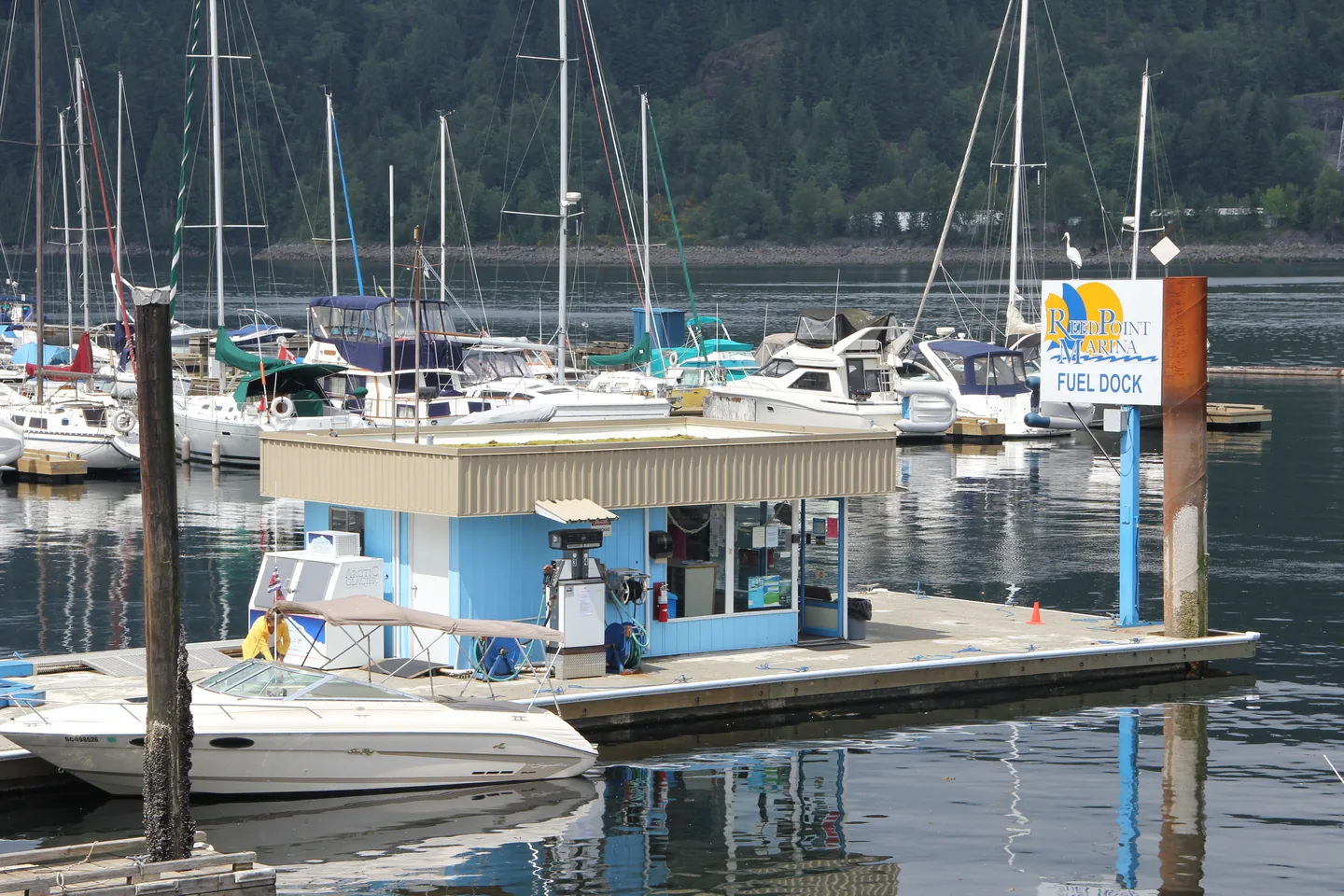
Safe boat refuelling starts with knowing the tank capacity and current level, shutting down engines and flames, closing openings and keeping oil-only absorbents ready. Hold the nozzle, maintain contact with the fill and slow down before the tank is full. If fuel escapes, stop the source, alert marina staff immediately and never use detergent to hide or disperse the sheen.
Article outline
Refuelling is one of the few routine jobs that brings a boat, an ignition hazard and an open body of water together. A safe result depends less on speed than on control: one person owns the nozzle, everyone knows when to stop, and spill equipment is ready before the cap comes off.
The method below is for recreational craft and covers prevention plus immediate first actions. The boat manufacturer’s instructions, the fuel dock’s procedure and local reporting rules take precedence. If the crew cannot stop or contain a release without danger, the job belongs to marina staff and emergency responders.
Calculate the delivery before opening the fill
Start with three separate numbers: the tank’s rated capacity, the best available estimate of fuel already aboard, and the maximum amount you intend to take. They are not interchangeable. TheUS Environmental Protection Agencyadvises boat owners to know tank capacity, work out the required delivery in advance and avoid topping off.
A fuel gauge may be useful without being exact. Compare it with logged engine hours, a realistic consumption range and previous deliveries, but label the result as an estimate rather than a measurement. Where those clues disagree, choose the smaller delivery and reassess early. The aim is to preserve headroom, not to prove how much the tank can physically accept.
Identify the fuel fill before a hose is moved. Water, waste and fuel caps should not be distinguished by memory alone, especially on an unfamiliar boat. Check the label and trace the arrangement if necessary. Place an oil-only absorbent around the fill without insulating the metal nozzle from the fitting, and keep spare pads plus a suitable container for contaminated material close at hand.
The boat should be securely alongside, with the route between pump and fill clear. Read the dock’s emergency notice and locate the shut-off and spill kit. Passengers who are not involved should leave the working area; where the dock requires everyone ashore, follow that rule. One designated operator should remain able to stop the pump instantly throughout the transfer.
Remove ignition sources and close the boat
Shut down engines, generators, cooking appliances and naked flames before fuel is handled, and prohibit smoking. UK governmentboat fire-safety guidancealso tells crews to close doors, windows, hatches and canopies while refuelling so petrol vapour cannot enter the accommodation or bilge. This is especially important because a vapour problem may exist without a visible deck spill.
Electrical isolation must follow the boat and dock instructions, not a slogan copied from another vessel. Installations differ, and a master switch may control equipment that a specific procedure expects to remain available. The defensible approach is to remove every identified ignition source and use the documented switching sequence for that craft.
Assign observation as well as operation. On boats where the vent can be seen safely, a second crew member can watch it and the surrounding water while the nozzle operator watches the fill. The observer reports; the operator decides and closes the flow. Nobody should be below looking for a leak while fuel is still being delivered.
Control flow at both the fill and vent
Insert the nozzle before starting and keep it in contact with the fill fitting.Transport Canada’s refuelling proceduresays to hold the trigger by hand rather than locking it open, maintain nozzle contact to guard against static sparks and monitor the filling rate to avoid overfilling. An automatic shut-off is a backup, not permission to walk away.
Begin at a manageable rate and slow down well before the calculated limit. Listen for a change in sound at the fill, watch the vent and stop at the first sign of splashback, foaming or liquid at the vent. These clues vary with hose routing, tank shape and fuel, so they cannot be converted into a universal “seconds remaining” rule.
If the fill starts to burp unexpectedly, release the trigger. Allow the system to settle and check the deck, vent and water before considering a slower restart. A repeat event calls for stopping the delivery and investigating the installation. Forcing more fuel in can turn restricted venting, a poor hose run or excessive flow into pollution.
Avoid the temptation to reach a round monetary value or a gauge needle on “full.” Neither is a safety target. The planned quantity and the first credible warning signal should govern the stop, with the more conservative one winning. This small discipline also leaves room for fuel movement and changing conditions after departure.
Finish the transfer and inspect before starting
Release the trigger and wait until flow has fully ceased before withdrawing the nozzle. Keep the tip oriented so residue cannot drip onto the deck or water, return it as the dock directs, then refit and check the fuel cap. Inspect the pad, fill, vent, deck edge and nearby water before opening hatches.
Used absorbent remains a fuel-contaminated material. Transport Canada’s procedure requires fuel-soaked cloths, sawdust or similar items to be disposed of properly. The marina should specify the correct waste container; a saturated pad does not belong loose in a locker or an ordinary bin. Keep it controlled until staff accept it.
Petrol inboard boats require particular care before restart. Ventilate exactly as the manufacturer and dock prescribe, then check the bilge, machinery space and blower discharge for fuel odour. Do not start if an odour persists. A generic ventilation time is not a substitute for the boat manual, especially after a spill or on a modified installation.
Diesel is less volatile than petrol, but that does not make a diesel release harmless or acceptable. The pollution-control sequence remains the same, and a wet deck can introduce its own hazard. Treat the fuel named on the pump and in the boat’s documentation as the controlling fact; never infer it from cap colour alone.
Respond to a spill without spreading it
Stop the source first if that can be done safely: release the nozzle, use the emergency shut-off when appropriate and call the fuel-dock attendant. Protect people from ignition and exposure before protecting equipment. If there is a strong vapour cloud, fire risk, uncontrolled discharge or uncertainty, move clear and summon emergency help rather than leaning over the source.
For a small contained release, use oil-only absorbent pads or the marina’s booms to prevent movement. Do not hose the deck and do not add soap. TheBoatUS Foundationwarns that detergent drives petroleum into the water column, makes recovery harder and spreads contamination even when the surface sheen appears to vanish.
Tell marina staff at once and follow the local reporting route. BoatUS lists a US National Response Center number, but that is jurisdiction-specific; a skipper elsewhere should not treat it as a worldwide contact. Report facts that responders can use: location, source, fuel type, estimated amount, immediate hazard and weather. Do not delay notification while trying to produce a falsely exact volume.
Fuel in the bilge must not be expelled through the normal bilge pump. The Canadian procedure calls for manual collection into sealed containers or pumping ashore, followed by thorough ventilation. If the boat lacks suitable equipment or the operation could create sparks or exposure, wait for trained assistance. Starting an engine before the space is confirmed free of fumes compounds the original event.
Use the evidence to prevent a repeat
Once the area is safe, write down what actually happened: delivery rate, gauge reading, estimated litres or gallons taken, where fuel first appeared and which action stopped it. Separate observation from diagnosis. “Liquid emerged from the vent” is evidence; “the vent valve failed” remains a hypothesis until the system is inspected.
Before another fill, examine the cap seal, deck fitting, fill hose, clamps, tank and vent line under the manufacturer’s maintenance scheme. The UK fire guidance specifically calls for checks of loose fuel joints, damaged tanks and deteriorated hoses. Any suspected defect warrants a competent marine technician; changing vent plumbing or sealing a leak by improvisation can create a new failure mode.
A useful onboard checklist can fit on one card: estimate, identify, secure, prepare absorbent, shut down, close openings, hold and ground the nozzle through contact, fill slowly, stop early, inspect, ventilate and dispose. Its value is not bureaucracy. It preserves attention at the exact moment when noise, queues and the desire to squeeze in more fuel make an avoidable spill most likely.
Sources and references
Sources consulted and references retained to verify data and context.
- Spill Prevention, Control and Countermeasure Guide for Marinas and Boat OwnersU.S. Environmental Protection Agency
- RefuellingTransport Canada · 2011-01-24
- Fire safety on boats (accessible version)UK Home Office and Department for Communities and Local Government
- In Case of a SpillBoatUS Foundation
Continue reading
406 MHz EPIRB and PLB: choosing, registering and testing
September 27, 2026 · 7 min read
Navigation lights: inspect and test them aboard
September 26, 2026 · 7 min read
Boat reboarding ladders: test them from the water
September 25, 2026 · 7 min read