How to Tow a Disabled Boat Without Improvising
A practical guide to deciding whether to assist, rigging a bridle and towline, controlling shock loads, and moving safely from open water into harbour.
In brief
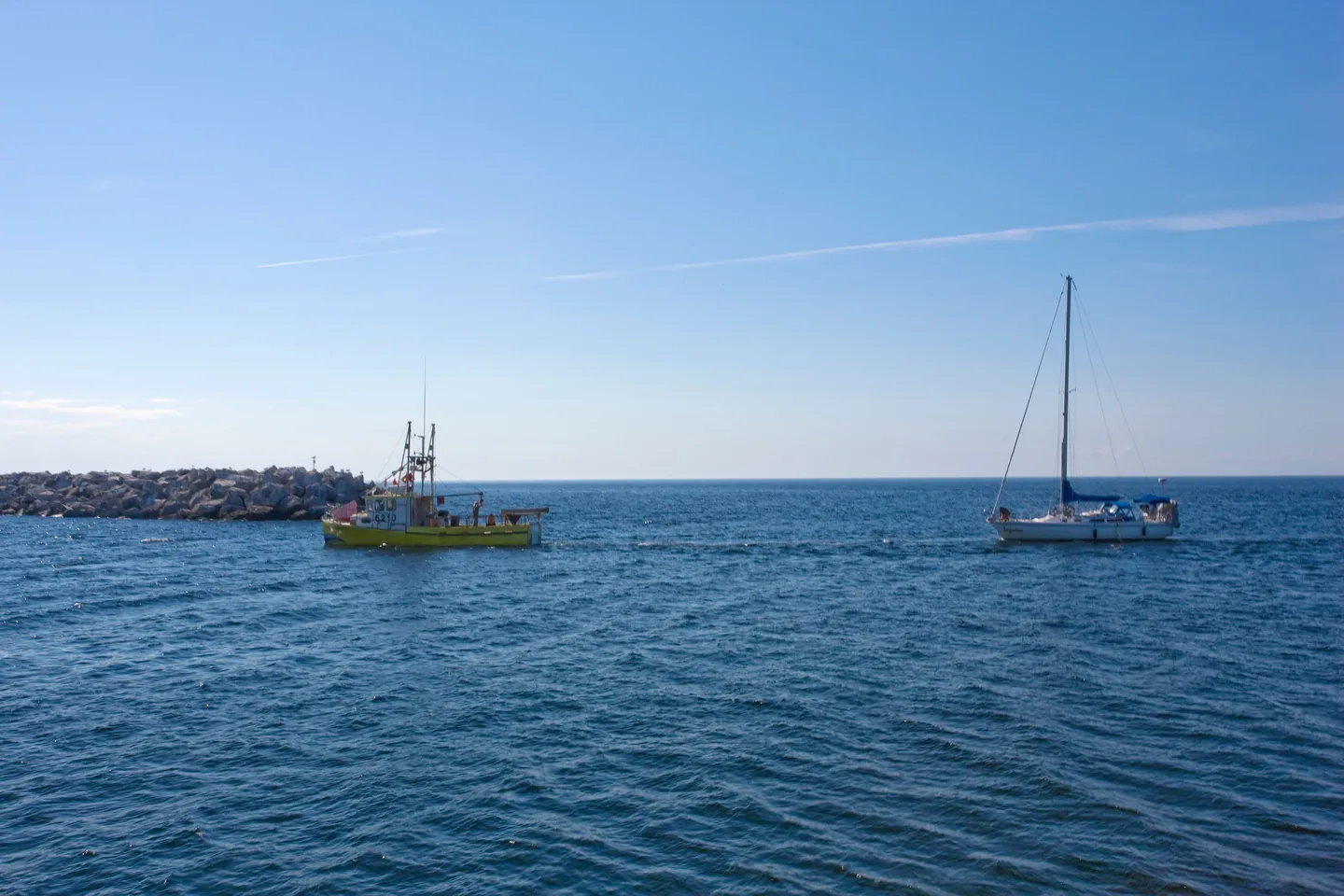
Before towing a disabled boat, assess the people, weather, hulls, structural attachment points, communications and receiving harbour. Use a bridle on genuine strong points, protect the rope from chafe, apply load gradually and proceed at the lowest speed that preserves steerage. If strength, stability or conditions are doubtful, alert the rescue authority and wait for suitable assistance.
Article outline
An engine failure does not automatically turn the nearest boat into a tug. Before passing a line, both skippers need to decide whether the assist has a workable safety margin, whether professional help is the better option, and how the connection can be released without endangering people or hulls. This guide addresses occasional towing between small recreational craft, not commercial towage or rescue in extreme conditions.
First decide whether to tow at all
Start with people rather than rope. If the casualty is in immediate danger, taking water, on fire, drifting toward hazards or carrying an injured person, alert the appropriate rescue authority and report position, the nature of the emergency and the number of people aboard. An improvised tow must not delay a distress call or create a second casualty.
A defensible decision considers weather, sea state, distance to shelter, traffic, remaining daylight, fuel and the capabilities of both craft. Maritime and Coastguard Agency guidance for professional towage calls for an assessment of the tow’s characteristics, expected conditions, navigational restrictions, equipment, communications and alternative safe havens. Batoo analysis: this does not certify a leisure boat for towing, but it is a sound checklist for deciding when not to start.
The assisting boat must be able to steer at very low speed without overheating or becoming unstable when the tow pulls off centre. The disabled boat needs adequate buoyancy, stability and steering; hatches, loose equipment and possible flooding paths deserve attention before departure. If the strength of an attachment, hull integrity or the forecast remains uncertain, waiting for a suitable rescue or commercial towing asset is the prudent course.
Agree the plan and the words before connecting
Both crews should agree the destination, intended track, approximate speed, stop signal and response to a parted line. MCA competence guidance treats clear communication as necessary during connection, the tow, loss of connection and disconnection; it also calls for defined roles and coordination with whoever will receive the tow. A working VHF channel helps, but simple hand signals are needed if batteries, noise or distance defeat the radios.
Prepare towing lines, fenders, gloves, an accessible cutting tool and a light messenger before closing the gap. A messenger lets the crew pass a rope without throwing heavy hardware. People without a job stay seated and clear of the working area; the arrangement should allow a line to be released without anyone stepping into its likely recoil path.
Where crew and conditions permit, the casualty assigns one person to steer and another to watch the attachment. Its helm follows the towing boat’s wake and anticipates sheer instead of trying to establish an independent course. One person on the towing boat directs the evolution, while short agreed calls such as “taking strain”, “slack”, “slow” and “release” reduce ambiguity.
Use structural strong points and share the load
The tow must lead to fittings that are genuinely part of the boat’s load-bearing structure, not guardrails, pulpits or convenient deck accessories. The UK Rescue Boat Code says the rope should be secured to strong points within the vessel’s structure and, where possible, to several points so the load is shared. A bridle between two substantial bow cleats can centre the pull on the casualty; a balanced bridle aft can keep the towing boat’s load closer to its centreline.
There is no universal rope diameter based only on boat length. Fibre, construction, condition, breaking load, stretch, attachment geometry and the displacement of both craft all affect the system; the MCA code requires towing equipment to have adequate strength and a design suited to its purpose. Batoo analysis: when the ratings of fittings and rope are unknown, a rule of thumb must not be presented as a guarantee.
Any lead over a gunwale or through a fairlead may abrade quickly under a cycling load. Fit chafe protection that cannot slide away, then inspect the rope, knots or splices, shackles and cleats at frequent intervals. MCA guidance explicitly includes checking gear for damage, protecting it against chafe and monitoring the tow so adjustments can be made underway.
Tune line length, stretch and wave timing
A longer line forms a deeper catenary and can moderate load changes, but it also adds delay, takes more room and raises the chance of contact with the bottom, propellers or other traffic. The Rescue Boat Code advises making a tow longer in rougher conditions so the boats can match wave phase, notes that weighting a towline can reduce snatch, and says the length must be adjustable for harbour entry and chafe control. It gives principles, not a universal number of metres.
The aim is for the boats to rise and fall with compatible timing. If one is on a crest as the other drops into a trough, the line can come tight abruptly; changing its length may bring them back into phase. Any device added for stretch or catenary must suit the rope and be arranged so it cannot become a projectile or trail into a propeller.
Apply power only after the slack has been gathered in under control, and build load gradually. MCA training material emphasises slow, controlled changes of power and course and enough turning room; hard acceleration or a sharp turn increases peak loads and can pull the towline across the towing vessel. If steerage cannot be maintained without a large increase in power, reassess the plan instead of simply going faster.
Drive slowly and watch the whole system
The appropriate speed is the lowest that preserves steering and controlled progress. Continuously watch engine temperature and alarms, stern trim, towline angle, the casualty’s motion and surrounding traffic. The plan should identify places to stop or seek shelter if wind, sea, visibility or fuel margin deteriorates.
Keep the line away from propellers during the start, every slowdown and the final release. The helm should not reverse toward the connection without first accounting for every section of rope. On the casualty, gentle steering along the wake reduces yaw, while its crew reports chafe, unusual slack, flooding or movement at an attachment as soon as it appears.
The Collision Regulations still apply during an assist. Rule 24 specifies lights and shapes for towing, and also covers a vessel not normally engaged in towing when it assists a vessel in distress: if the normal towing lights are impracticable, all possible measures must indicate the relationship, particularly by illuminating the towline and the assisted vessel. Before any night tow, confirm the international rules, local requirements and the lights actually available aboard.
Re-plan before entering confined water
Harbour approach is a separate phase, not merely the end of the open-water tow. Reduced room, traffic, shallow water and the need to stop may justify shortening the line or changing to an alongside tow; the Rescue Boat Code specifically includes transferring from astern to alongside and planning alternative havens. Make the change in protected water at minimum speed, with fenders and lines ready in advance.
An alongside tow gives close control but changes beam, inertia and steering response. Secure the boats with breast lines and springs that prevent fore-and-aft movement, protect the contact area with fenders and keep the assisting boat’s propulsion clear. Batoo analysis: use this arrangement only when the relative sizes, fittings, conditions and crew competence allow the pair to manoeuvre as one unit.
Contact the marina or harbour authority before arrival, confirm the receiving berth and preserve a way to abort the approach. Once secured, inspect the towline, attachment points and deck gear and record any damage. A successful emergency tow ends without drama: there is still reserve margin, communications still work, and the final manoeuvre has not been left to chance.
Sources and references
Sources consulted and references retained to verify data and context.
- The Rescue Boat Code — Unit 11: TowingUK Maritime and Coastguard Agency
- The Sport or Pleasure Vessel CodeUK Maritime and Coastguard Agency · 2025-11-20
- Competence Standard for Sea Towage Assist EndorsementUK Maritime and Coastguard Agency
- Navigation Rules and Regulations Handbook — Rule 24U.S. Coast Guard Navigation Center · 2024-08-12
Continue reading
406 MHz EPIRB and PLB: choosing, registering and testing
September 27, 2026 · 7 min read
Navigation lights: inspect and test them aboard
September 26, 2026 · 7 min read
Boat reboarding ladders: test them from the water
September 25, 2026 · 7 min read