Marine distress flares: inspection, use and disposal
A practical guide to choosing, inspecting and stowing marine flares, using each signal for the right purpose, and arranging safe disposal without treating pyrotechnics as ordinary waste.
In brief
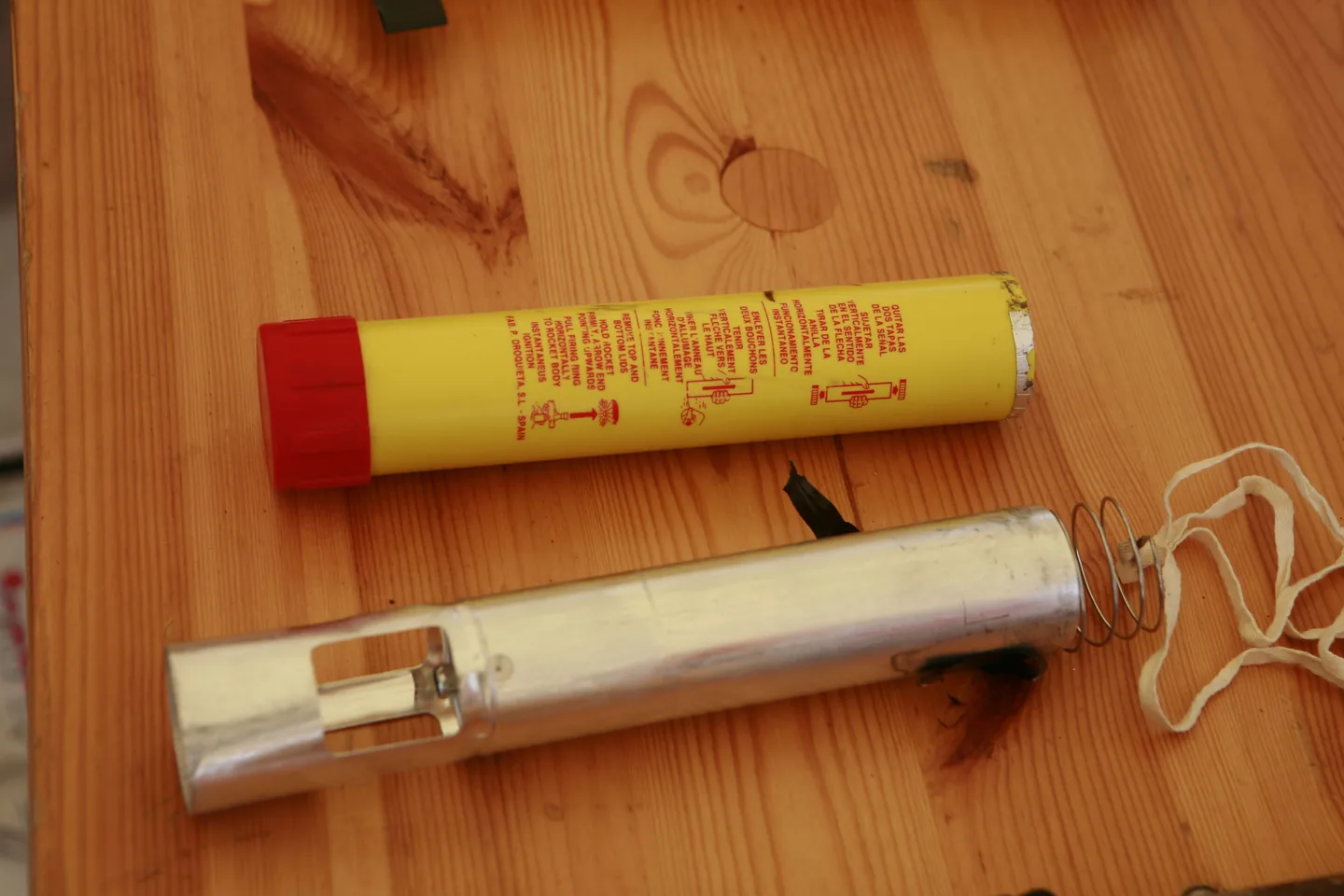
Choose marine flares for the voyage and the vessel’s flag rules, then keep them dry, reachable and routinely checked for damage, instructions and expiry. Rockets, red hand flares and orange smoke serve different jobs. Use them only in distress exactly as labelled, and transfer expired or damaged units to an authorised disposal route rather than household waste.
Article outline
A flare pack is not simply a box to show an inspector. It is a small communication system for the moment when ordinary channels are failing or rescuers need a visible position. Its value comes from choices made alongside the berth: carrying signals suited to the voyage, keeping them serviceable and ensuring the crew can distinguish alerting at range from close-location work.
Match the signal to the rescue phase
A parachute rocket is primarily a long-range attention signal. It climbs before a red light descends beneath a parachute, so overhead clearance, wind and the possible landing area matter. Italy’s technical standard for approved recreational-craft signals specifies a launch height of at least 300 metres, average luminous intensity of at least 30,000 candela and a burn lasting at least 40 seconds.
A red hand flare is better understood as a close-location tool. Once a rescue craft or lookout is in the area, the sustained red light can make the casualty easier to identify. The Italian standard specifies at least 15,000 candela and at least 60 seconds for its approved hand-flare design, while safe handling still depends on the instructions printed on that particular unit.
Floating orange smoke serves a daylight role. It can mark a position and show drift to a nearby or airborne search unit, but it is not a substitute for a light at night. A sensible inventory therefore covers different phases rather than buying several devices that all solve the same part of the problem.
Start with flag and operating rules
There is no worldwide leisure-boat quantity that can be copied onto every checklist. Carriage depends on the vessel’s flag, size, operating area and whether its use is private or commercial. The approval marks accepted by the relevant authority also matter, which is why an inexpensive device bought abroad may not satisfy the rules governing the boat.
The United Kingdom illustrates this jurisdictional approach. Current Maritime and Coastguard Agency guidance describes four red hand flares and two orange smoke signals, alongside marine radio and another alerting device such as an EPIRB or PLB, for pleasure vessels of 13.7 metres and over in the waters covered by its Class XII provisions. It treats shorter pleasure craft differently, so even one country does not have a single answer for every boat.
The U.S. Coast Guard guide gives several approved combinations for day and night requirements in specified U.S. waters. Those combinations help explain functional coverage, but they do not set the loadout for a European-flagged vessel. Before departure, obtain the current requirement from the flag administration and check any additional rule applying to the intended waters.
Inspect condition, date and crew readiness
A useful inspection starts with an inventory. Record each signal’s type, count, location and printed expiry, then compare the result with the applicable carriage list. Under the Italian recreational-craft technical decree, compliant distress signals normally have a four-year validity period from manufacture; elsewhere, the label and local approval regime govern.
Date is not the only test. A swollen, split, corroded, soaked or illegible casing is a reason to remove the item from the operational pack, even if the calendar appears favourable. Check visually without dismantling the unit, disturbing its safety features or “testing” an igniter; pyrotechnics do not have an owner-serviceable trial mode.
Crew knowledge deserves the same attention. Before a serious passage, designated adults should be able to locate and open the container and explain which device answers which need. Reading the maker’s directions at the dock is preparation, whereas arming the signal is not. This distinction becomes valuable at night, in spray and when fine print is hard to read.
Log the check with the vessel’s other safety inspections and schedule replacement before the deadline. That margin leaves time to source an approved new pack and arrange disposal of the old one. It also prevents an expired set from being quietly retained as if it provided dependable redundancy.
Stow for protection and immediate access
The U.S. Coast Guard recommends a cool, dry location and suggests a watertight red or orange container prominently marked for distress signals or flares. That advice captures the central trade-off: the devices need protection from water but cannot be buried under cruising gear. A box that takes several minutes to excavate is not emergency-ready.
Choose a position that crew can reach without entering a likely machinery fire or a compartment vulnerable to flooding. Secure the container so that it cannot become a projectile, yet keep its closure operable without specialist tools. Follow the manufacturer’s temperature and orientation limits rather than assuming that every pyrotechnic product tolerates the same locker.
A small torch and a concise emergency card may live alongside the pack if they do not obscure labels or prevent removal. Do not wrap individual signals so heavily that their instructions, approval or opening direction disappear. Everyone aboard should recognise the container, while children and unauthorised users must not be able to reach it casually.
Recheck the locker after water ingress, unusual heat or a hard impact. The absence of visible external damage to the boat says little about a flare that has been soaked or crushed inside its box. Where condition is uncertain, isolate the suspect unit and seek advice from the supplier or a competent disposal operator.
Alert first, then help rescuers locate you
Pyrotechnics show distress but do not communicate a vessel identity, an exact position or the nature of the emergency. When circumstances permit, make the alert by DSC VHF, voice radio or a registered beacon first, then use a visual signal when somebody is likely to see it. This is Batoo’s operational interpretation of complementary equipment, not a promise that every emergency allows an orderly sequence.
Use any flare only for genuine distress and exactly as its own label directs. Before activation, account for people, sails, canopy, fuel, nearby craft and the downwind sector. Never aim a rocket toward land, a vessel or an obstruction, and keep a hand flare outside enclosed spaces and away from the body.
The Coast Guard warns that pyrotechnic distress signals produce very hot flame capable of burning people and igniting materials. That hazard is also why an informal practice firing is not sound training: it can create an emergency, trigger a false alarm and breach local law. Hands-on instruction belongs at an authorised event with competent supervision and a controlled site.
Do not fire the complete stock at once merely because help has been requested. Preserve close-location signals for the stage when an aircraft, ship or shore party can use them, unless the immediate threat demands otherwise. The skipper must adapt to the real event and the product directions rather than follow a rigid magazine-style script.
Replace and dispose before it becomes a crisis
An expired flare is not reliable reserve equipment, and a damaged one should be handled as little as possible. UK official guidance makes the disposal principle plain: marine flares are explosive devices and must not be fired for disposal, abandoned, dumped at sea or placed in household or garden waste. Exact collection systems differ by country and locality.
Plan the handover before the expiry date. Contact the original retailer, a liferaft service station, a marina, the relevant authority or a licensed waste operator and ask whether it accepts the exact devices. Never arrive unannounced; providers may impose quantity limits, packaging instructions, appointments or transport conditions.
If a unit is leaking, hot, smoking or has suffered serious impact, do not transport it on your own initiative. Keep people away and describe the condition to the competent emergency service or hazardous-material authority. Safe ownership ends with a serviceable replacement and an agreed disposal route, not with moving an uncertain explosive from the boat to a shed.
Sources and references
Sources consulted and references retained to verify data and context.
- Decreto 29 settembre 1999, n. 387 — segnali da soccorso per unità da diportoGazzetta Ufficiale della Repubblica Italiana · 1999-11-02
- MIN 542 Amendment 3 — recognised distress signals and alternativesUK Maritime and Coastguard Agency
- A Boater’s Guide to the Federal Requirements for Recreational BoatsUnited States Coast Guard · 2023-11-08
- Disposing of unwanted distress flaresUK Maritime and Coastguard Agency and Department for Transport · 2018-02-02
Continue reading
Lightning aboard: avoidance, response and checks
October 22, 2026 · 7 min read

Boating in fog: sound signals, radar and Rule 19
October 20, 2026 · 7 min read
Radar reflectors for small craft: choice, mounting and limits
October 18, 2026 · 7 min read