Thunderstorms and lightning afloat: a skipper’s plan
From escape planning to checks after a suspected strike, this guide gives crews a conservative sequence for shelter, boat control and onboard systems.
In brief
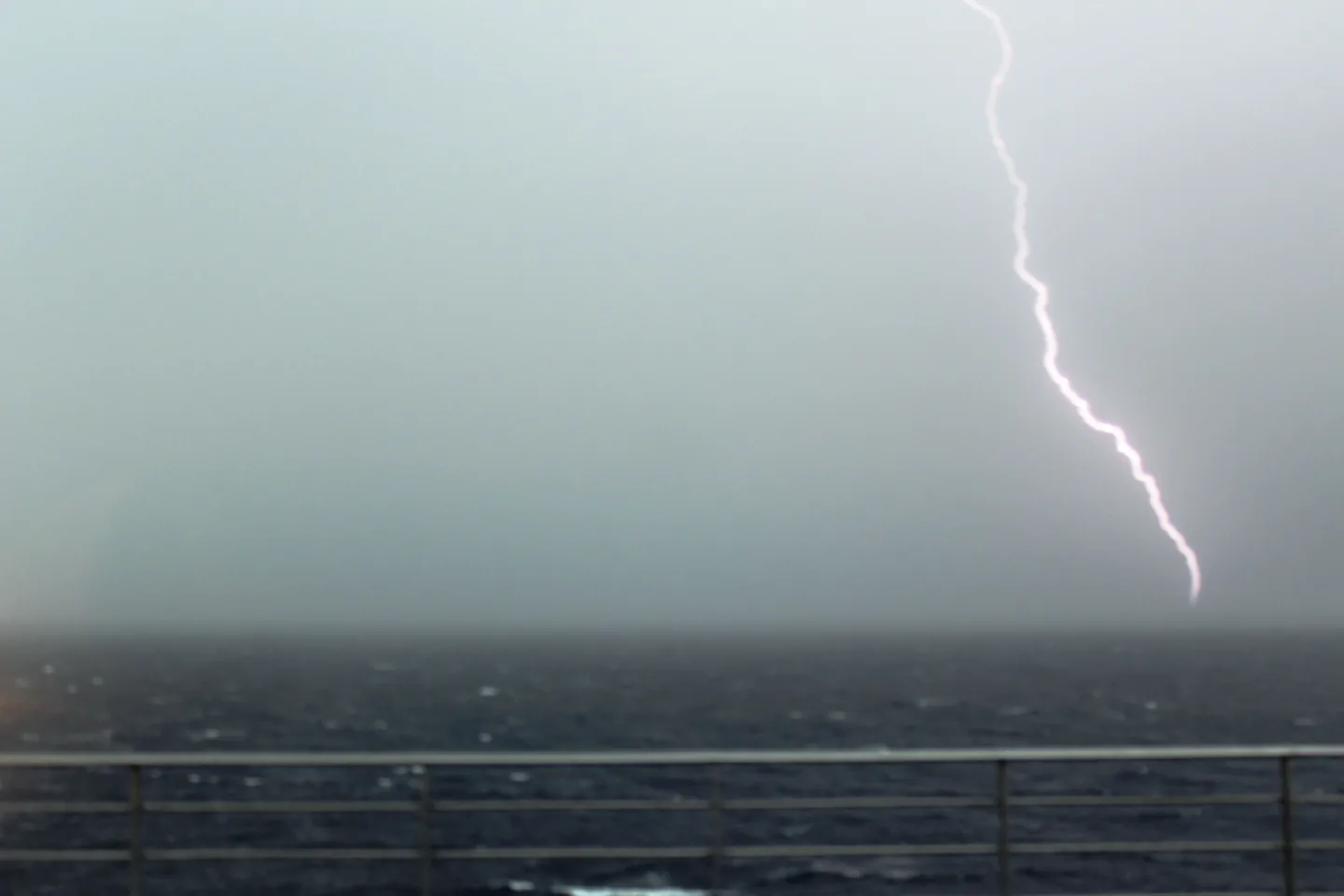
When thunderstorms are forecast, the safest choice is to postpone or retreat early to proper shelter ashore. If the cell reaches the boat, wear flotation, remain out of the water, stay low or inside an enclosed cabin, and avoid unnecessary metal or electrical contact. After a suspected strike, check people, fire, flooding, steering, propulsion, electrical systems and compass.
Article outline
A thunderstorm at sea is an escape-route problem before it becomes a lightning problem. Wind, waves and visibility can change while a small craft is committed to an exposed leg or difficult harbour entrance. The skipper’s most valuable decision is therefore made early: define when to cancel, when to turn back and where genuinely safe shelter exists.
This guide addresses recreational powerboats and sailing boats, not the design of lightning-protection systems. Hull material, a fully enclosed cabin, installed protection, crew competence and distance from shore all alter exposure. Manufacturer instructions and local maritime warnings take precedence; where uncertainty remains, Batoo analysis favours the conservative route to shelter ashore.
Build an escape plan around the whole passage
Check a marine forecast for the route and return window, then keep monitoring official products available in the cruising area. A forecast for a nearby town may not represent an exposed sound, cape or offshore bank. Radar and lightning displays add context but do not turn a growing cell into a predictable object with a guaranteed safe side.
Name more than one refuge before departure. For each, consider approach depth, entrance orientation, traffic, shelter from the expected wind and whether reduced visibility would make entry harder than remaining in open water. A harbour on the chart is not an escape if the storm can close its only safe route.
Set the cancellation trigger while the crew is ashore. The same probability deserves different treatment on a coastal hop with several exits and on a leg with a lee shore and no alternative. Fuel or battery reserve, early sail reduction and a crew briefing belong in the weather plan because they govern how quickly the boat can change course.
Treat the changing sky as operational evidence
Official guidance points to dark threatening clouds, increasing wind or sea, and wind strengthening against a current as warning signs. They do not predict the exact first gust, but they show that the comfortable operating envelope may be shrinking. Waiting for a nearby flash wastes time needed to secure the boat and leave the exposed area.
Thunderstorms can combine abrupt gusts, shifting wind, heavy rain, lightning and waterspouts. The transition matters as much as a peak measurement: an unprepared sail plan, loose equipment or a crowded foredeck can make a brief change difficult to manage. Rain also removes visual references while other boats converge on the same entrance.
Do not invent a universal safe passing distance from a phone display. Batoo analysis uses sustained access to shelter as the useful measure: watch the cell’s movement and growth, preserve open water for manoeuvre, and avoid trying to outrun its leading edge. A watch is a cue to prepare; a warning means hazardous conditions exist or are forecast and the plan should start.
Configure boat and crew before the hard gust
Early retreat remains the primary control, but preparation limits consequences if weather arrives first. Put personal flotation devices on everyone before movement on deck becomes difficult. Secure loose gear, clear working areas, manage openings without compromising ventilation, and choose a propulsion or sail configuration the available crew can control.
On a sailing boat, reducing sail early avoids sending people forward after the deck is wet and unstable. On any craft, exposed canopies, fishing gear and deck equipment should be handled while deliberate work remains possible. Assign short roles for steering, lookout, navigation, communications and passenger monitoring so tasks are not silently missed.
Keep the VHF available for safety traffic and distress. Prepare the position and route into shelter rather than filling the radio with non-essential calls. Disconnecting electronics or lowering antennas depends on the installed protection design; follow the vessel manual and qualified guidance, because improvisation can remove essential communication or interfere with a designed system.
Reduce exposure when retreat is no longer safe
If land and proper shelter remain reachable without crossing the hazard, leave the water early. Environment and Climate Change Canada identifies a substantial building with wiring and plumbing, or an all-metal hard-topped vehicle, as safer shelter ashore. A beach, dock, isolated tree or open-sided shed does not provide the same protection.
If the storm catches the vessel, retain control while reducing contact paths. On a boat with a fully enclosed cabin, stay inside and avoid metal surfaces and electrical equipment as far as practical. On an open boat, stay low, keep arms and legs inside and do not enter the water; small open craft are specifically identified as more exposed.
Navigation still governs the immediate choice. A helmsman should not abandon collision avoidance, steering or an emergency transmission merely to adopt an idealised posture. Whether to anchor, keep steerage or use a heavy-weather sailing technique depends on depth, sea room, lee shore, traffic, boat type and crew; no generic article can choose that tactic remotely.
Inspect people and systems after a suspected strike
The end of rain is not the end of lightning exposure. Canadian guidance says to remain out of the water and in safe shelter for 30 minutes after the last thunder, and reports that roughly one third of lightning-related casualties occur after the storm. Hearing thunder again restarts the interval.
After a known or suspected strike, first check for injury, fire, water ingress, and loss of steering or propulsion. A lightning casualty retains no electrical charge, so aid can be given; call the appropriate rescue service when assistance is required. A detailed technical survey is secondary to stabilising people and vessel.
The later inspection should cover electrical and electronic systems, aerials, pumps, communications and navigation equipment. National Weather Service guidance also calls for the compass to be checked, since damage or altered calibration may not announce itself immediately. Before the next passage, a competent technician should examine affected systems and document alarms, tripped protection, failures and repairs.
Turn the guidance into a cockpit card
A workable onboard card separates the sequence into phases. Before departure: forecast, alerts, refuges, cancellation trigger and crew roles. While the cell develops: flotation devices on, deck secured, conservative sail or power configuration, position known and radio ready.
If caught: remain out of the water, stay low or inside the enclosed cabin, minimise avoidable contact with metal and electrical equipment, but preserve control. Afterwards: respect the shore waiting interval, treat injuries, check for fire and flooding, then inspect critical systems and compass. This compact order reduces improvisation when thunder, rain and workload compete for attention.
Batoo’s conclusion is deliberately cautious. The most dependable lightning measure available to a recreational skipper is enough lead time to avoid exposure, not confidence that equipment will make a strike harmless. Everything done after the escape route closes is consequence reduction, valuable but unable to make an outdoor position safe.
Sources and references
Sources consulted and references retained to verify data and context.
- Safe Boating and ThunderstormsNOAA National Weather Service
- Marine Weather Safety RulesNOAA National Weather Service Melbourne, Florida
- Lightning safety on the waterEnvironment and Climate Change Canada · 2020-05-07
- Canadian marine warning programEnvironment and Climate Change Canada
- Inland Boating TipsNOAA National Weather Service
Continue reading
406 MHz EPIRB and PLB: choosing, registering and testing
September 27, 2026 · 7 min read
Navigation lights: inspect and test them aboard
September 26, 2026 · 7 min read
Boat reboarding ladders: test them from the water
September 25, 2026 · 7 min read