Boat water: how long will the tank really last?
A simple experiment turns showers, washing-up and rinsing into a measurable water budget, separating nominal capacity, available litres and a chosen margin.
In brief
Tank duration cannot be read from brochure litres alone. Measure the water actually used for showers, washing-up and rinsing, subtract a margin you have chosen from the available amount, then divide the remainder by measured daily domestic use. The result applies only to that crew, those habits and that particular stop.
Article outline
One extra shower can alter a stop more than the impressive tank figure on a specification sheet. Capacity describes a container; life aboard depends on how much water you can reasonably treat as available, what the crew repeatedly does, and how much you deliberately leave uncommitted.
This experiment covers domestic uses only: showers, washing-up and rinsing. It does not set personal requirements, address water quality, or prescribe work on the system. Its purpose is to turn observable routines into a stop plan that can be checked and revised.
A tank figure is not a number of days
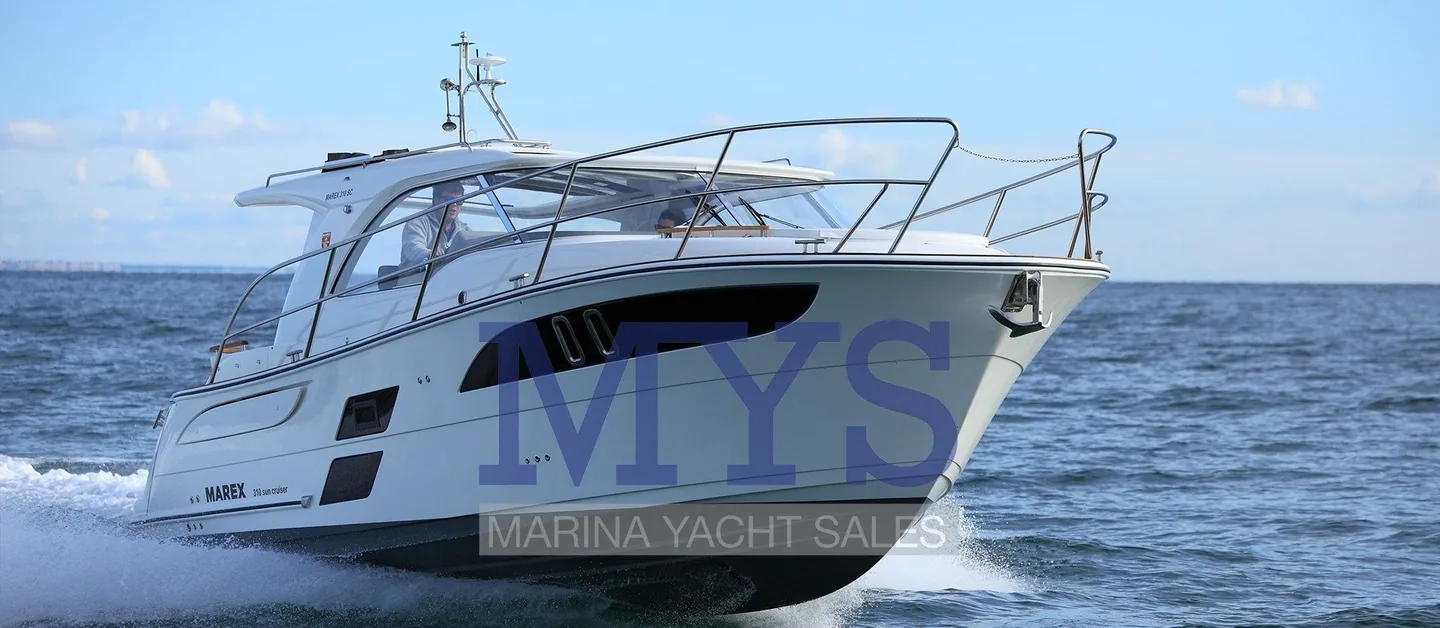
Nominal capacity is the starting line, not the answer. The official Marex 310 Sun Cruiser page lists a 280 L water tank, while the Batoo Marex 310 model guide places that figure in the wider model specification. Neither source says how often your crew will shower or how your galley is used.
Put three separate entries on the worksheet. First comes documented nominal capacity. Second comes the amount you are prepared to call available for this plan, based on evidence you can observe aboard, such as the starting indication and a recorded fill. Third comes a margin you choose not to allocate. Keeping them apart prevents a neat brochure number from quietly becoming a claim about usable water.
Marex also lists a 40 L hot-water boiler among standard features. Do not automatically add that figure to 280 L as though it were a guaranteed second reserve. For this exercise it remains part of the actual boat system to be understood; tank capacity, planning quantity and hot-water volume are not interchangeable labels.
Run the experiment on an ordinary day
The most useful measurement is a complete real cycle. Collect water in a graduated container where appropriate, or weigh the collected amount with suitable equipment, then perform the task as the crew normally would: one full shower, one washing-up session after a meal, one rinse of the platform or gear. Record litres, the people or items involved, and how many times the cycle occurs.
Break a shower into running, paused and final-rinse phases. The official Whale freshwater page separates faucets, interior showers and deck showers; for its specific Elegance Interior Shower RT2498 it describes a temporary shut-off intended to conserve water. That shows why control style can affect a routine. It does not prove that your boat has that fitting or justify applying a saving percentage.
Measure washing-up after a representative meal rather than selecting an unusually easy test. Give different rinses different rows: a brief platform rinse is not the same operation as washing down the cockpit. Repeat each cycle at least once. When two results differ, preserve the difference and select the one that matches the stop you are actually planning.
Build a worksheet that exposes every assumption
The table is deliberately blank. Its value lies in replacing borrowed averages with the crew’s measurements, while the “cycles per day” column reveals how frequency can matter as much as litres per event.
| Domestic use | Measured litres per cycle | Chosen cycles per day | Litres per day |
|---|---|---|---|
| Showers | measure aboard | state explicitly | multiply the two columns |
| Washing-up | measure aboard | state explicitly | multiply the two columns |
| Exterior rinses | measure aboard | state explicitly | multiply the two columns |
| Other defined domestic use | measure aboard | state explicitly | multiply the two columns |
| Domestic total | sum the rows |
Add the crew count, date and a short description of the test beside the table. A number without those labels becomes misleading as soon as a guest joins or the routine changes. If the crew changes, alter the cycles or remeasure; do not massage the final total until it looks convenient.
The approach echoes the documentation discipline in Batoo’s 10-metre boat ownership budget. That guide keeps quotations and costs separate; this one keeps measured litres and assumptions separate. In both cases, a missing input should remain “to be measured”, never zero.
A transparent example: 240 litres become four days
Consider an explicitly invented scenario. Start with 240 L considered available, choose a 40 L planning margin, and assume the crew’s completed worksheet totals 50 L per day for the domestic uses in scope. These figures are teaching inputs, not a Marex trial, an industry average or a recommended allowance.
The allocable quantity is 240 − 40 = 200 L. Dividing 200 L by 50 L/day gives four arithmetic days. If the same crew later measures 60 L/day, the result becomes 3.33 days. For planning purposes, rounding that up would claim a complete fourth day that the calculation has not supplied.
The 40 L margin is also only a scenario choice. Give it its own cell so it can be changed independently of measured use. Always carry the scope beside the answer: a domestic-use total cannot silently stand for every draw on the water system.
A useful sensitivity check changes one input at a time. Add one shower cycle while holding everything else constant, then change the washing-up cycle, then the margin. The largest movement identifies the routine worth discussing with the crew. This is Batoo analysis of the worksheet, not a claim that every boat has the same dominant use.
Three checks before trusting the result
First, challenge the starting amount. A segmented gauge and a nominal capacity do not by themselves establish the litres available at that moment. Record what was observed and keep uncertainty visible. Second, challenge representativeness: a cycle measured by one crew member may not describe everyone else.
Third, keep refill logistics outside the arithmetic. Place, timing and access must be confirmed separately; four calculated days do not guarantee a usable supply point on day four. Layout also shapes routines. Batoo’s comparison of open boats and enclosed cabins offers a way to observe where wet gear, cooking and clean-up happen without assigning invented consumption to either layout.
The next action is deliberately small. On your next outing, measure one shower, one washing-up session and one typical rinse, then compare their daily sum with the change you observed aboard. Repeat on a second ordinary day. Two traceable records are a better foundation for the next stop than a universal figure that never belonged to your crew.
Sources and references
Sources consulted and references retained to verify data and context.
- Marex 310 Sun Cruiser — current model and technical specificationMarex Boats
- Whale Freshwater — faucets, showers and deck showersWhale / Navico Group