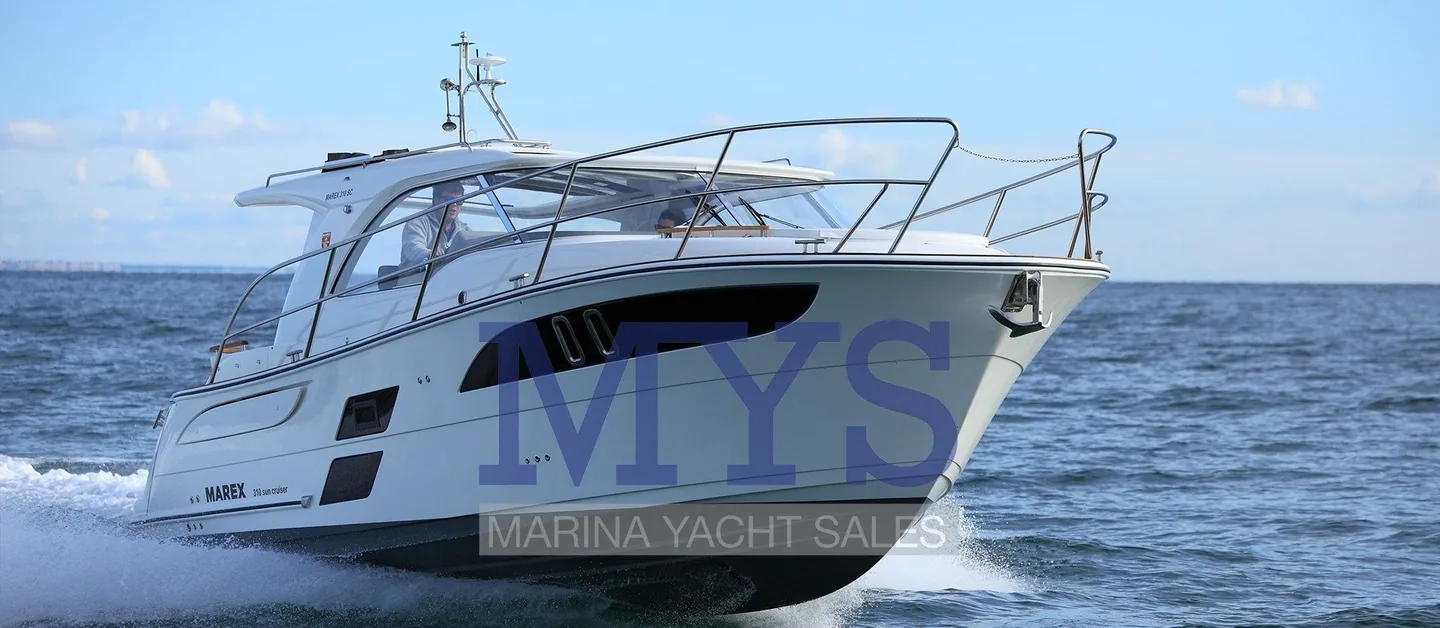
Open boat or enclosed wheelhouse: where will you live?
An open deck, Sun Top and enclosed wheelhouse make a group meet, eat and move differently. Two illustrative days reveal which space fits the intended use.
In brief
For a day spent mainly outside, an open deck keeps people and activities in one shared setting. A Sun Top adds overhead shade and shelter without creating a closed room. The Axopar 37 XC instead introduces a protected saloon behind sliding doors. The useful choice is where you want the group to gather, not how many spaces appear on a specification sheet.
Article outline
A boat may offer plenty of nominal space yet keep making people move out of one another’s way. Another can look simpler and hold the whole party together from boarding to the last drink. The practical divide is not merely outside versus inside; it is where bags land, lunch happens, wet people pass and conversation resumes when somebody wants a little separation.
The Axopar 37 family makes that choice unusually visible. This comparison uses the official layouts of the 37 Spyder, 37 Sun Top and 37 XC Cross Cabin, then applies two explicitly illustrative days. It is Batoo analysis, not a sea trial, and it draws no conclusions about performance, weather safety or personal comfort from a deck plan.
One platform, three social centres
The open boat puts the day on deck. Axopar describes seven rotating, length-adjustable sports seats and an extending dining table on the Spyder, whose standard aft arrangement is an open deck. On paper, helm, guests and activities remain part of one scene. Air, noise and sunshine are also shared because there is no main room to close.
The 37 Sun Top is a genuine middle position, not an XC with missing doors. Its extended roof provides overhead cover, and a large sliding canvas section opens the helm and cockpit towards the sky. The party still occupies an open-sided cockpit; the roof changes the experience from above without creating a separate saloon.
The 37 XC Cross Cabin introduces a room with a threshold. The builder documents a fully enclosed wheelhouse, broad sliding doors on both sides and an aft L-shaped sofa with a table. People can gather behind the doors while the side decks keep bow and stern accessible, yet every transition between cockpit and saloon becomes a small choice.
This is deliberately narrower than Batoo’s published Axopar 37 XC used-boat guide. That dossier deals with versions, documents and purchase checks; this article asks where the crew will actually spend an ordinary day.
A decision matrix built around behaviour
The matrix combines the manufacturer’s stated layouts with editorial interpretation of everyday movement. It does not measure noise, temperature or effective weather protection, all of which need to be experienced on the exact boat and specification.
| Moment aboard | Open deck / Spyder | Sun Top | XC Cross Cabin |
|---|---|---|---|
| Natural gathering point | One outdoor setting | Outdoor cockpit beneath adjustable overhead cover | Enclosed saloon plus separate exterior areas |
| Moving between tasks | No doors or threshold | No doors; roof remains over the central zone | Crew chooses whether side doors stay open or closed |
| Group meal | Fully connected to the surroundings | Shaded from above, open at the sides | L-shaped sofa and table inside the wheelhouse |
| Bags and loose gear | Must be accommodated by the selected open layout | Same issue despite the roof | Can be separated from the cockpit, but is not automatically secured |
| Main compromise | Maximum connection, little separation | Cover without a closed room | Useful separation, less continuous togetherness |
A second variable sits behind every column: Axopar makes the aft deck modular. The official pages show an open aft deck as standard and alternatives that include a wet bar, multi-storage compartment, U-sofa or aft cabin; the XC also lists an aft bench. The badge on the cabin roof therefore cannot tell you how a particular boat will host people.
Illustrative day one: six people, a swim and lunch
Picture six people arriving with soft bags, towels and food. This is a constructed scene, not an observed test. On the Spyder, the day remains physically outside: the driver can stay within the conversation, somebody returning from the water does not cross a saloon, and the extending table turns the sports-seat group into a dining area. It is coherent when being outside together is the point, less so when half the party expects another principal room.
The Sun Top changes the same scene without fragmenting it. Its roof provides overhead shade or ordinary shelter, while the sliding canvas adjusts how open the central area feels. Lunch can remain one event for everyone. A buyer asking for side walls, a door or a true lobby is asking this open-sided solution to perform a different job.
The XC can move the meal to the L-shaped sofa inside and leave swimming activity outside. That division helps when people have different rhythms, but it can also split the group into a cockpit party and a wheelhouse party. Batoo’s Jeanneau DB/37 OB guide provides a useful published counterpoint: its open dayboat concept pushes the shared centre much more decisively towards the cockpit.
Think about bags as part of the social plan. On an open deck, an unassigned bag often occupies a seat or passage. Inside the XC, moving belongings through a door can clear the cockpit but may clutter the saloon. Neither is inherently better; the useful question is which space you are willing to surrender first.
Illustrative day two: early start, late return
A long day gives separation more value without deciding the argument. Imagine an early departure when some guests still want jackets, followed by an evening return when others prefer to remain outside. On the Spyder, the party negotiates both moments in one environment. That simplicity is appealing, but there is no alternative main room for somebody who wants a boundary.
The Sun Top retains lateral openness and a continuous conversation while reducing exposure from above in the central area. Its large canvas section can change the balance again. This is a statement about ordinary use of the documented roof, not a claim that the boat is suitable for any particular conditions or that cover makes a passage safe.
The XC gives the wheelhouse a clear role: close the doors and the table, seats and helm occupy a separate volume; open them and traffic can flow directly to the side decks. The question during a viewing is not whether the doors work, but whether your party would use them often enough to justify reorganising the day around an inside room.
The published Batoo analysis of the Buster XL CC’s clear deck sharpens the contrast. When the primary purpose is carrying gear and moving freely, furniture and enclosure consume space that may be more useful empty. Social cruising may reverse that priority, but only the intended day can reveal it.
Rehearse the day before choosing the boat
A useful viewing needs a script. Write down the actual sequence first: how many people board, where six bags go, who prepares food, who wants to sit near the helm, how a wet swimmer returns, and where everybody gathers for the final leg. Use realistic objects if the seller allows it, while remembering that this is a layout exercise rather than a technical inspection.
Run the same script on each candidate. Rotate the Spyder seats, extend the table, walk both side decks, operate the Sun Top canvas and the XC doors, and then try to reach storage with every intended seat occupied. Notice interruptions: a person who must stand, a bag that blocks a route or a door that is repeatedly left in the wrong position tells you more than a wide-angle photograph.
Treat the aft cabin as a separate decision. It changes the daytime deck module, but this article does not judge overnight comfort or promise that nominal berths suit a particular crew. Ask for the exact build specification so open aft, wet bar, storage module, U-sofa and aft cabin are never blurred into a single idea of “the model.”
The next step is simple and discriminating: view two versions on the same day and repeat the identical boarding-to-departure sequence. Choose the one in which your group finds its places without explanation. A layout that needs a sales pitch every time somebody moves is unlikely to become more natural after purchase.
Sources and references
Sources consulted and references retained to verify data and context.
- Axopar 37 SpyderAxopar Boats
- Axopar 37 Sun TopAxopar Boats
- Axopar 37 XC Cross CabinAxopar Boats