Jeanneau DB/37 OB: specifications, checks and prices
A source-led Jeanneau DB/37 OB guide covering conflicting official dimensions, variants, used-boat checks, alternatives and the observed Batoo asking price.
In brief
The Jeanneau DB/37 OB is a twin-cabin outboard dayboat for social day trips and short weekends, especially where a transformable cockpit matters more than long-range accommodation. Its main caveat is complexity—from terraces, systems and engines—combined with differently defined official dimensions, so the individual boat’s documents must be checked before berthing, surveying or buying.
Article outline
Model factsheet
Editorial data from official sources and observed listings. Open only the level of detail you need.
Key facts
- Observed years
- 2024
- Length
- 12.22–12.3 m
- Beam
- 3.56 m
- Draft
- 0.73 m
Specifications and engines
2× Yamaha XTO + Joystick 450 hp
Observed prices
Observed asking prices from eligible active Batoo listings in this dossier, grouped by currency. This is not a valuation: taxes, equipment, condition, year and negotiation can change the final price.
Observed listings (2)
Listings form the dossier dataset and may change or become unavailable.
Images come from active Batoo listings and may show different individual boats, years and configurations. Brokers and sellers have not reviewed or approved this dossier. Broker Pro indicates an active subscription, not identity verification, and never guarantees editorial coverage, placement or assessment.
See DB/37 OB listings on BatooListing photographsReal photographs from listings included in the dossier, with a link to each source.
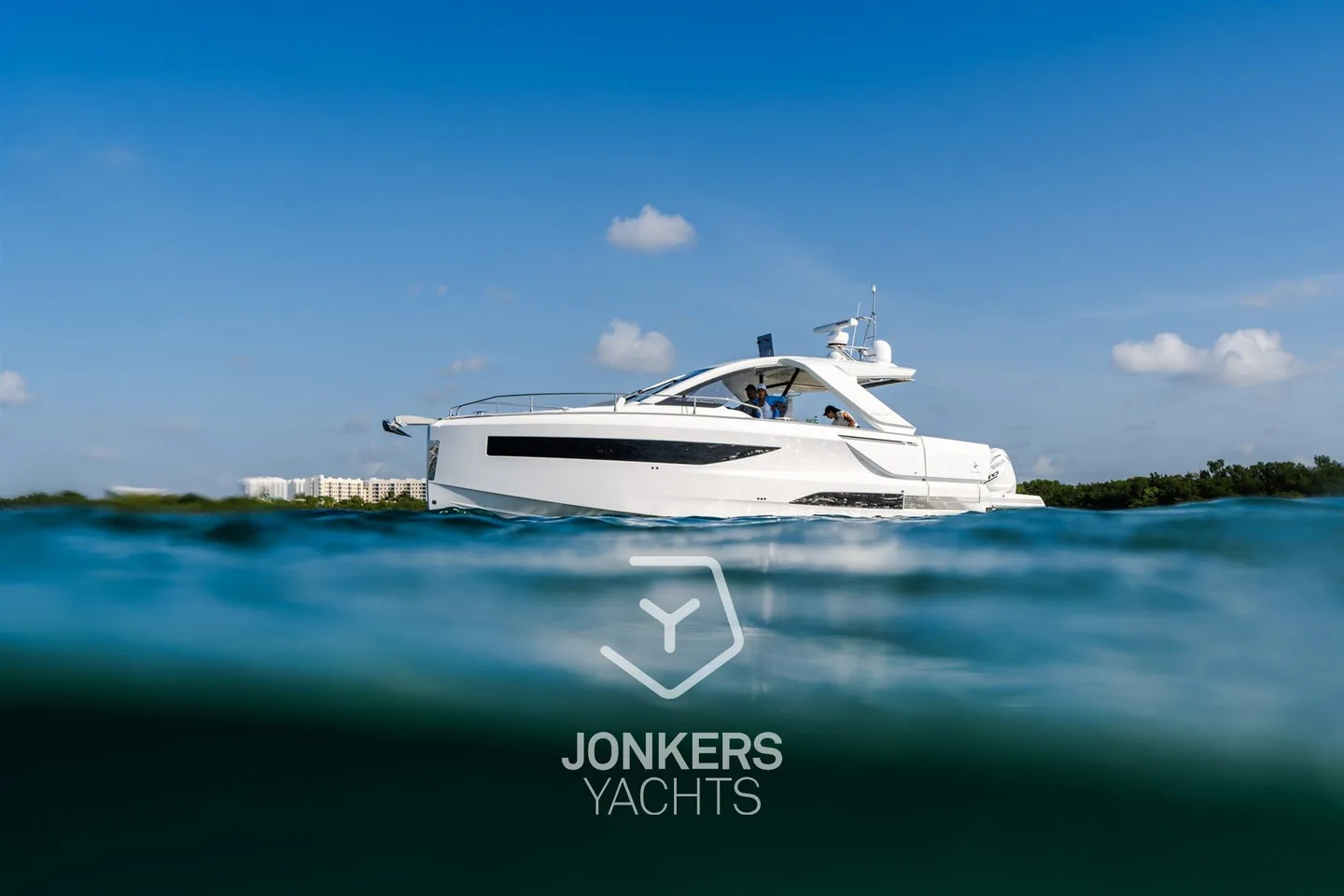
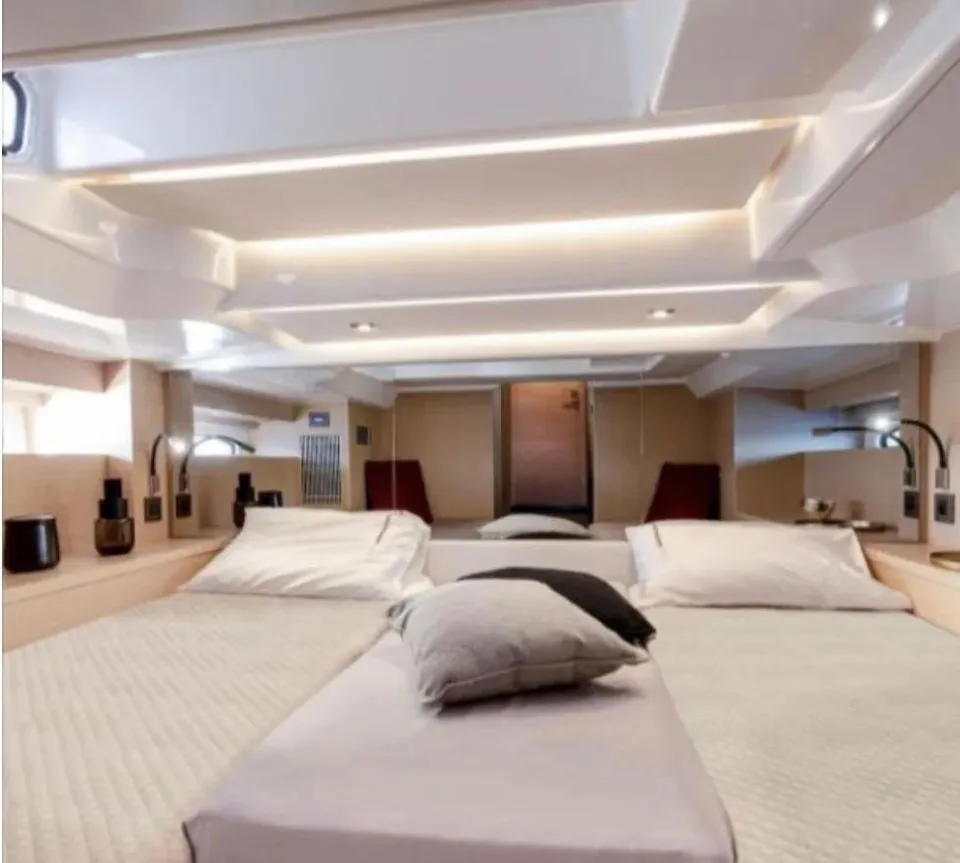
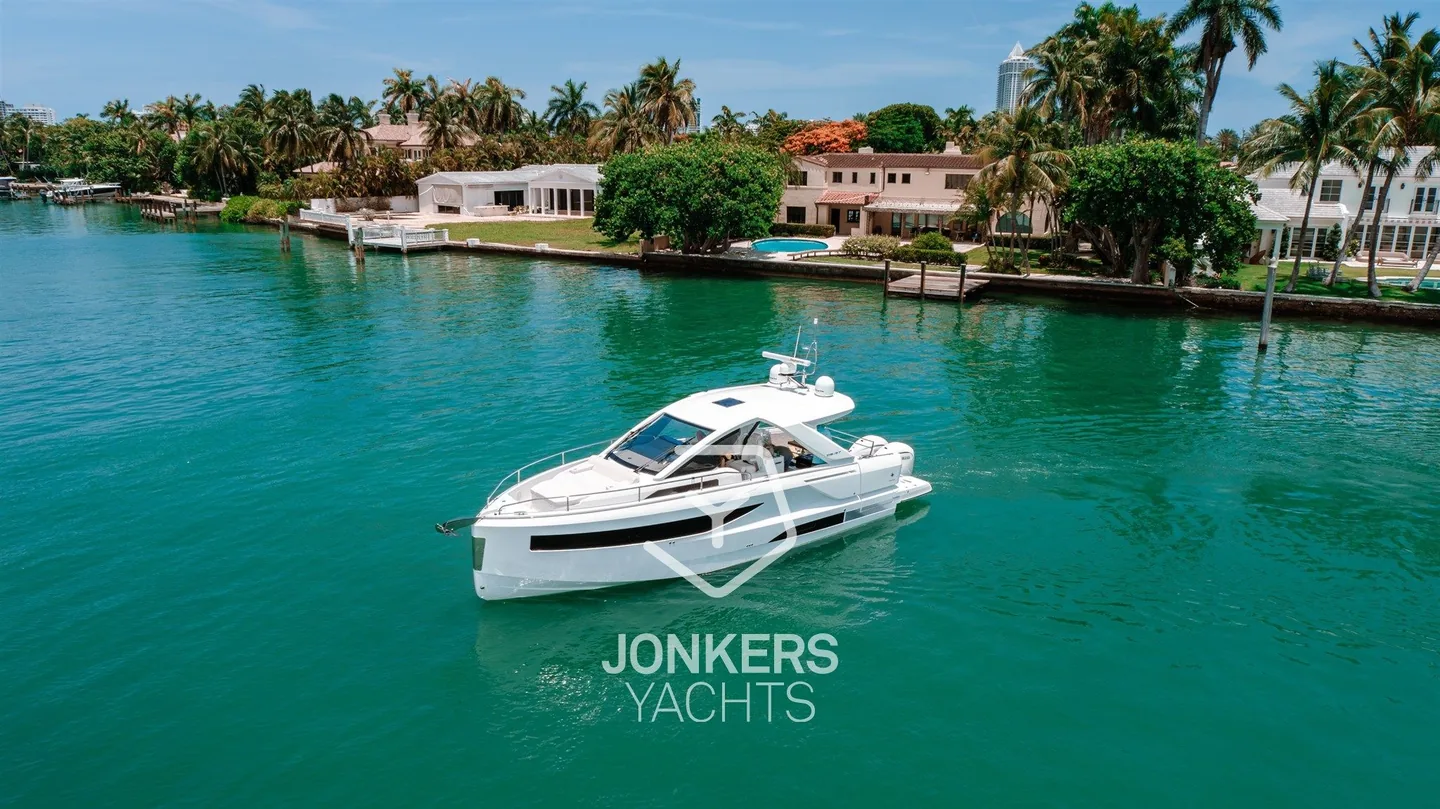
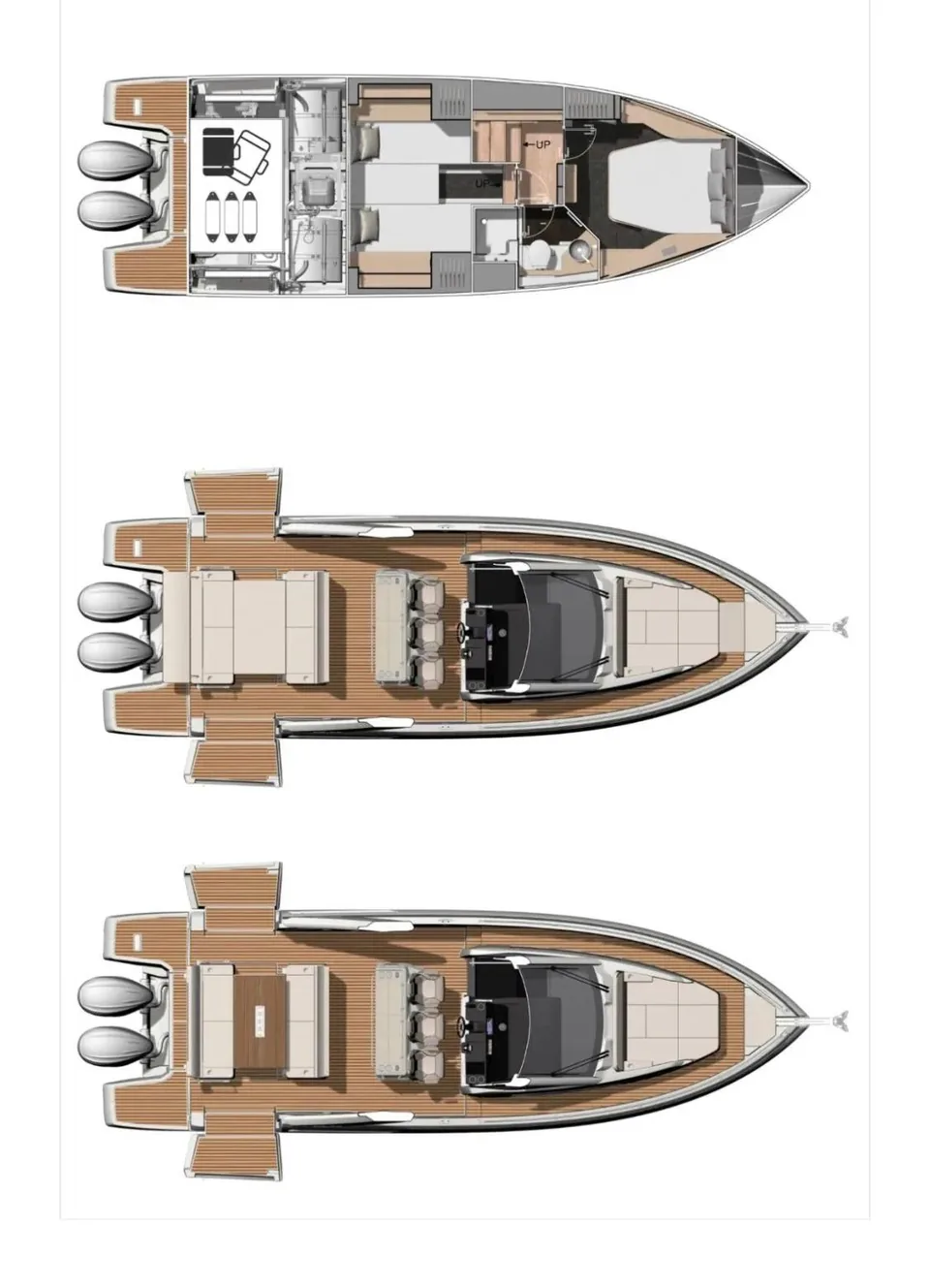
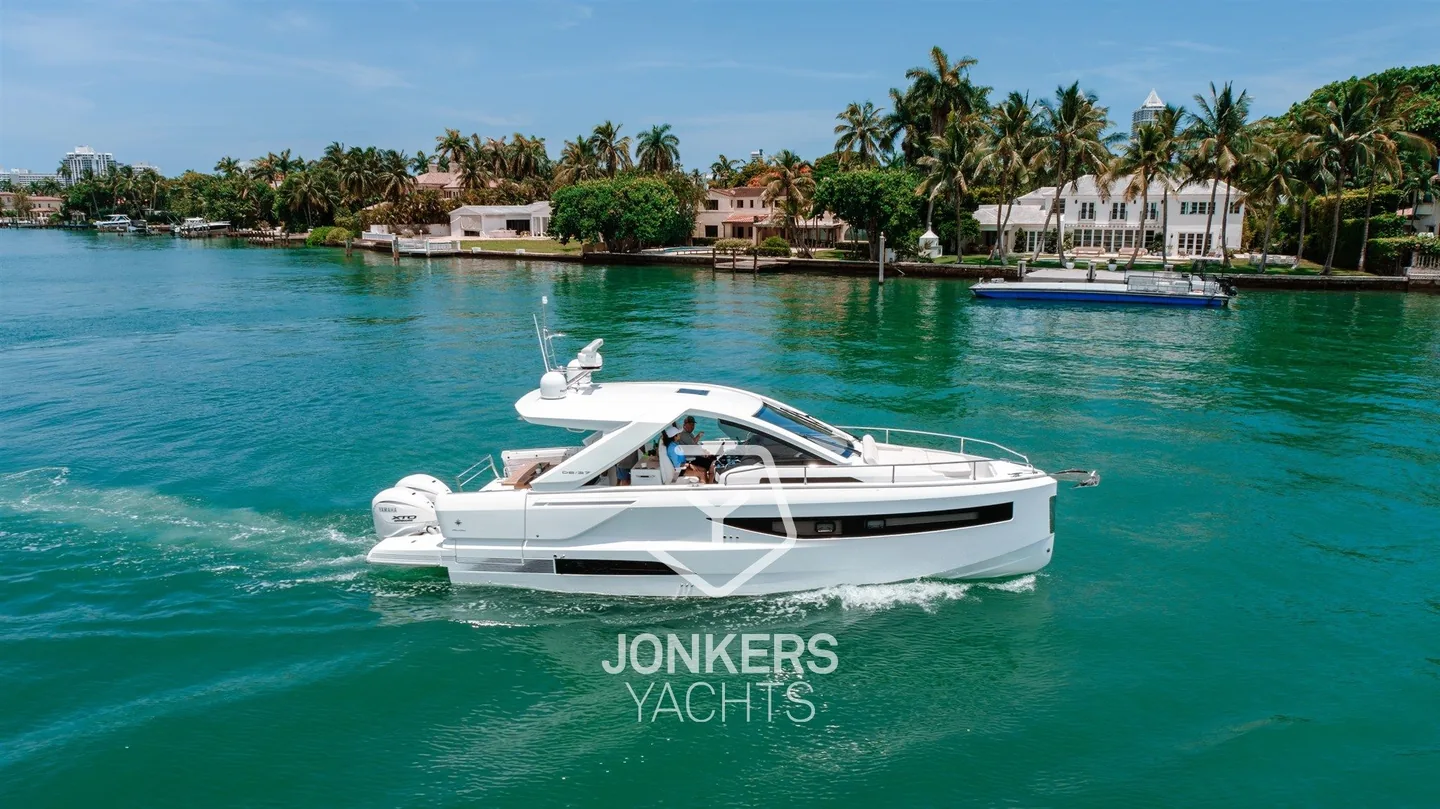
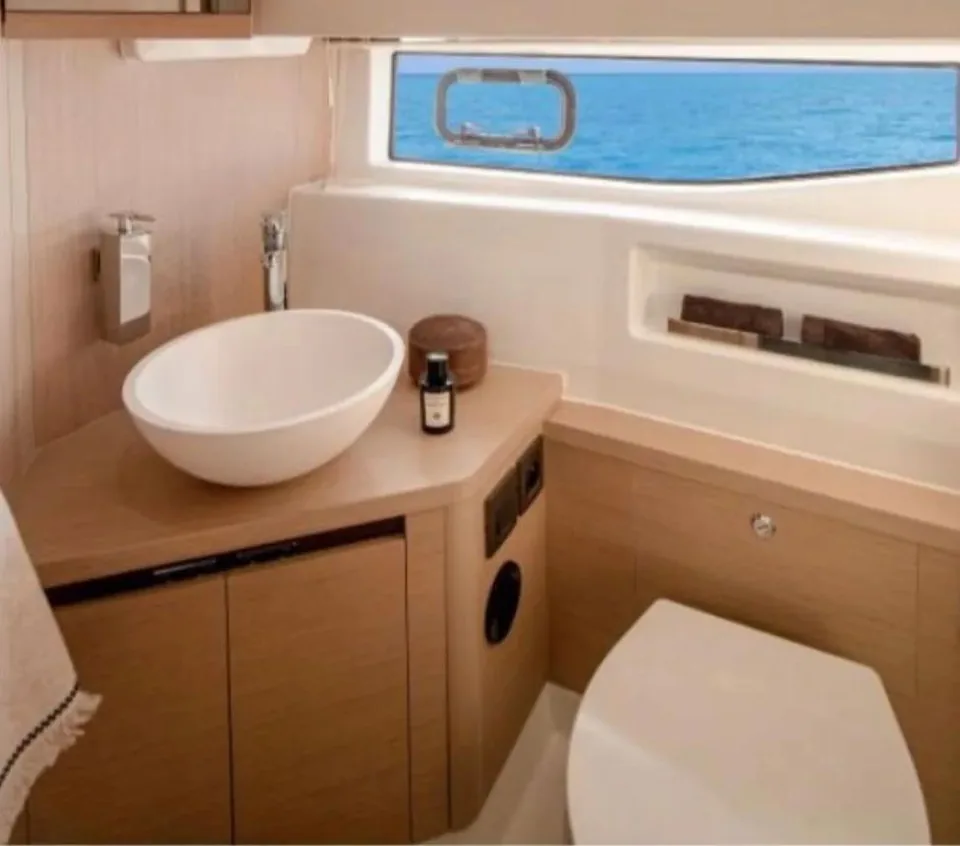
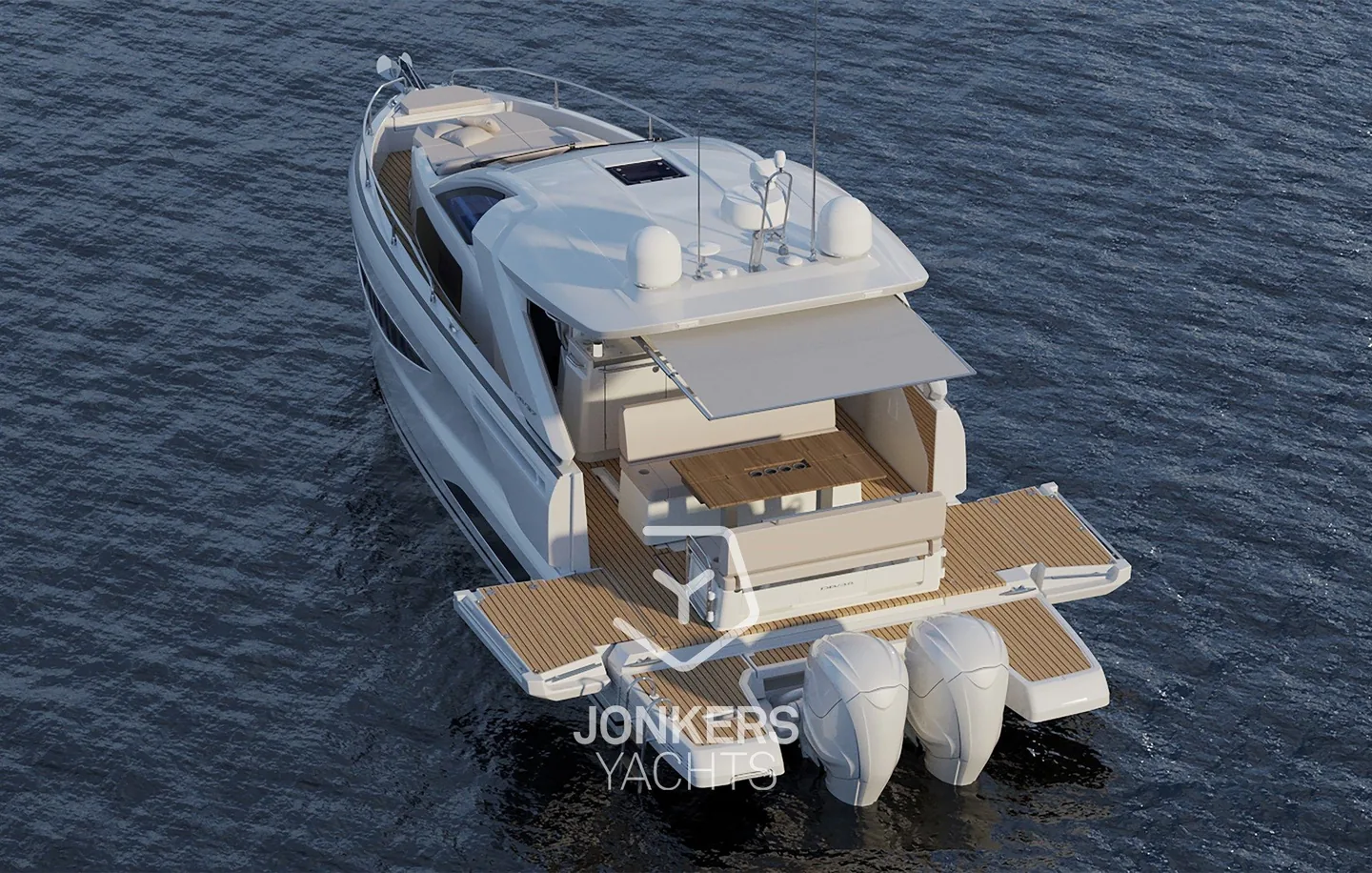
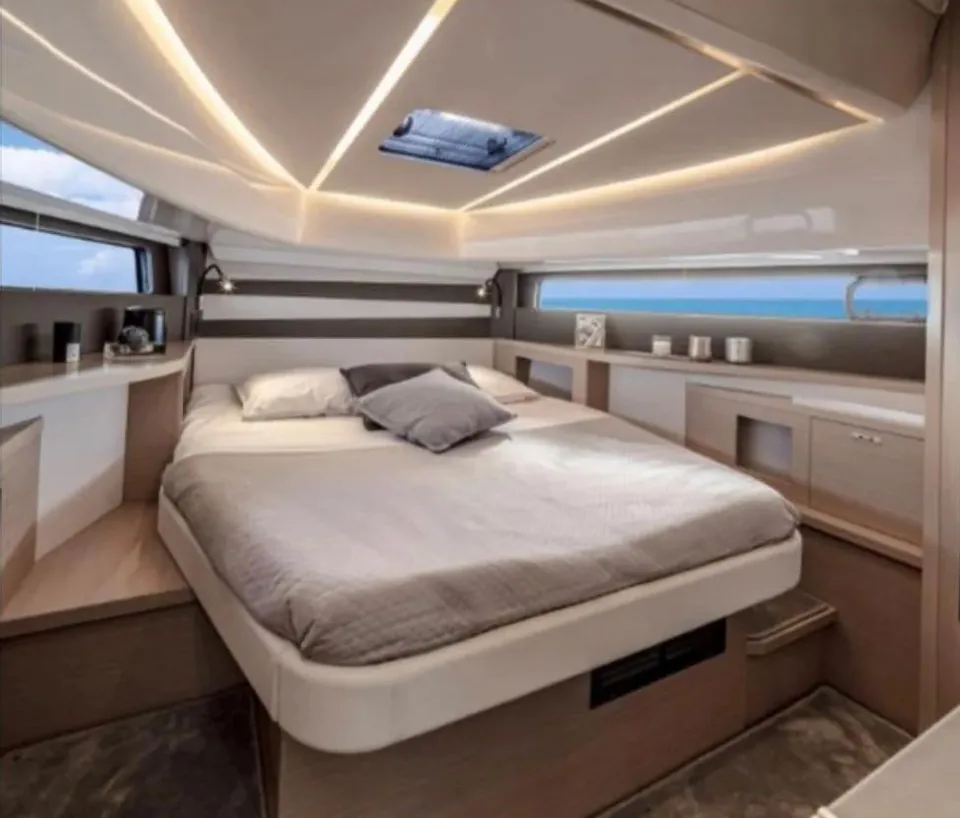
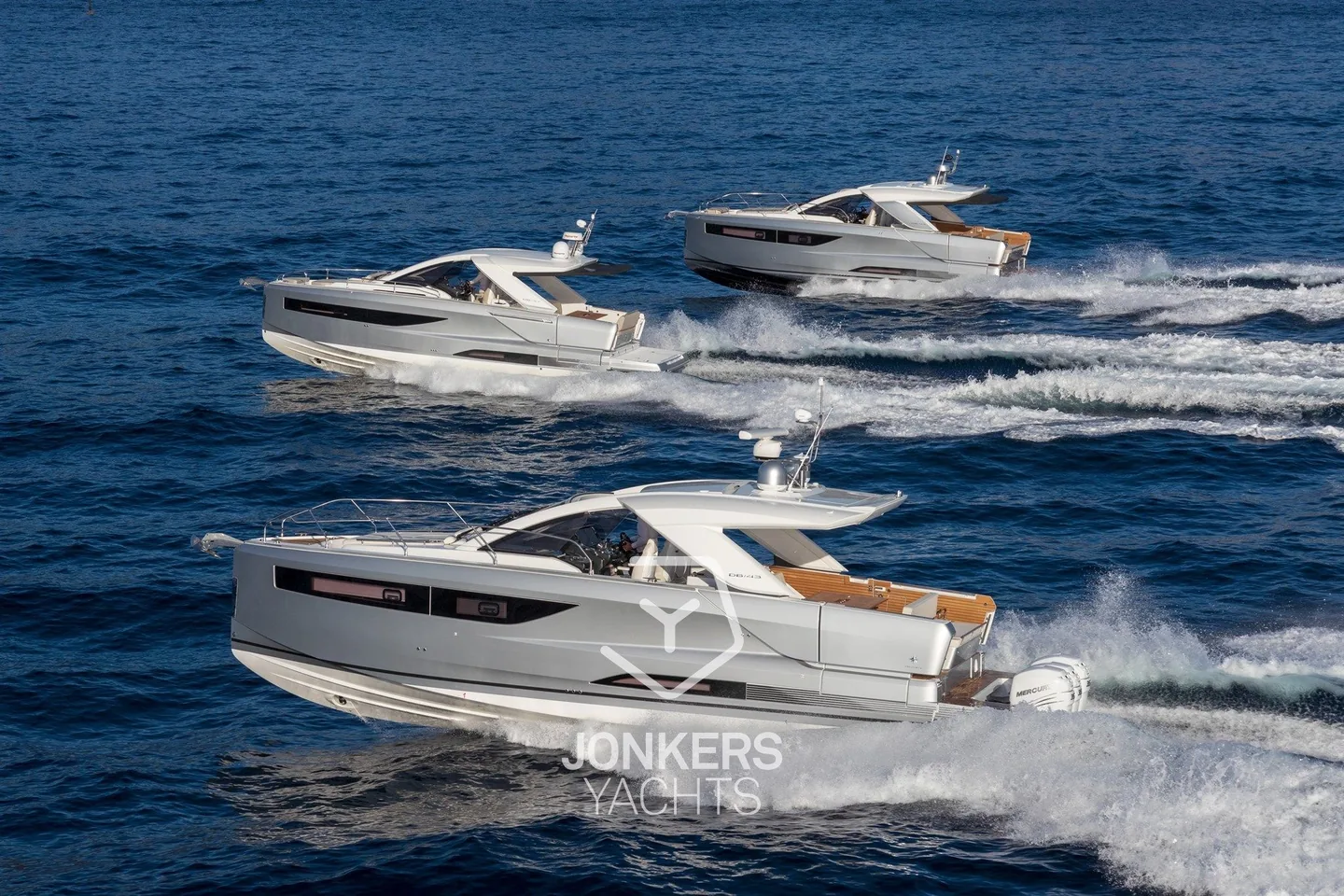
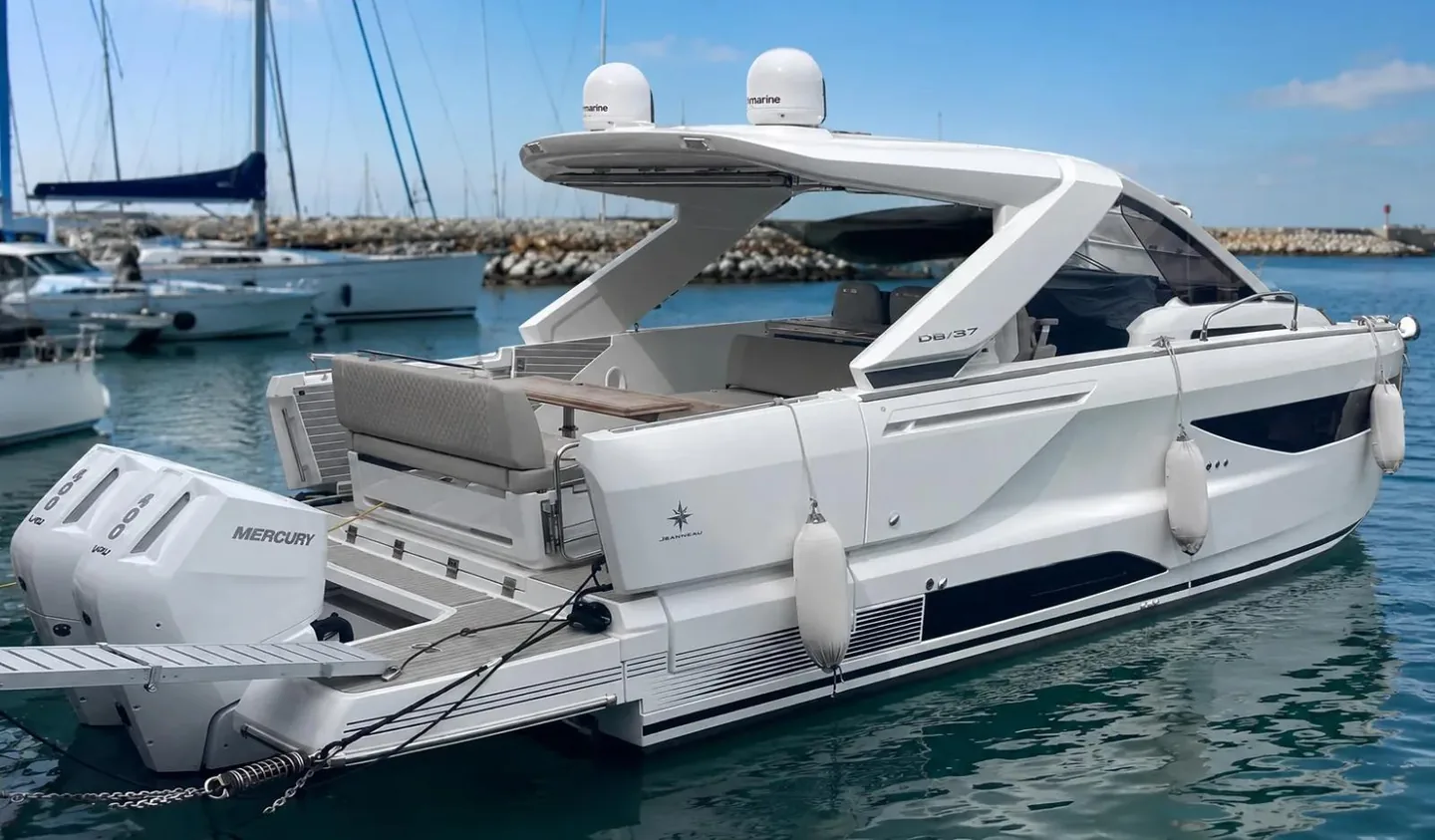
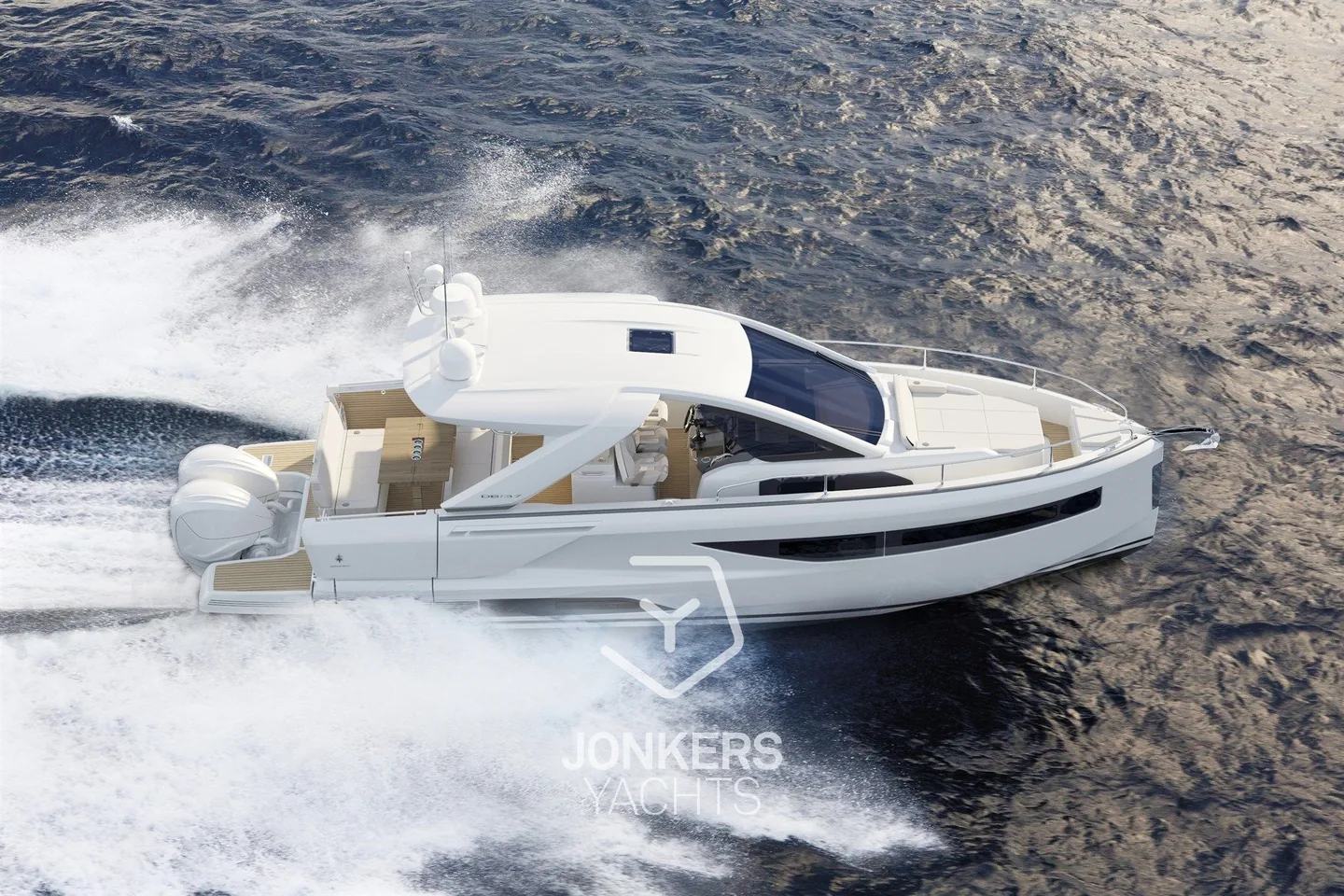
The Jeanneau DB/37 OB is an outboard dayboat with genuine weekending ambitions. Its main living area is built around the cockpit and opening side terraces, while two cabins and one head sit below. That combination is its strongest proposition and the right basis for judging it: this is not a boat to select on power or styling alone, but on how crew, guests and luggage will move through the boat in normal use.
This guide keeps four evidence layers separate. Dimensions and factory configurations come from Jeanneau’s current model page and official brochure; prices and observed configurations come from Batoo’s 6 October 2026 dossier; use-case judgments are Batoo editorial analysis; and the performance, consumption, condition and equipment of any individual boat remain unknown until documents and inspections establish them.
Design, specifications and dimensional conflicts
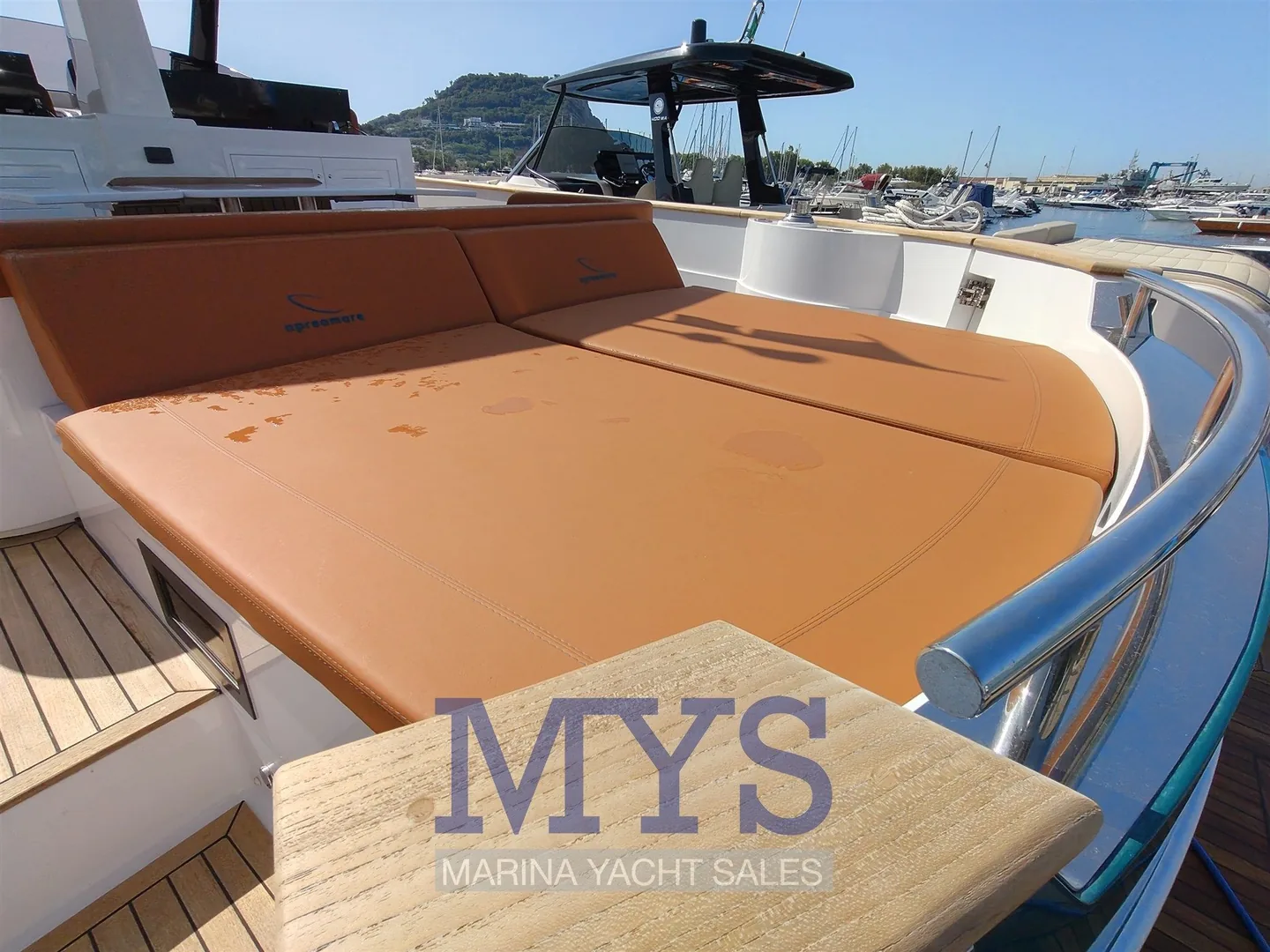
Jeanneau credits the exterior styling to Garroni Design and the hull to Michael Peters Yacht Design. The defining deck feature is a cockpit that expands through two electrically operated side terraces, arranged around a central outdoor galley, with recessed side decks leading forward. This architecture puts social space first. Its moving structures, closing procedure and weight distribution deserve as much attention as the visual effect.
The official sources do not label every dimension in the same way. Jeanneau’s model page gives a 12.22 m overall length, 10.65 m hull length, 3.56 m hull beam and 1.17 m standard draft. The official brochure’s outboard table instead gives 11.82 m LOA without options, the same 10.65 m hull length, 3.55 m beam and 0.72 m hull draft. Batoo’s dossier also records listing lengths of 12.22 and 12.30 m and a 0.73 m draft. These may reflect different definitions or configurations; averaging them would conceal the issue.
| Item | Jeanneau model page | Jeanneau brochure, OB | Batoo dossier |
|---|---|---|---|
| Length | 12.22 m overall | 11.82 m LOA without options | 12.22–12.30 m |
| Hull length | 10.65 m | 10.65 m | not consolidated as a structured field |
| Beam | 3.56 m | 3.55 m | 3.56 m |
| Draft | 1.17 m standard | 0.72 m hull draft | 0.73 m |
| Fuel | 2 × 480 l | 2 × 480 l | not consolidated as a structured field |
Berth contracts, transport plans, insurance and regulatory paperwork should use the measurements in the individual boat’s documents, including any options that alter overall length. The table exposes a documentation conflict; it does not choose a universal figure for every hull.
Variants, engines and accommodation
OB denotes the outboard version and should not be confused with the DB/37 IB sterndrive model. The brochure lists twin Yamaha 350 or 450 hp packages with joystick for the OB and states a maximum of 2 × 450 hp. One of the two dossier offers records twin Yamaha XTO 450 engines, or 900 hp in total. That is evidence for one observed configuration, not a standard specification for every DB/37 OB.
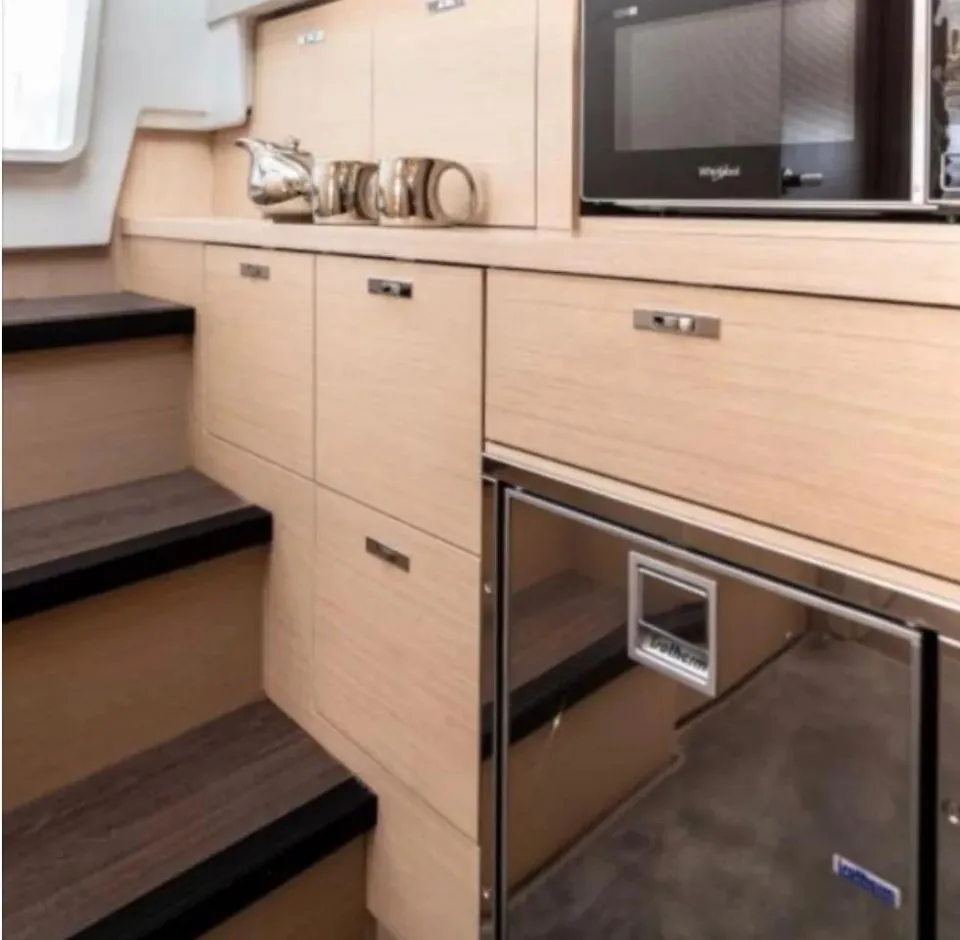
Below deck, Jeanneau documents two cabins, four berths, one head and a breakfast point. The basic room count is shared across the propulsion variants, although the machinery volumes and aft platform differ. A purchase file should still identify model year, factory options, finishes, installed systems and engine serial numbers. A model name cannot substitute for an equipment list.
Both offers in the dossier are dated 2024, yet only one has structured cabin and head data and only one carries a full engine record. The missing fields must stay unknown. They should be resolved through the declaration of conformity, build documentation, option invoices and physical serial numbers, not by borrowing details from the other listing.
Reasoned strengths and limitations
The strongest feature is the cockpit’s transformation at anchor. The terraces increase contact with the water, the central galley keeps food preparation within the social area, and the side decks distribute people between bow and stern. Two cabins make an overnight stay plausible without turning the DB/37 OB into a boat designed primarily for long residential cruises.
Complexity is the corresponding limitation. Electric terraces, convertible seating, large outboards, joystick control and comfort options introduce actuators, seals, wiring and service points. Buyers also need to judge the open area against the wind, sun and spray typical of their own cruising ground; generous space at anchor is not the same thing as all-weather shelter.
The maximum engine package suggests a wide performance envelope, but it does not prove the speed or fuel burn of a particular boat. Load, propellers, hull condition, installation and sea state all matter. Without an instrumented test tied to the hull for sale, this guide assigns no cruise speed, top speed, range or consumption.
Ideal use and owner profile
The DB/37 OB makes most sense for owners who run social day trips, swimming stops and meals at anchor, yet want two couples or a small family to stay aboard for a short weekend. Its space plan prioritises shared areas over compartmental privacy, so it suits a coastal programme in which the cockpit is used much more than the cabins.
It is a less obvious fit for buyers whose first requirements are long-range efficiency, substantial stores for extended cruising or fully enclosed protection in every season. Those missions may still be possible on a particular build, but tankage, payload, systems and real shelter must demonstrate the case. The “premium dayboat” label alone does not.
A useful viewing exercise is to rehearse a complete day. Bring representative bags, rig fenders and lines, walk forward with the terraces closed, serve the galley, return aboard after a swim, convert the sleeping spaces and simulate an early departure. This often reveals practical friction that a clean, static showroom presentation does not.
Used-boat checks and hull-specific evidence
The survey should begin with the boat’s technical identity rather than its listing. Match the hull identification number, build year and model designation to the conformity declaration, owner’s manual, invoices and factory option record. Because published dimensions differ by definition, the sale contract should state the actual configuration and the measurement relevant to the berth or transport plan.
For the outboards, request serial numbers, diagnostic hours, service history, stored alarms, gearcase work and a loaded sea trial. An independent engine technician should inspect mounting, steering, joystick integration, cable and hose runs, propellers, corrosion and synchronisation. The 900 hp package recorded for one offer must not be imputed to the other.
Hull and deck work should include visual inspection and appropriate moisture or percussion checks, with attention to impact repairs, leaks and drainage. Cycle each terrace repeatedly, check alignment, seals, sensors and locking devices, and follow the manufacturer’s operating limits. Test 12/230 V systems, batteries, charging, pumps, head, shower, refrigeration and any optional climate equipment one circuit at a time.
The sea trial needs a written protocol: note load and fuel, begin from cold, manoeuvre slowly, accelerate progressively, turn both ways, stop, record abnormal noise and temperatures, then read diagnostics again. Separate reports from the marine surveyor and engine technician help prevent driving impressions from being mistaken for evidence.
Alternatives and a priority-led comparison
Three documented in-range alternatives help frame the decision: DB/37 IB, DB/43 OB and DB/43 IB. They are not automatic equivalents. The table is a Batoo editorial framework for deciding what to investigate, not a ranking or a replacement for the builder’s current specifications.
| Model to compare | Buyer question | Reason to include it |
|---|---|---|
| Jeanneau DB/37 IB | Outboards or sterndrives? | Similar core concept with a different propulsion architecture |
| Jeanneau DB/43 OB | Is moving up the range while retaining outboards useful? | Test whether additional space justifies the budget |
| Jeanneau DB/43 IB | Are a larger platform and another propulsion layout both wanted? | Separate the volume decision from the engine decision |
Compare every candidate on the same basis: tax status, engines, options, model year, remaining warranty, delivery cost and remedial work. A lower asking price can be a false economy when key equipment is absent or deferred maintenance is substantial.
Observed asking price and methodology
On 6 October 2026, the dossier contained two active, editorially eligible Batoo offers, both recorded as 2024 boats. Only one disclosed a price: €499,000. The observed range is therefore €499,000–€499,000 with a sample of one; the unpriced offer neither expands nor confirms that range.
This is an asking price, not a valuation or achieved transaction. Taxes, engines, hours, options, condition, warranty, location and negotiation can materially alter comparability. With one disclosed amount, the responsible interpretation is “one observed price point,” not “the market price of the model.”
Images come from current Batoo listings and may show different individual boats or configurations. Brokers and sellers have not reviewed, validated or approved this dossier. Where Broker Pro appears in platform data, it means only that a subscription is active; it is not identity or KYB verification and never guarantees editorial coverage, ranking or a positive assessment.
Sources and references
Sources consulted and references retained to verify data and context.