Does the helm fit you? Seat, wheel and access
Two people can reach different conclusions at the same helm. A stationary viewing separates documented adjustments, personal fit and questions that still need an organised trial.
In brief
To judge whether a helm fits, each regular user should separately observe the seat, wheel, foot support and access on the actual boat, with controls inactive and adjustments demonstrated by an authorised person. Brochure features show possibilities, not guaranteed comfort. Record two individual settings and leave visibility, fatigue and behaviour under way to an organised trial.
Article outline
A dramatic helm can win a buyer over before anyone has sat down. It cannot show whether two regular users will both find a workable relationship between the seat, wheel, foot support and the space needed to enter or leave. That question deserves a static viewing of the actual boat, followed by a clearly separate operational assessment.
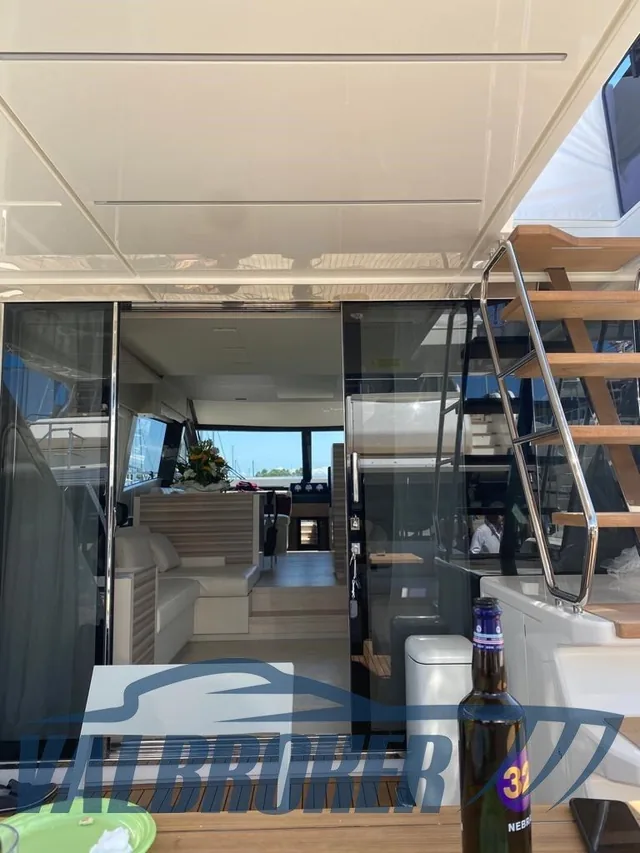
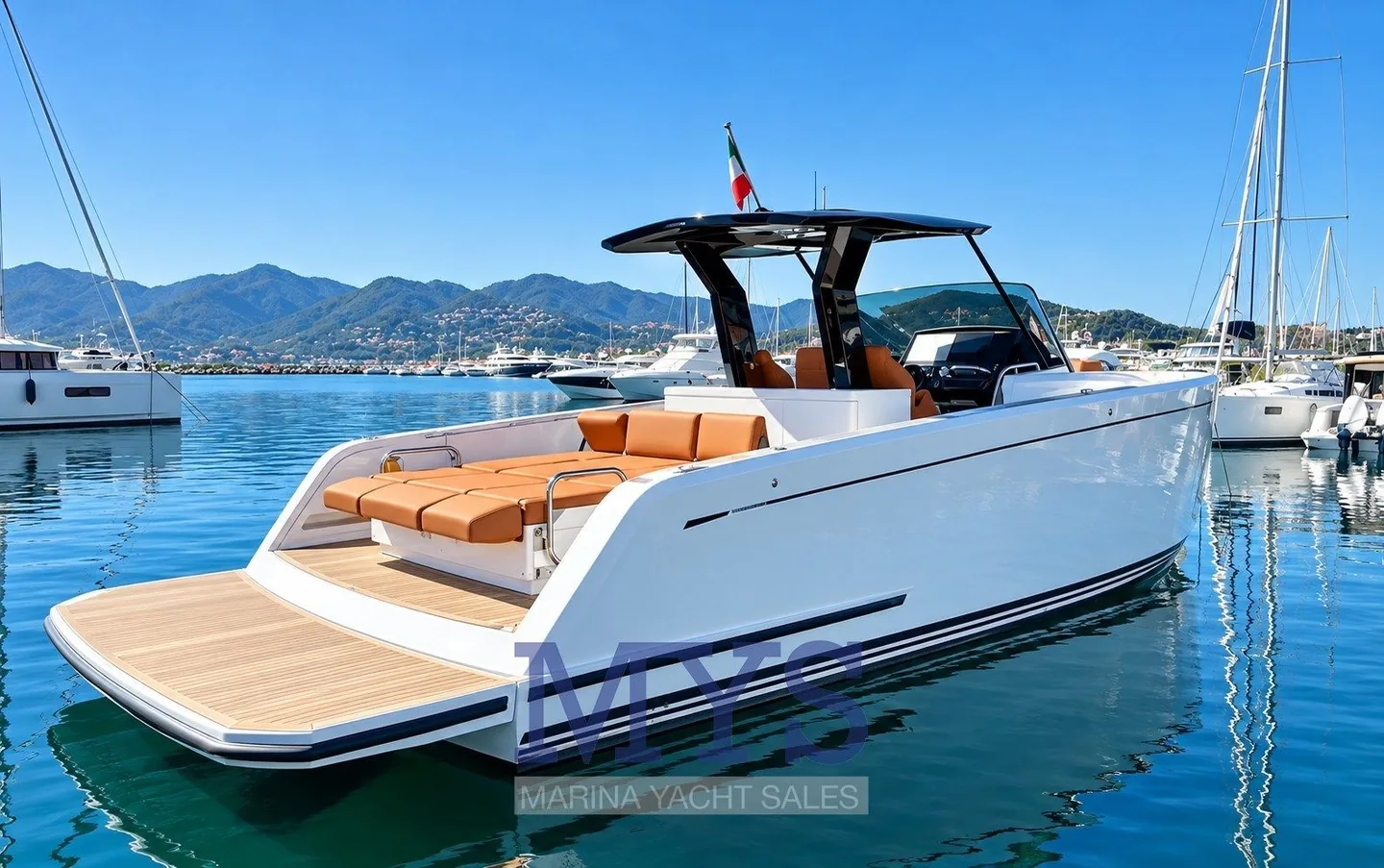
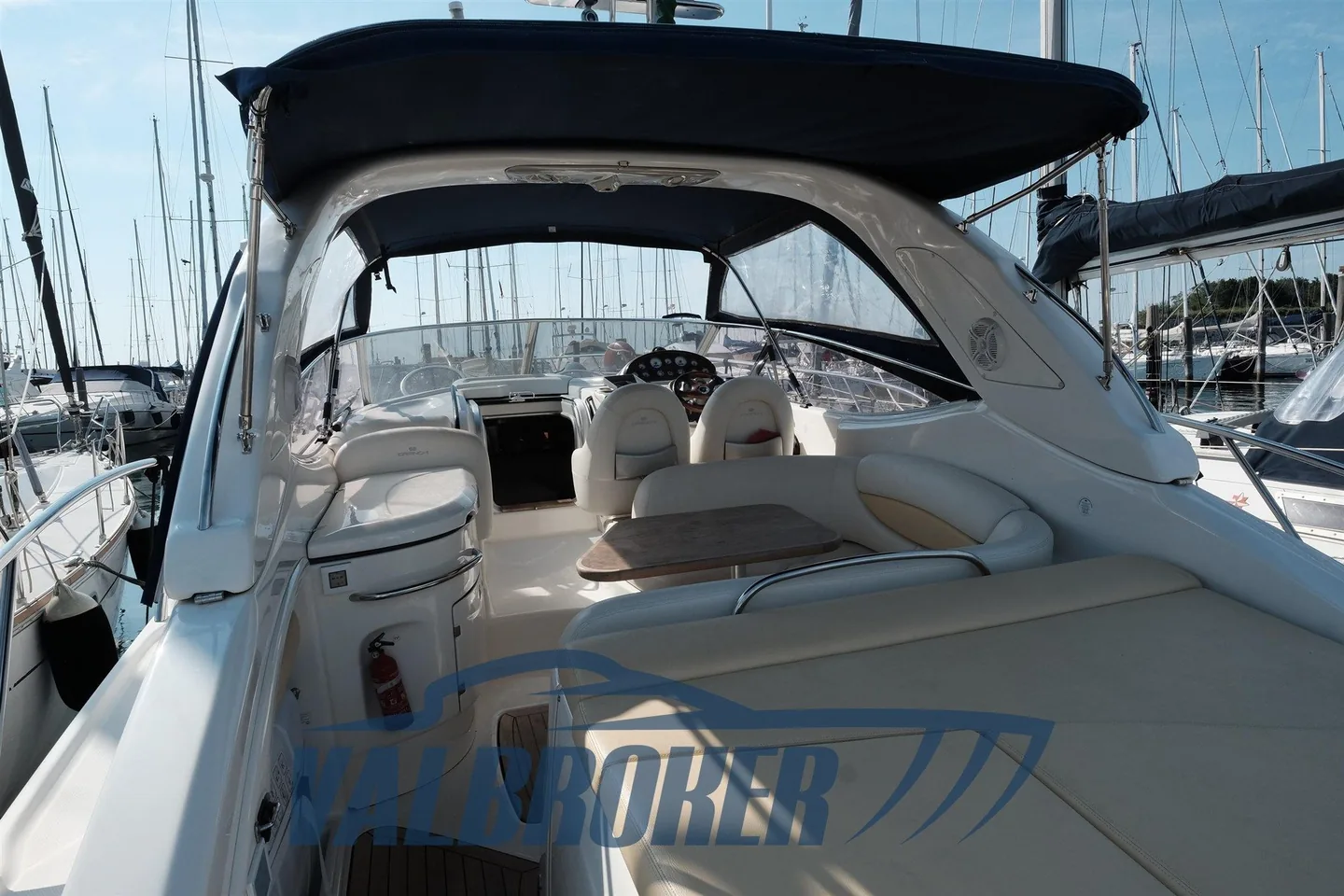
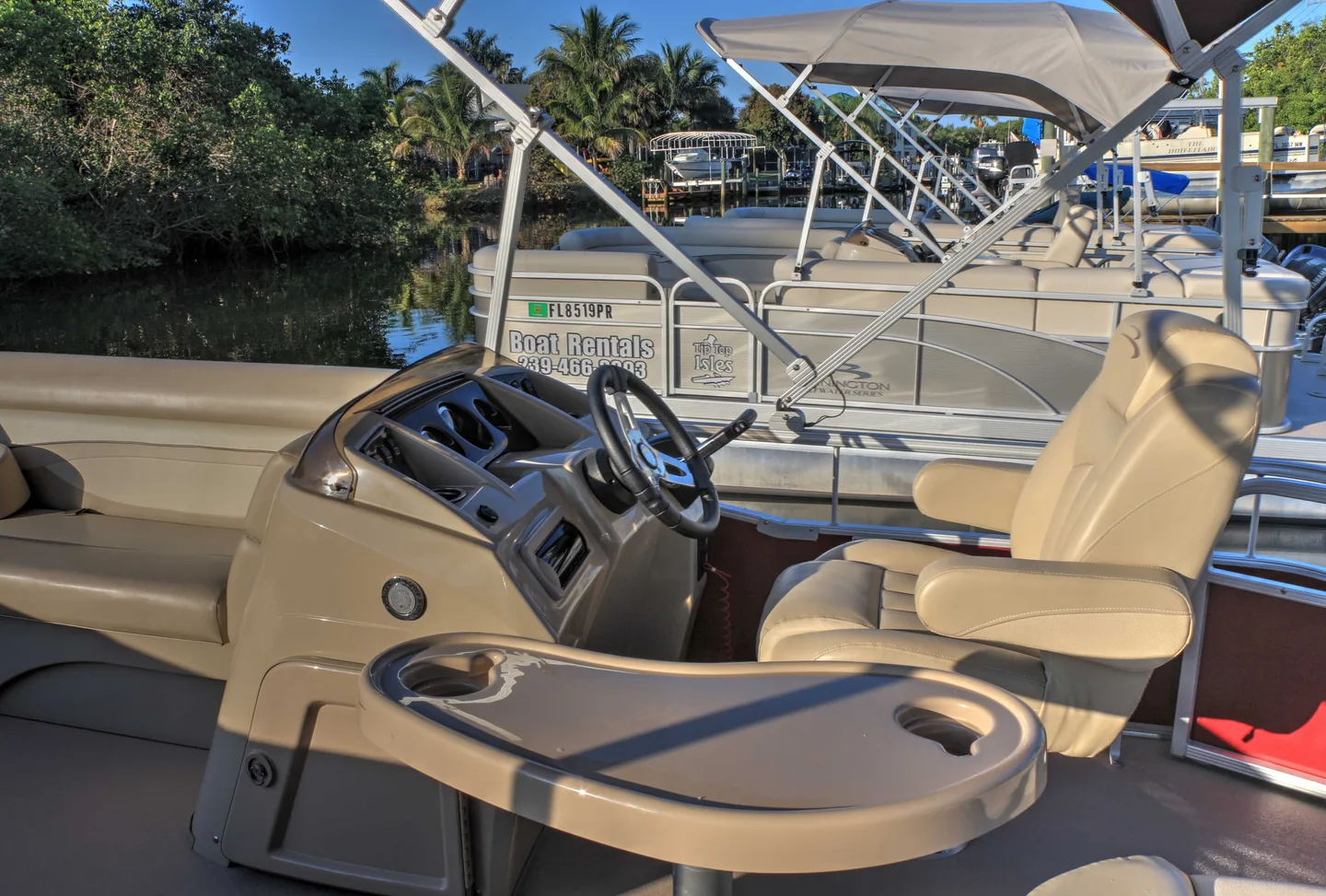
The scene below is explicitly illustrative. Two prospective users take turns at one berth-side helm, the controls remain inactive, and the owner demonstrates only adjustments covered by the boat’s documentation. Axopar 37 Sun Top and Jeanneau DB/37 provide two documented examples, not contestants in a model ranking.
Equipment lists describe options, not personal fit
The official Axopar 37 Sun Top page lists rotating, length-adjustable front seats with flip-up bolsters. It also identifies a footrest and a lowered floor at the helm. Those are useful facts about the range currently presented by the builder, but they do not state the adjustment travel, establish the specification of every model year, or predict how a particular person will sit.
A bolster is the section of the seat that folds up to support a different posture. Its presence creates another configuration; it does not guarantee that every user will prefer it or reach the fixed supports in the same way. The same caution applies to a lowered floor: the brochure feature is real, while the individual result remains something to observe on the configured boat.
The 2025 Jeanneau DB/37 brochure documents three adjustable bolster seats for pilot and co-pilots plus an adjustable steering wheel. It gives no adjustment ranges or measured ergonomic outcome. A buyer therefore needs the year and equipment record for the vessel being viewed before treating those brochure features as present.
One helm, two users, no averaged answer
In this illustrative visit, User A goes first while User B watches. The owner demonstrates the authorised release and locking sequence; A does not start machinery, move the steering system or operate propulsion controls. Once the position is set, A records where the feet rest, how the wheel meets the body, whether entry and exit feel straightforward, and whether a fixed fitting forces an unwanted movement.
The helm is then returned to its documented starting position and B repeats the sequence. The useful discovery is not whether A and B choose identical settings. It is whether the real boat offers two intelligible, repeatable arrangements and whether changing between them is practical for the people who will actually use it.
If B cannot settle, the worksheet should preserve that outcome without diagnosing its cause. The limit may involve the available adjustment, the individual preference, the installation on this vessel, or a mechanism needing attention. A static visit cannot decide among those possibilities, and it should not try.
This focus differs from Batoo’s guide to open decks and enclosed wheelhouses, which asks where a whole group spends the day. It also leaves model identification and used-boat history to the separate Axopar 37 XC buyer guide. N36 is only about the individual seat–wheel–access relationship.
A worksheet that keeps each person visible
The table is Batoo editorial analysis, not an ergonomic standard. It deliberately avoids scores, body-size thresholds and a combined verdict. Its purpose is to separate builder documentation, individual stationary impressions and work that still requires a properly organised trial or professional attention.
| Record | User A | User B | Evidence or next step |
|---|---|---|---|
| Boat configuration | year, version, seat examined | year, version, seat examined | vessel manual and equipment record |
| Demonstrated adjustments | positions actually shown | positions actually shown | owner or technician demonstrates; visitors observe |
| Static impression | seat, feet, wheel, entry and exit | seat, feet, wheel, entry and exit | personal note, not a diagnosis |
| Open question | unknowable at the berth | unknowable at the berth | organised trial and suitable professional |
Complete the sheet independently for each user. A good result for A does not cancel a poor result for B when both expect to drive regularly. Equally, different preferences are not evidence against the boat if both positions can be set reliably and each user understands how to restore the chosen arrangement.
Record who demonstrated the movement and which manual was available. “The seat adjusts” is a weak note; “the owner demonstrated the longitudinal movement shown in this vessel’s manual” is traceable. If a lever sticks, documentation is missing, or the boat’s year does not match the source, mark the item unresolved. Do not force, dismantle or improvise a repair during a viewing.
Access is part of the helm, not empty space around it
Stationary comfort starts before anyone touches the wheel. Each person has to reach and leave the seat, while the other needs somewhere to stand without blocking the route. Armrests, tables, doors, seat pedestals and later accessories can change this sequence on the actual boat even when the marketing photograph looks generous.
Observe only an ordinary movement on a stationary boat where the visit has been authorised. This does not certify an escape route, a field of view or safety under way. Sun, motion, acceleration, clothing, noise and load all belong to operating conditions and should not be imitated by abrupt berth-side actions.
Multiple seats create more questions rather than one global answer. Jeanneau’s 2025 brochure identifies three adjustable bolster seats at the DB/37 helm, so a visitor can record the centre and adjacent positions separately. The source does not say that all three feel alike or that every occupant has the same role. Axopar’s stated rotation and fore-aft adjustment likewise need to be read against the actual Sun Top configuration and year.
Photographs are especially poor at revealing this relationship. Wide-angle images can show the console and upholstery while hiding the movement needed to pass a corner or clear an armrest. The relevant evidence is the documented configuration plus what each person can observe without operating the boat.
Keep berth-side findings separate from a trial
A comfortable stationary posture does not establish comfort under way, adequate visibility in every condition, easy handling or freedom from fatigue. Those are operational conclusions outside this worksheet. The discipline is valuable precisely because it prevents an attractive first impression from becoming a fictional sea trial.
Sort open points into three groups. First, resolve identity and documentation: model year, relevant manual, fitted seat and stated adjustments. Second, send any stuck mechanism, damaged fitting or installation concern to the owner and a suitable professional. Third, reserve dynamic sensations for an agreed trial in which the boat is operated by an authorised person and the right professional addresses the defined question.
The distinction also makes two boats easier to compare. When looking through the used-boats catalogue, apply the same sheet rather than awarding points for the longest equipment list. A helm with fewer named movements may suit both users; one with more features may still leave a material question. The worksheet cannot predict which outcome will occur.
Before travelling, send the owner the boat identity you expect, request the helm documentation, and ask who will demonstrate each adjustment. Leave the visit with two separate sheets and a short list for the next stage. If either regular user is still expected simply to “get used to it” without a known setting or a planned assessment, the buying decision is not ready.
Sources and references
Sources consulted and references retained to verify data and context.
- Axopar 37 Sun Top — official model pageAxopar Boats
- Jeanneau DB/37 — official 2025 brochureJeanneau