A boat ashore: what you can learn before seeing it afloat
An ashore viewing exposes surfaces and access points hidden afloat, but it cannot show how the boat behaves. Use an evidence ledger to separate observations, documents and professional checks still to arrange.
In brief
A boat ashore offers better access to the underwater hull, appendages, hull openings and some installations, but visibility is not a diagnosis. Use the visit to record what is genuinely observable and to scope a professional survey, specialist checks and a later afloat assessment. Engine performance, watertightness and behaviour underway remain unproven until tested under agreed conditions.
Article outline
A boat standing under shed lights can appear unusually legible. The underwater hull is no longer hidden, yet the most important mistake would be to treat this extra visibility as proof that the vessel will work properly once launched.
The visit described here is hypothetical. The buyer gathers observations and questions; a marine professional determines the scope, access and methods of a survey. Those are complementary viewpoints, but they are not interchangeable.
Ashore reveals more surface, not the whole truth
The principal advantage of an ashore viewing is access to areas normally below the waterline. The published Compass Marine survey structure lists the underwater hull skin, through-hull openings, keel, rudder, steering and stern gear among the areas addressed in a full condition survey. That list helps a buyer understand what may become available for professional inspection; it is not a do-it-yourself diagnostic programme.
A buyer can accurately note that a surface was visible, a fitting was present or an area was obscured. The wording matters. “An uneven-looking area is visible on the starboard side” records an observation. “The hull has structural damage” asserts a cause and condition that the buyer has not established. Photographs, where authorised, should preserve location and context rather than serve as a verdict.
Even a clean hull leaves questions unanswered. Lighting, coatings, dirt, supports and restricted access all change the view. Failure to see a mark on one exposed patch does not certify concealed structure, and a dry hull does not demonstrate watertightness after launch. The ashore appointment is valuable precisely when its limits are written down.
The buyer frames the question; the surveyor owns the diagnosis
In this hypothetical appointment, the buyer does not climb the supports, remove panels or try to run machinery ashore. Instead, the buyer asks which spaces can be opened safely, who authorises access, and whether dated invoices, inventory and photographs actually correspond to the boat being viewed. A useful question identifies the place, document or function still in doubt.
Compass describes its pre-purchase service as an inspection of accessible parts, a condition report and advice on further specialist investigations. It also says that arranging access in advance reduces the number of areas that cannot be inspected. These are documented features of one surveyor's service, not a universal contract, an Italian legal rule or a promise that every defect will be found.
That distinction changes the conversation before the visit. Ask what will be uncovered and reachable, not merely whether the boat is “ready for survey”. A closed compartment or shielded component is not presumed sound; it is unobserved. Any lifting, opening, movement or operation should be organised by the owner, yard and relevant professional rather than improvised by the buyer.
The evidence ledger: seen, documented, still unknown
Batoo's original decision aid is a compact evidence ledger. It is not a survey form and assigns no technical score. Its purpose is to stop an impression, a document and a spoken assurance from merging into one unreliable memory after the appointment.
| Item | Record at this visit | What it cannot establish | Named next step |
|---|---|---|---|
| Visible hull and appendages | area, side, authorised image, limit of view | structural integrity or behaviour under load | flag the exact area to the surveyor |
| Accessible openings and components | present, reachable or obstructed | watertightness, operation or remaining life | agree the survey scope |
| Engine and drive | readable identifiers and records shown | performance, temperature or reliability | arrange specialist and afloat checks |
| Inventory and declared work | document, date, issuer, visible match | workmanship or present condition | verify origin and relevance |
| Unseen areas | precise reason access was unavailable | nothing; unseen remains unknown | obtain access or retain the limitation |
A completed row does not mean “good”, and an empty one does not mean “bad”. The ledger only reveals the basis of each statement and the appointment needed to improve it. It also keeps unknown initial work separate when applying the 10-metre boat ownership budget method; an annual allowance should not quietly absorb an unresolved purchase condition.
Use neutral nouns and dates. Identify the engine record that was shown rather than writing “well maintained”. Name the compartment that remained closed rather than writing “access difficult”. Precision makes the later professional conversation shorter and prevents optimism from filling blank spaces.
Questions that only an afloat appointment can answer
An ashore viewing cannot reproduce how the boat responds underway. The Royal Yachting Association's buyer guidance recommends a professional survey before finally agreeing a second-hand purchase and treats an afloat trial as the way to learn how the boat reacts in the water. This article relies only on that practical separation; UK legal, tax and contractual guidance is not imported into an Italian transaction.
Compass makes the same boundary concrete. Its service description says that inspecting a previously stored boat afloat supplies additional information, while a sea trial can add evidence about the engine, sails and rigging. It does not say that one short trial proves every system or removes every uncertainty. Land and water are different evidence settings.
Turn each decisive unknown into an appointment requirement before leaving the yard. Which questions need the boat afloat? Which need a specialist? Which records must be supplied, and who will arrange access or movement? Yard availability is not evidence of condition, but it determines whether the intended evidence can actually be collected.
Leave with a plan, not a premature verdict
The immediate next step is a short written summary to the owner or intermediary. Identify the vessel, documents seen, areas unavailable and questions reserved for professional or afloat assessment. Do not invent a contractual entitlement, declare a discount due or assume that a seller's willingness to arrange a launch proves anything about condition.
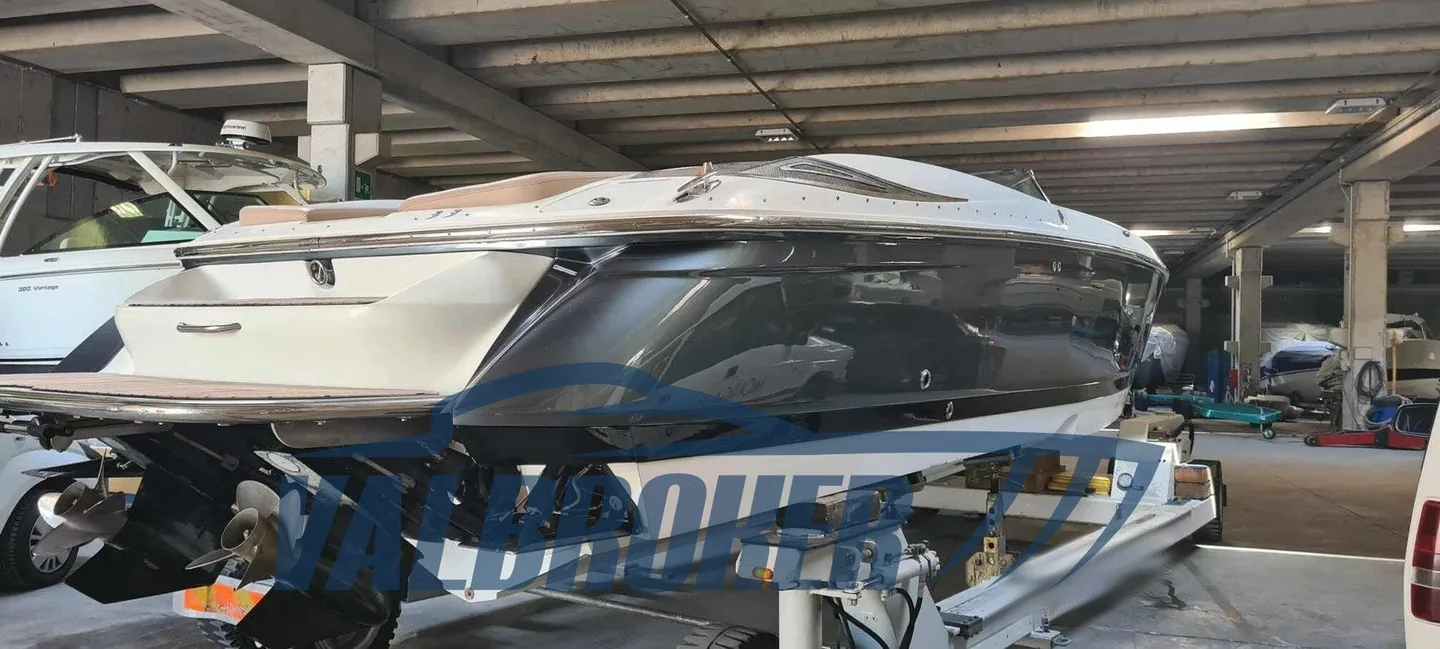
Model identity comes first. The used Cobalt 343 guide illustrates why configuration and engine identification should precede comparison; the opening photograph here is only an illustrative Cobalt 343 ashore, not a boat inspected or tested by Batoo. Once the candidate is properly identified, the used-boat catalogue can provide relevant alternatives without turning a live listing into evidence about this boat.
For the boat just viewed, agree a defined survey scope with the chosen professional and request an afloat assessment for the questions land cannot answer. If decisive access, records or an appropriate trial cannot be arranged, preserve that result in the ledger. “Unknown” is useful information; it must never be silently rewritten as “satisfactory”.
Sources and references
Sources consulted and references retained to verify data and context.
- Tips for buying or selling a boatRoyal Yachting Association
- Pre-purchase surveys and sea trialsCompass Marine Yacht Surveys
- Inspection and Report StructureCompass Marine Yacht Surveys