A distant used boat: images worth the journey
A practical way to request connected photos and video, record what remains off camera and decide whether to travel without mistaking imagery for a survey.
In brief
Before travelling to a distant used boat, request an agreed visual sequence: a wide exterior view, a continuous walk through accessible spaces, context and close-up views of decisive points, then an explicit list of anything not shown. The material can justify, postpone or prepare a viewing; it cannot prove technical condition or replace an in-person inspection, survey or sea trial.
Article outline
Distance changes the first used-boat decision. Before assessing the boat itself, a buyer must decide whether it deserves a day of travel. A polished gallery does not answer that question, while a vague request for “more photos” often produces more attractive but disconnected frames. The useful alternative is to direct a small piece of remote coverage without pretending that a screen can reproduce smell, texture, diagnostic sound or behaviour afloat.
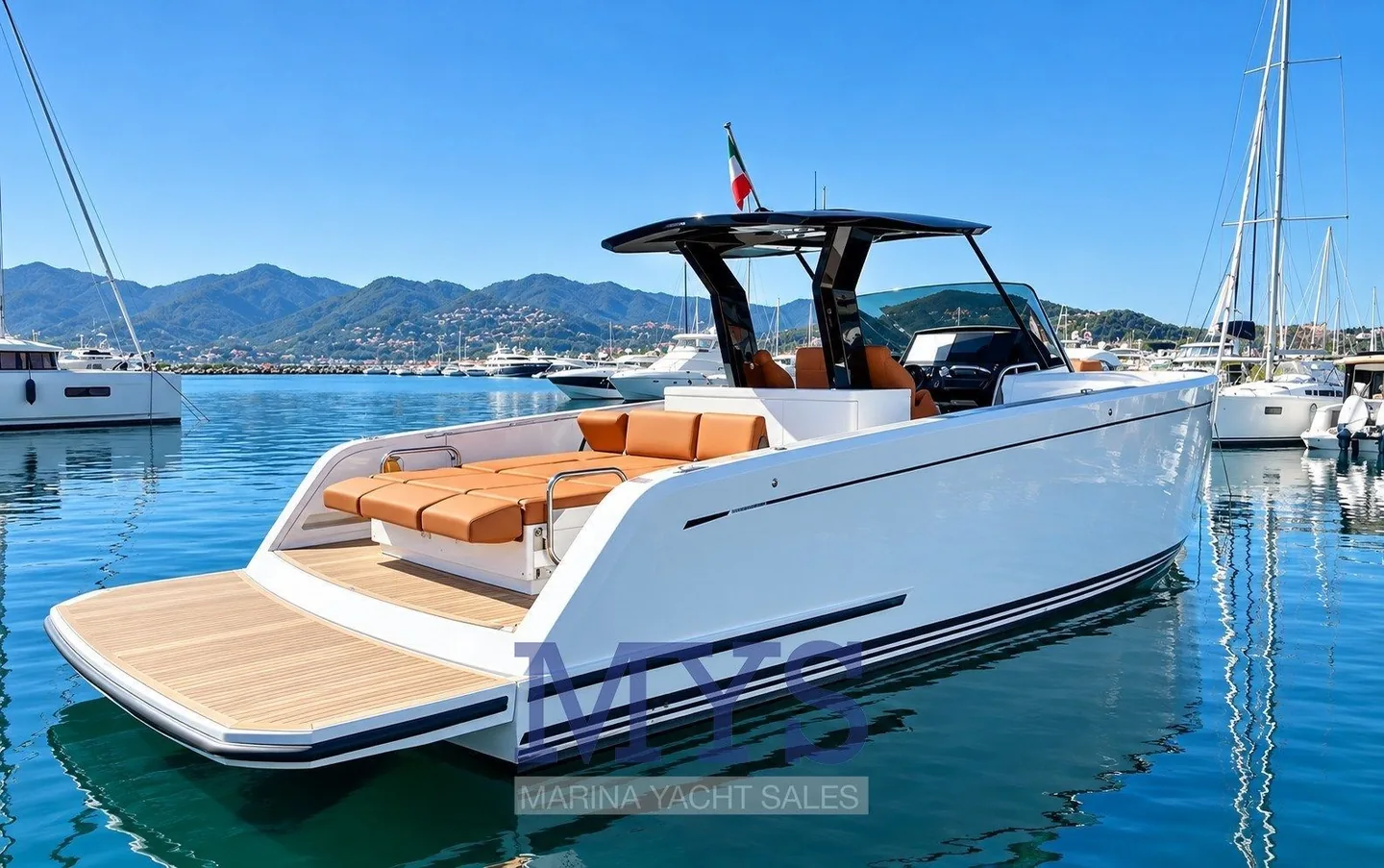
The opening photograph shows a Pardo 38 from the stern quarter in a marina. It is an illustrative wide view with an MYS watermark, not a boat inspected by Batoo and not evidence of condition, included equipment or current availability.
Request a route rather than a highlights reel
Useful material starts with two questions: which boat is being shown, and how do its spaces connect? Ask first for a wide exterior frame containing as much of the profile, berth and surroundings as reasonably possible. It does not authenticate identity or date, but it provides the context needed to understand later details and makes it harder to mistake a close-up for its actual location aboard.
Next request a slow, continuous video from the boarding point through the spaces that are genuinely accessible. Agree the route before recording and avoid edits, rapid pans or music over the natural audio. This is still not a remote technical test. The person filming may state the date and show an agreed note at the beginning, but that remains a declared date rather than an authenticated one.
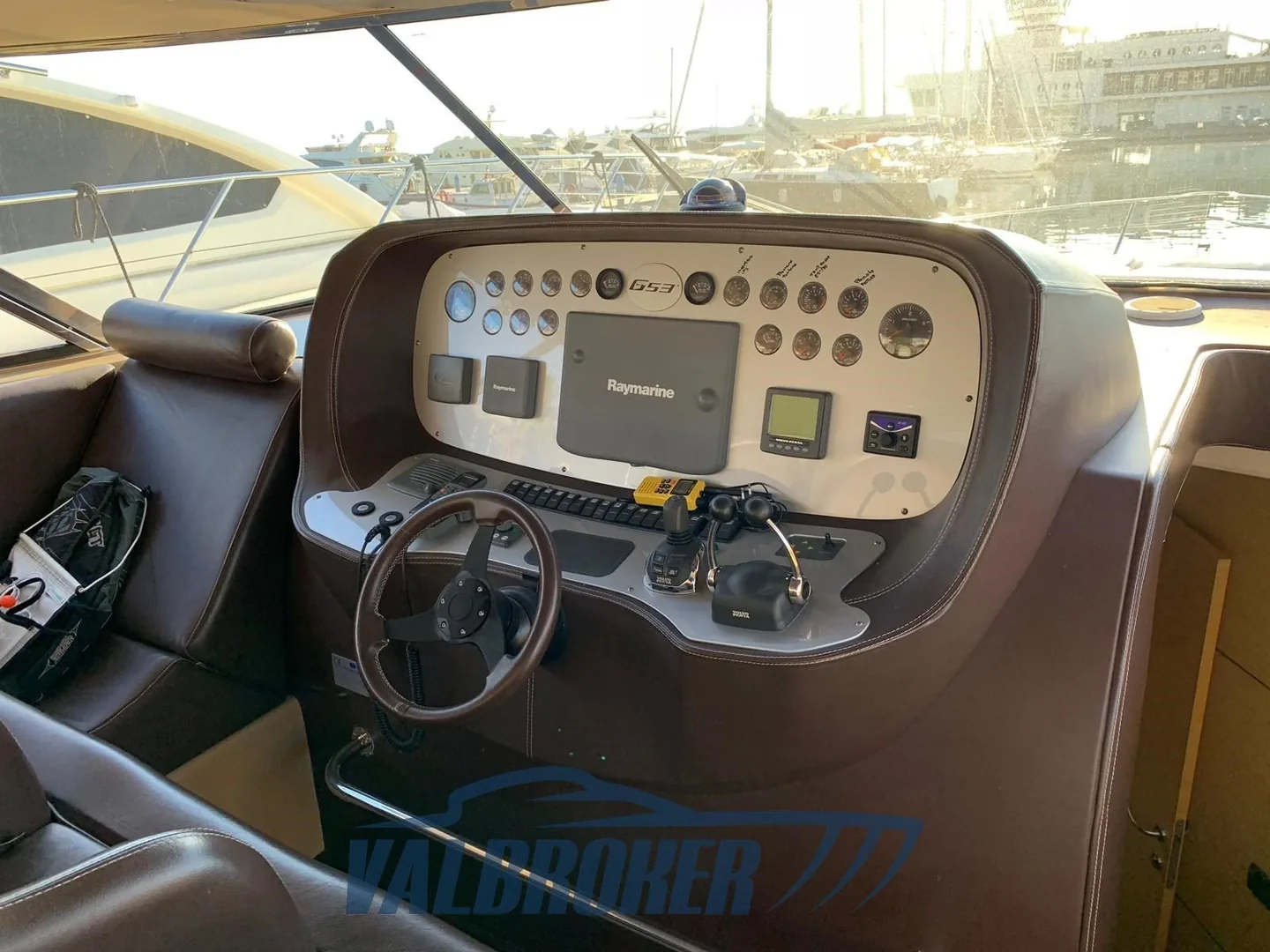
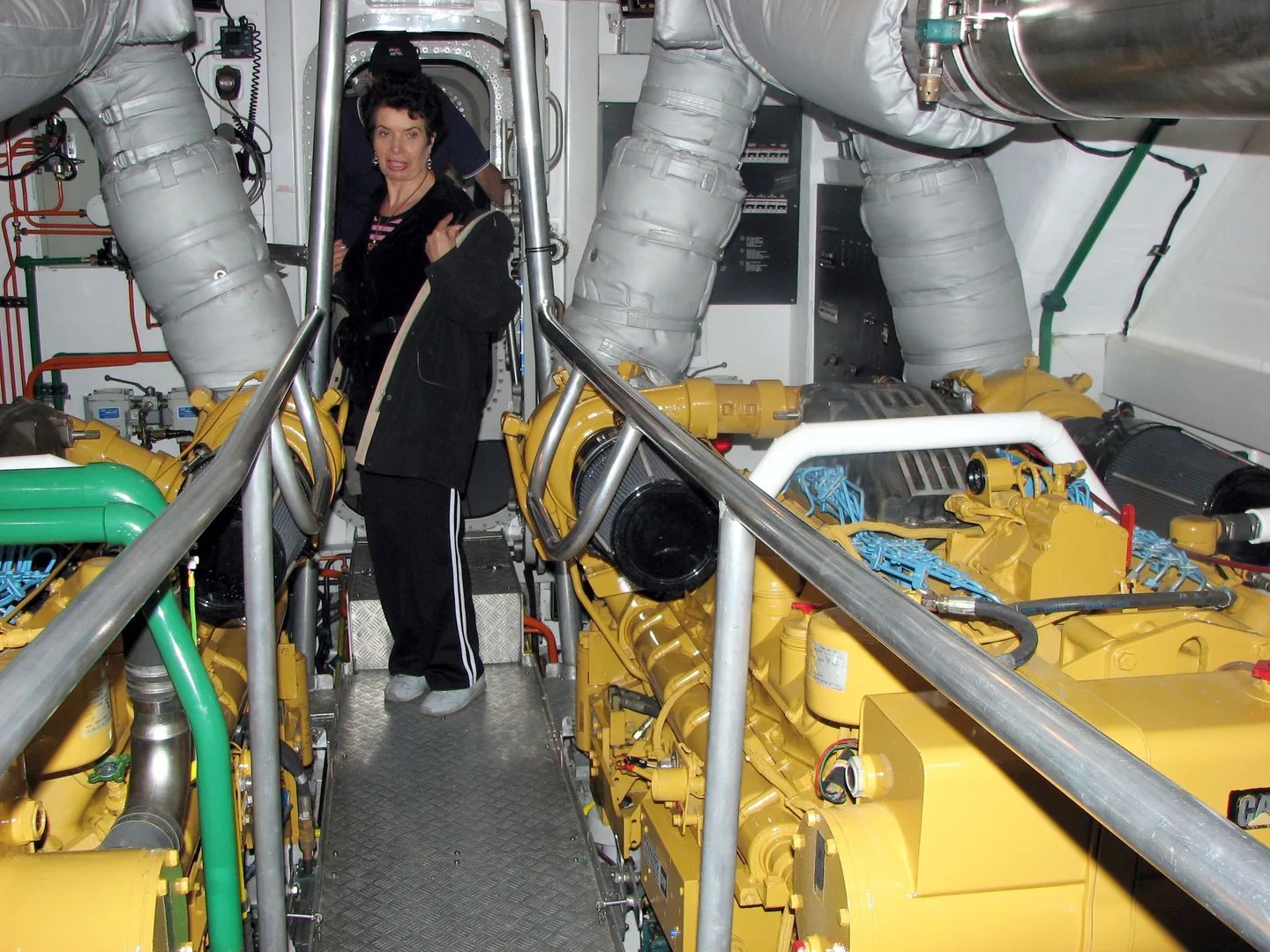
A sensible route might move from stern to cockpit, helm, companionway, cabins and engine space only where entry is safe and already authorised. Nobody should remove panels, start machinery or enter a hazardous compartment for the camera. If an area cannot be reached, showing its entrance and recording the reason for exclusion is more useful than quietly cutting around it.
The four-shot visual sequence
Good direction does not try to photograph every centimetre. It establishes continuity, then concentrates on the points that influence the travel decision. The following Batoo sequence is an editorial organising tool, not a score for trustworthiness or condition.
- Wide view. Show the exterior and then each complete space before selecting its most flattering feature.
- Connection. Record the actual passage between two areas, keeping doors, steps and obstructions recognisable.
- Context and detail. For a decisive point, show where it sits before moving closer; an isolated close-up loses scale and location.
- Declared omissions. Finish with the areas not shown, closed accesses and views that must wait for an in-person visit or a professional.
Consider an explicitly illustrative example. A cockpit photograph appears to promise an easy route into the accommodation. The useful follow-up is not another close-up of the upholstery but a short sequence joining the seat, walkway, door and first steps. It still cannot tell you exact dimensions or whether the passage suits your body; it can identify what you need to try at the appointment.
A close-up is useful only when context survives
The wide-plus-close pair is most valuable when an image raises a concern. Photograph the whole panel, locker or surface with recognisable references, then approach the point in even light and usable focus. Do not ask the person filming to diagnose discolouration, a mark or an apparent repair. Imagery can locate an appearance; it cannot establish its cause or severity.
Apply the same restraint to electronics and loose equipment. A lit display may show that one screen appeared at that moment, not that sensors are accurate, licences current, connections complete or the unit included in the sale. Use Batoo’s guide to used-boat included equipment to separate visibility from an inventory statement; this article does not duplicate that task.
Do not let a request encourage improvised work. Remote engine tests, dismantling, lifting and unsafe access sit outside this method. If the decision depends on the underwater body or components visible only ashore, the guide to an ashore used-boat viewing explains how to keep observation separate from professional diagnosis.
What imagery cannot settle
The limit is not a disclaimer added at the end; it is the centre of the decision. The RYA’s official buying guide contrasts the favourable impression created by pictures and an advert with viewing the boat and recommends a survey after viewing. Only that practical boundary is used here. UK contract, tax and insurance guidance is not being applied to an Italian purchase.
The RYA also separates survey and sea trial in its Tips for buying or selling a boat. That page lists manuals, service information and receipts for major work among useful sale paperwork. A video may visually connect a record or component with the boat, but it cannot establish the record’s authenticity, the quality of work or present condition.
For identity, history and paperwork, return to Batoo’s twelve questions before viewing. Do not request personal documents for public circulation, and do not turn this visual procedure into an anti-fraud promise or payment advice. Its narrower purpose is to decide whether there is enough organised access to justify the journey.
Turn the coverage sheet into one of three outcomes
Record the material in a four-line coverage sheet. Batoo designed it as a planning aid; it cannot determine reliability, safety or value. Use neutral descriptions. “Locker not shown” records evidence, whereas “locker in good condition” claims a conclusion the remote view has not earned.
| Stage | Material received | Limitation to retain | Planning decision |
|---|---|---|---|
| Wide context | recognisable exterior and spaces | identity and date remain declared | continue if the boat fits the search |
| Continuous route | links between accessible areas | no proof of ergonomics, smell or comfort | mark what requires physical presence |
| Context plus detail | located point and close view | no diagnosis from imagery | prepare a question for viewing or surveyor |
| Omitted areas | list of closed or excluded access | missing imagery does not prove a defect | request one targeted view or postpone |
The first outcome is to book the viewing: the day’s programme is clear, decisive access can be organised and every important unknown has a next step. The second is to request one targeted addition because a missing visual connection would genuinely change the travel decision. The third is to postpone—not because silence proves a fault, but because the access needed for a productive appointment has not yet been agreed.
Before leaving home, send a short summary of the route received, the excluded areas and the checks reserved for the viewing, survey or sea trial. Then compare the candidate with the used-boats catalogue against the same intended use. The concrete next step is not to collect a hundred images. It is to obtain the minimum connected sequence that makes the journey productive and preserve, in writing, everything the screen cannot resolve.
Sources and references
Sources consulted and references retained to verify data and context.
- Boat buying made easyRoyal Yachting Association
- Tips for buying or selling a boatRoyal Yachting Association
- Pardo 38 offer and owned-image provenanceBatoo