Are low engine hours enough to choose a used boat?
A boat with 220 hours and another with 1,180: a fictional comparison shows how to connect readings, engines and records without treating a number as a diagnosis.
In brief
Read a used boat’s engine hours alongside the engine identity, the date and source of each reading, and the continuity of the records. A low number does not establish good condition. A coherent history helps define questions for professional assessment; missing intervals or reported component replacements require supporting evidence, not an assumed adjustment to the total.
Article outline
Low engine hours are not enough to choose a used boat. Before giving the figure much weight, establish which engine it belongs to, when it was recorded and what paperwork lets you follow it over time. A consistent record helps you plan a purchase. It does not certify mechanical condition or automatically give the boat with the smaller number an advantage.
A low reading has an obvious appeal. Among photographs, dimensions and equipment lists, here is something that seems easy to compare: a number you can sort. The trouble starts when that convenience hides the more useful question. Are you comparing two readings supported in the same way, or a lone figure against a history you can actually reconstruct?
Two boats, two very different files
Imagine boats A and B. This is a fictional comparison designed to explain a method, not an account of advertisements, owners or engines we have inspected. A is offered with 220 hours; B with 1,180. We know nothing about their present mechanical condition and are not estimating which will be cheaper to maintain.
For A, you receive a photograph of the instrument said to be recent, but no earlier reading. For B, the seller supplies two dated service documents identifying the engine and recording hours, plus a current reading. The seller also says the engine and instrument remained unchanged during that period. That link needs corroboration; a tidy sequence is not enough to establish it.
B's file gives you more concrete questions to ask. It does not establish that B is the better boat. A may have a traceable history that has not yet been supplied, while B may have problems outside the scope of its paperwork. At this stage, the useful decision is what evidence to request next, rather than which engine deserves a favourable verdict.
Give every reading an identity
The July 2014 North American Volvo Penta booklet treats component identifiers, operating hours and service records as separate information. It is a documentary example, not a statement of current warranty terms for a boat in Italy.
To organise your comparison, assign each entry to one specific engine: make, model and serial number where available. Keep separate sequences for a twin-engine boat. Writing only “boat hours” leaves an important question unanswered: which item of machinery does the figure describe? Do not fill a missing identifier with a guess based on where a display appears in a photograph.
Next, record the date of the reading and the source from which you obtained it. A photograph received today was not necessarily taken today. An invoice issued in a particular month does not establish when its hour entry was observed unless the document makes that clear. Keep the original wording and ask for the missing detail. An incomplete but accurate row is more useful than a neat one built on assumptions.
A timeline that shows the gaps
The table continues our hypothetical example. Its dates, readings and maintenance entries are invented. A1 and B1 are simply labels for the two engines; replace them with documented identifiers when making your own version, without collecting unnecessary personal information.
| Stated date | Engine | Source of reading | Hours recorded | Work described | Question still open |
|---|---|---|---|---|---|
| October 2026 | A1, identity unconfirmed | Seller's photograph | 220 | None documented | When was it taken? Are earlier readings available? |
| September 2023 | B1 | Service document | 960 | Service reported | Does the document identify this particular engine? |
| September 2024 | B1 | Service document | 1,080 | Service reported | Can continuity of engine and instrument be corroborated? |
| October 2026 | B1 | Instrument photograph | 1,180 | Not stated | What records cover the later interval? |
If attribution and continuity are confirmed, the B readings show arithmetic increases of 120 and 100 hours. They do not measure wear, describe operating conditions or establish that all necessary maintenance was completed. Nor does their sum of 220 make this period equivalent to the whole history of A.
Keep the entry distinct from your interpretation. “The document records 1,080 hours” is a transcription; “the engine was used carefully” is a conclusion that transcription cannot support. Where the work description says only “service”, do not add parts replacements or checks that the document does not mention. Request whatever detail is available and leave the rest unresolved.
You can also give each document a short reference in your own file, such as an invoice number or the name of a saved photograph. The point is to make every row retrievable. A spreadsheet that cannot lead you back to its evidence has merely rearranged the seller's statements into a more convincing-looking format.
Replacements and years without records
A break in the sequence calls for a verifiable explanation. If replacement of an instrument or engine is reported, record the date, component, identifiers and available paperwork before comparing later figures. Do not add readings from different items as though they necessarily belonged to a single continuous history.
There is no universal assumption here about how hour meters work or where their data is stored. This method does not require accessing control units, resetting instruments or improvising electronic diagnostics. A professional familiar with the particular installation should interpret technical questions about what its readings mean.
An interval without paperwork should remain visible too. “We have no records between these dates” accurately describes the file. “The boat was unused” and “the boat was neglected” are different stories, neither established by missing documents alone. Apply the same restraint to a mismatch: asking for an explanation is not an accusation that someone has altered a reading.
The response may be another document, a correction to an earlier statement or confirmation that the information cannot be recovered. Record which of those you receive. A clearly acknowledged unknown is more useful to a purchasing decision than an attractive account assembled from guesses.
Use the file to brief a professional
The RYA's practical buying and selling guidance includes service information and major-repair receipts among useful paperwork, separately from a survey and an afloat trial. That practical distinction is relevant here; its British legal advice is outside this article's scope.
Turn your table into a short brief: which engine are you considering, which readings can be attributed to it, and which link remains unexplained? The file should help define the work needed. It cannot provide a clean bill of health from photographs, and confirmation of the paperwork is not itself a mechanical assessment.
If the boat can only be viewed ashore, establish in advance what that appointment cannot demonstrate. Our guide to viewing a used boat ashore separates visible evidence from questions requiring different assessment conditions. You need not settle every uncertainty at the first visit, but you should know which ones you are carrying forward.
Choose the question before choosing the number
In the used boat catalogue, treat advertised hours as the start of an information request. Apply the same approach to each shortlisted boat: identity, date, source and continuity. A larger figure is not an automatic reason for rejection, and a smaller one should not earn a preference while its meaning remains unclear.
You can arrange a visit when you know what you will be seeing and what you want to discuss. You can also decide that the available answers do not yet justify the journey. That is a decision about the information you need, not a universal acceptable-hours threshold. The useful reading is the one you can place in a traceable history without making it speak for everything that history leaves out.
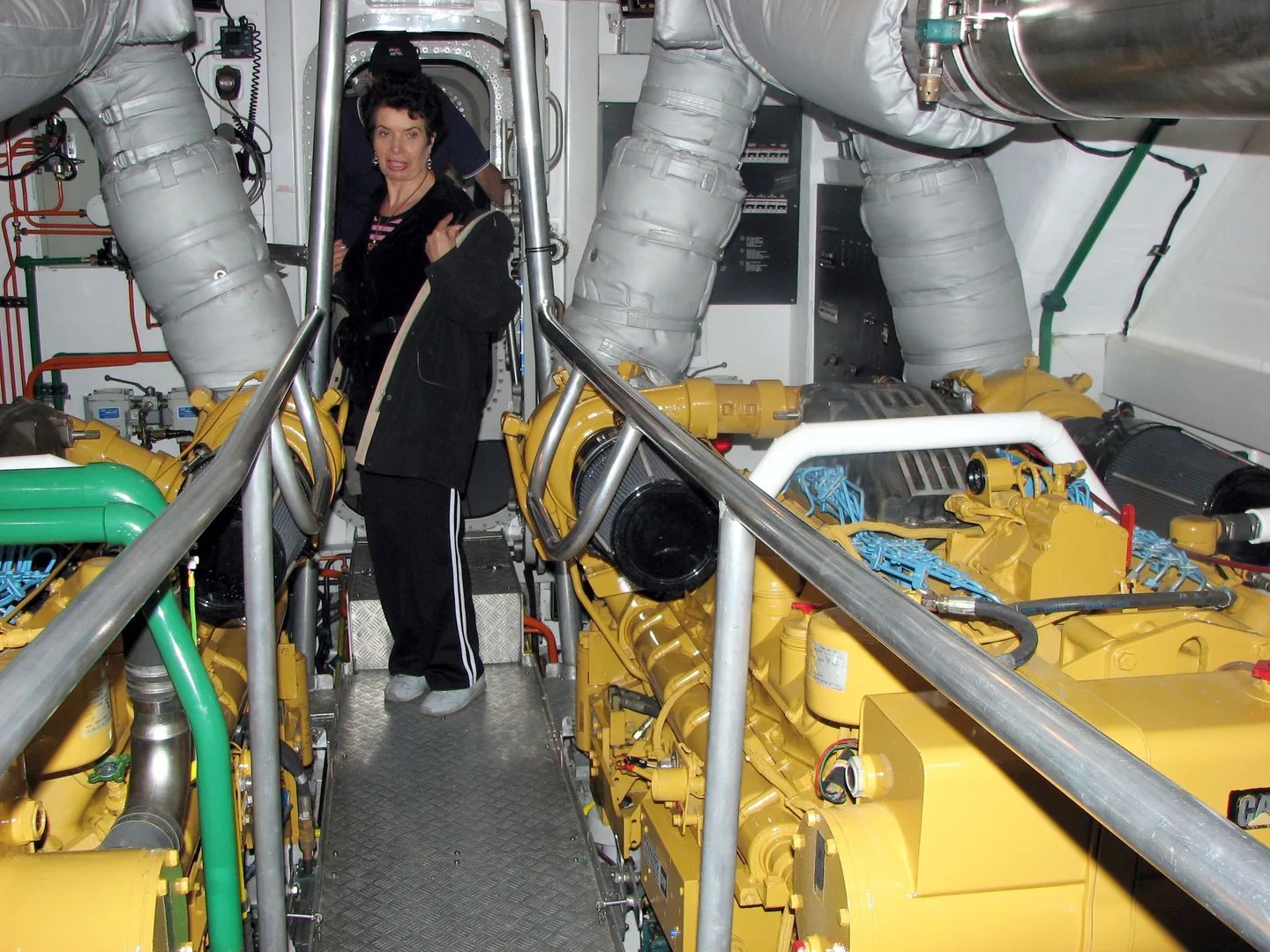
The illustrative photograph shows a Severn-class rescue lifeboat's engine room at Poole: Adrian Pingstone, public domain via Wikimedia Commons. It depicts neither boat in the example and is not evidence of their hours, condition or any test carried out by Batoo.
Sources and references
Sources consulted and references retained to verify data and context.
- Warranty Information — North America, Publication No. 47704262Volvo Penta · 2014-07-01T00:00:00.000Z
- Tips for buying or selling a boatRoyal Yachting Association
- Engine room of lifeboat 17-31 — original photograph and rightsAdrian Pingstone / Wikimedia Commons