Sneekweek 2026 turns a Dutch lake into a sailing city
From 1 to 6 August, 30 classes fill the Sneekermeer. A dispatch from the Dutch regatta where serious racing, water access and city life become one.
Article outline
Sneekweek 2026 began on 1 August and, until the 6th, is putting 30 classes onto the Sneekermeer in Friesland. The central fact is not simply fleet size. For six days, a city, a start island and a lake operate as one nautical system. The consequence reaches well beyond racing: Sneek demonstrates how much richer boat ownership can become when access to the water, club infrastructure and urban life reinforce one another.
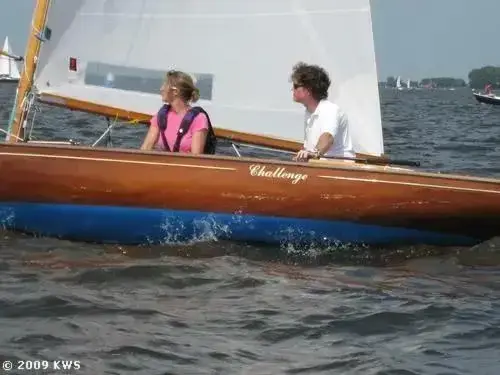
This is the 89th edition. The Royal Yacht Club Sneek has organised the week since 1934, while its Hardzeildag tradition reaches back to 1814. That continuity has not produced a floating museum. The organiser lists Optimist, Solo, Laser, Vaurien, Yngling, Finn, 2.4mR, J/22, Splash and Windsurfer LT among the participating classes. Different ages, physical abilities and budgets share the same body of water.
Thirty starts reveal more than one large fleet
Sneekweek's editorial interest lies in variety rather than sheer scale. One-design racing shortens the distance between boat and result: when hulls are comparable, boat handling, shifts and traffic management come to the foreground. For anyone considering a future purchase, it is a useful counterweight to evaluating boats only by length, cabin count and equipment lists.
The official class mix includes youth dinghies, demanding single-handers, accessible boats such as the 2.4mR and small crewed keelboats. That does not mean a sailor can move between them without acquiring new skills. It does show that a life in boating can remain continuous: learn, race, change crews and keep sailing without every transition requiring a larger yacht.
That lens remains useful when browsing cruising ranges fromBeneteauorJeanneau. The sensible comparison is not dinghy against cruiser, but two ideas of value: a boat as an accumulation of features, or a boat as reliable access to time afloat. Sneek strongly favours the latter.
Starteiland works as infrastructure, not scenery
Racing is centred around Kolmeersland, commonly called Starteiland, where the club is based on the Sneekermeer. A free ferry is scheduled from 1 through 7 August. That apparently small operational detail carries weight: competitors and visitors can reach the centre of the event without turning every movement into a car, parking or berth problem.
The published programme connects the lake with central Sneek. The vlootschouw on 31 July opened the week in front of the Waterpoort, with 40 boats representing the classes; racing started the following day. Hardzeildag, the traditional high point, falls on 5 August, while final races and prizegiving follow on the 6th.
For a visiting cruising boat, none of this should be read as an invitation to enter the race area. Density calls for preparation: consult the local sailing instructions and organiser updates, give racing fleets room and consider using the ferry for the final connection. That is prudent analysis, not an additional restriction announced by Batoo. TheDufour YachtsandBavariapages offer further reading on cruising yachts; their inclusion does not suggest either yard is participating in Sneekweek.
The festival succeeds because the racing remains legible
Sneekweek describes its formula neatly: racing for honour by day and enjoying the atmosphere by night. The 2026 calendar adds live music, city activities and an evening programme, but the sporting grammar remains intact. Thirty classes retain their technical identity, and the organisers publish a Notice of Race and local sailing instructions, including English material for international competitors.
That orderly separation matters. A nautical festival loses character when boats become background decoration; a regatta loses its audience when it closes itself off among specialists. In Sneek, the fleet parade brings the classes into town and the ferry carries the town towards the starts. Those two movements meet without becoming muddled.
Batoo's analysis is that the model exposes an undervalued form of capital: not only how many boats a region owns, but how frequently they sail and how easily a newcomer can enter its boating culture. A modest fleet used weekly builds more practical knowledge than an impressive fleet left tied to the dock.
A portable lesson for clubs and marinas
Sneekweek cannot simply be copied onto the Mediterranean. An inland lake, a dedicated island and a city threaded by water provide specific conditions. Differences in depth, wind, commercial traffic and tourist pressure are real. Three principles, however, travel well.
First, connect an event to the urban fabric instead of isolating it behind a marina gate. Second, maintain several credible entry points, from junior dinghies to small crewed one-designs. Third, treat visitor mobility as part of the nautical experience rather than a secondary service.
For owners and buyers, Sneek leaves a more useful question than any campaign slogan: how many genuine days afloat will the boat under consideration enable? Cost and dimensions matter, but so do clubs, ramps, transport links and a dependable calendar. On the Sneekermeer, that network becomes visible for six days. More than the count of sails, it is what turns Sneekweek into a temporary sailing city.
Sources and references
Sources consulted and references retained to verify data and context.
- About the Sneekweek and 2026 programmeKoninklijke Watersportvereniging Sneek · 2026-07-13
- Sneekweek 2026 agendaKoninklijke Watersportvereniging Sneek
- Notice of Race and Local Sailing Instructions 2026Koninklijke Watersportvereniging Sneek
Continue reading

Chicago Grand Slam and the seven minutes that shape a match race
August 14, 2026 · 5 min read

Naples compresses the America’s Cup into eight AC40 races
August 11, 2026 · 5 min read

At the Copa del Rey, the multiplier outweighs the final beat
August 8, 2026 · 6 min read